What's new

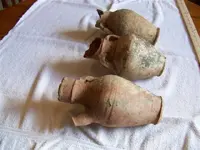
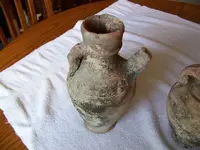
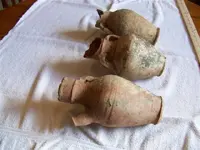
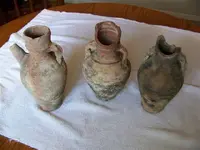
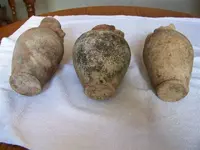
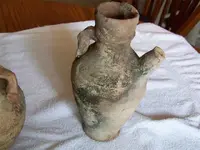
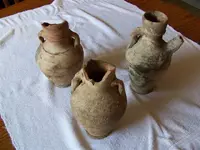
Found these old pottery jars the other day, care to help Identify ????????

tallahassee420

Tenderfoot
Joined
May 17, 2011
Messages
1
Reaction score
0
Golden Thread
0
hey guys, me and a buddy was digging near an old Fort site in the middle Ga. area near Dublin Ga. next to the Oconee River , this area was used by the Indians and also was used befor the 1700's by the Spanish trading with the indians. Next weekend we will go back to dig around this area to see what we come across. Found the very edge of one of the broken jars on the edge of a old tree hole, Started to dig around and found the other two. Going to take the metal detecot out next week if i can, But i desperatly need info on these jars. i have never seen anything like these before from my area or even in the south east. I think they are very Early settler, but i have no clue. checkem out and hollar back at me if you know anything at my email. Tallahassee420@yahoo.com

These guys are about 9 1/2 inches tall ... one is really nice,,,, COME ON GUYS HELP ME OUT ON THIS ONE>>>>>>.
 

Attachments

  • old jars1.webp
    old jars1.webp
    47.7 KB · Views: 440
  • old jars5.webp
    old jars5.webp
    44.6 KB · Views: 369
  • old jars 2.webp
    old jars 2.webp
    46.8 KB · Views: 403
  • old jars 3.webp
    old jars 3.webp
    44.6 KB · Views: 376
  • old jars 4.webp
    old jars 4.webp
    36.4 KB · Views: 361
  • old jars 6.webp
    old jars 6.webp
    38.3 KB · Views: 356
  • old jars 7.webp
    old jars 7.webp
    39.4 KB · Views: 399
The pottery in the picture was made on a wheel. If it were American Indian pottery it would not be made on a wheel. The surface colors indicate a kiln atmosphere that varied in oxidation and reduction. They don't look like they are made of stoneware, more likely earthenware and lower in firing temperature than stoneware. They might have been fired in a wood kiln at a low temperature and that's why the surface varies in color, and there is no ash glaze on the surface because of the lower firing temp.
They may not be American in origin, and could have been made elswhere and transported here (on a ship). The narrow foot may be an ndicator that these were often set in a specific location. One way you could find out is by looking at some of the clay that local potters or brick makers are/have used.
The shape is different and what comes to my mind is a seperator jar that might have been used for seperating milk from the heavier cream. That's why the spout is low and the top area so wide. I'm only guessing at that though.
They don't look modern in the least. And do look European/middle Eastern. Maybe Moravian. Surface decoration/detail is minimal, so we are probably talking more about function, rather than decoration. Very interesting...
 
Upvote 0

Users who are viewing this thread

Back
Top Bottom