
You are using an out of date browser. It may not display this or other websites correctly.
You should upgrade or use an alternative browser.
You should upgrade or use an alternative browser.
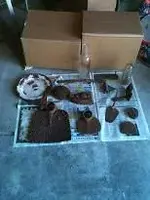
Fridays finds...slave tools
- Thread starter jefg231
- Start date


relicminer
Sr. Member
- Joined
- Dec 31, 2010
- Messages
- 428
- Reaction score
- 28
- Golden Thread
- 0
- Location
- Pike County Kentucky
- Detector(s) used
- Garrett Ace 250, Garrett Pro-pointer, Lecshe Digging Tool, Predator Mauler T-Handle
- Primary Interest:
- Relic Hunting
very interesting!

Curious The George
Hero Member
- Joined
- Sep 4, 2008
- Messages
- 655
- Reaction score
- 133
- Golden Thread
- 1
- Location
- East Coast
- 🥇 Banner finds
- 1
- Detector(s) used
- Metrotech
- Primary Interest:
- All Treasure Hunting
How are you able to determine what ever is in the photo is "slave tools"?
What little I can make out, a hoe head, looks like a common farm implement that would be found on any old farm field or home site. Slaves or no slaves the corn and cotton got the weeds hoed out.
What little I can make out, a hoe head, looks like a common farm implement that would be found on any old farm field or home site. Slaves or no slaves the corn and cotton got the weeds hoed out.

ivan salis
Platinum Member
- Joined
- Feb 5, 2007
- Messages
- 16,836
- Reaction score
- 3,817
- Golden Thread
- 0
- Location
- callahan,fl
- Detector(s) used
- delta 4000 / ace 250 - used BH and many others too
the spot where these tools were found might be a old plantation home --that had slaves working the feilds during the time frame of the tools are from -- logically farming tools from the era ---civil war to 1800 if the farm was a known slave plantation --would have been used by the slave's --hince --slave tools

civilman1
Gold Member
Here we go againCurious The George said:How are you able to determine what ever is in the photo is "slave tools"?
What little I can make out, a hoe head, looks like a common farm implement that would be found on any old farm field or home site. Slaves or no slaves the corn and cotton got the weeds hoed out.
 Merry Christmas George!!
ivan salis
Platinum Member
- Joined
- Feb 5, 2007
- Messages
- 16,836
- Reaction score
- 3,817
- Golden Thread
- 0
- Location
- callahan,fl
- Detector(s) used
- delta 4000 / ace 250 - used BH and many others too
no it doesn't make you a slave , it makes you "narrow minded"
if the hoe was found "in context" along with the other items dating from the mid to early 1800 's when the farm was being used as a "slave platation" when slaves were used as "feild laborers' -- frankly speaking -- it is not logical to think that the tools were not used by them . (because thats what the slaves were there to do -- the hard dirty manual grunt feild labor )
a lot of this has to do with knowing the sites history * it is true hoes of that type have been used for many , many years by all types of people (both slave and free) --but knowing the places history is a important part of figgering "possible" use and by whom -- say a old plantation farm worked by slaves in the mid to early 1800 era -- if one finds tools mixed in with items from the mid to early 1800's era --a "in context" veiw that they were likely slave used tools would not be a unrealistic thought.
you are only a "slave" to locked in "closed minded" thought -- you think unless YOU personally saw a slave use it --it can not be a slave tool --only a tool . (the doubting thomas * way of thought) this is highly limiting point of veiw.
my much more "open minded" point of view is logically speaking -- if the labor force at a certain place during a certain time peroid was known to be slaves --odds are very good to excellent that any laborer type tools found at that spot "in context" with other items from the slavery era --were tools used by said slaves - hince slave tools --can it be proved 100% no but it is a logical thought
if one is at a place where a civil war fight occured and find a .69 cal musketball of the type used by confederate forces in the area known to be used as confederate trench line -- i would have no problems saying --confederate musketball -- however since confederate troops used guns that were of the same type as union troops , and people used these guns post war -- you might have 'issues' with calling it confederate or even civil war era -- so you would only say that it is a .69 caliber musket ball.
thus the differance between "open" and "closed" points of veiw .
Curious The George
Hero Member
- Joined
- Sep 4, 2008
- Messages
- 655
- Reaction score
- 133
- Golden Thread
- 1
- Location
- East Coast
- 🥇 Banner finds
- 1
- Detector(s) used
- Metrotech
- Primary Interest:
- All Treasure Hunting
ivan salis said:if the hoe was found "in context" along with the other items dating from the mid to early 1800 's when the farm was being used as a "slave platation" when slaves were used as "feild laborers' -- frankly speaking -- it is not logical to think that the tools were not used by them . (because thats what the slaves were there to do -- the hard dirty manual grunt feild labor )
a lot of this has to do with knowing the sites history
So Ivan, lets look at the context.
1. A white enamel pie pan or dish. 1930's at the earliest.
2. Two glass bottles that would date from the 1930's at the earliest.
3. Two hoe heads of a pattern that has been used for about 200 years. And can still be purchased today new.
4. A grubbing hoe, same as #3
5. A worn masons trowel, same as #3
6. Some other iron stuff that because of the poor photo can't be identified.
As far as the sites history goes, where did that come from? Anyplace south of the Mason Dixon line and a lot of places North of it had slaves working. The poster doesn't tell us where he is nor much of anything else about the site. Other than mentioning that there were slaves someplace in the area.
Where does the "context" you speak of put this stuff into a slave's hands?
And where in the world did you end up in a Confederate trench line?
I'm all for investigating the history of found items but making stuff up with nothing to back up the assertions is not productive or an honest attribution of a relic's history. The tools found could be used by anyone working in a garden or field. In fact from what little detail I can see in the photo they are in far too good of condition to be more than 100 years old, if not less.
ivan salis
Platinum Member
- Joined
- Feb 5, 2007
- Messages
- 16,836
- Reaction score
- 3,817
- Golden Thread
- 0
- Location
- callahan,fl
- Detector(s) used
- delta 4000 / ace 250 - used BH and many others too
i'm just saying if * not for sure . -- like i said -- a lot has to do with the sites history --and the artifacts found along with it --IF they support the "slave owning" time frame , and the spot was a known "slave plantation farm " during that era. they could be "slave tools" -- if not then of course you have a "valid' point / issue -- since they would be "out of historical context"

spitfire55
Bronze Member
- Joined
- Sep 17, 2008
- Messages
- 1,383
- Reaction score
- 24
- Golden Thread
- 0
- Location
- Fresno, CA.
- Detector(s) used
- (Whites) MXT, MXT PRO, SURF PRO/PI and COINMASTER 5500/D, (Fisher) GOLDBUG. AT PRO(Garrett), CTX 3030(Mine Lab).
- Primary Interest:
- Metal Detecting

hikeinmts
Bronze Member
- Joined
- Dec 13, 2008
- Messages
- 1,268
- Reaction score
- 30
- Golden Thread
- 0
- Location
- South Korea
- Detector(s) used
- Cobra II/Minelab Sovereign
- Primary Interest:
- All Treasure Hunting
I think I better bring out my wasp spray.......this entry has certainly stirred up a nest of the angry buggers.
(circa 2010/2011.....just to keep the dates straight.)
Perhaps, "possible" added to the initial entry might have precluded all the extra.
For sure, found in the right area. But, impossible to say, one way or the other.......and "possible" solves that problem......
and all of our blood pressures don't soar out of site.
(BTW, Ivan, I also hunted some in the same general area as you.....great hunting area......possibles all the way back to
the beginning of our country being settled by Europeans.)
Merry Christmas......and have a great 2012 hunting.
S
stefen
Guest
tinpan said:There is no point in misleading the people who frequent this web site with an attribution that cannot be substantiated.
As simple as a claim may be those tools could have belonged to later family members of pre revolutionary settlers or slaves.
First off I have no intention of raining on anybodies parade...so here goes...
Two very important statements have been made by tin pan and Curious The George which I isolated above...
What I find is that many times a person will post a subject find and make attributions that are thinly veiled simply to add credence to the subject.
A post needs to provide amply facts in the introductory statement in order to validate the title.
There is the probability that the tools are from the pre CW days and support the slavery usage. Then again, they could easily be post-slavery...
Curious The George
Hero Member
- Joined
- Sep 4, 2008
- Messages
- 655
- Reaction score
- 133
- Golden Thread
- 1
- Location
- East Coast
- 🥇 Banner finds
- 1
- Detector(s) used
- Metrotech
- Primary Interest:
- All Treasure Hunting
I think the finder has some nice artifacts. I did question an unsubstantiated attribution of found relics, that clearly has ca. 1930's artifacts found with them. Until something much older and more than one something much older, turns up at that site it is clear what the time frame of the artifacts are. There is nothing to be gained from folks searching this site, seeing a hoe being called a "slave tool" and then forevermore assuming that all eye socket hoes are slave tools. They aren't, in the south of the US they are commonly called "cotton chopping hoes", or at least in the cotton growing areas. Lots of folks chopped cotton, both slave, tenant farmer and yeoman farmer.
S
stefen
Guest
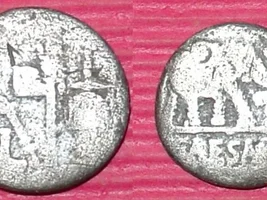
Using the coin as an example, it was found in an area that was inhabited for hundreds of years and until it's identified, it's related period cannot be stated...
That is how a statement should be worded...
That is how a statement should be worded...
Curious The George
Hero Member
- Joined
- Sep 4, 2008
- Messages
- 655
- Reaction score
- 133
- Golden Thread
- 1
- Location
- East Coast
- 🥇 Banner finds
- 1
- Detector(s) used
- Metrotech
- Primary Interest:
- All Treasure Hunting
jefg231 said:Restating the ORIGINAL post..........
I found some tools the other day, hope some of you might find them interesting.
Good idea jefg. It is interesting. I hope you continue to work the site and let us know what you find. Also I hope you can upgrade your photo method so the artifacts can be better shared.
Good luck, happy digging, Merry Christmas and Happy New Year!
ivan salis
Platinum Member
- Joined
- Feb 5, 2007
- Messages
- 16,836
- Reaction score
- 3,817
- Golden Thread
- 0
- Location
- callahan,fl
- Detector(s) used
- delta 4000 / ace 250 - used BH and many others too
i like your finds - keep up the good work 
2country
Jr. Member
Nice stuff . You can get a rough estimate of the age of the tools by the way the were made .... blacksmith or modern means . I've found several grubbing hoes and what us country folks call weeding hoes (smaller than a grubbing hoe) at some old plantation sites in my area . I won't say who used them , but I have a pretty dern good idea .
S
stefen
Guest
jefg231 said:Restating the ORIGINAL post..........
I found some tools the other day, hope some of you might find them interesting.


Abt12
Greenie
- Joined
- Nov 27, 2011
- Messages
- 19
- Reaction score
- 0
- Golden Thread
- 0
- Location
- Phoenix, AZ
- Primary Interest:
- All Treasure Hunting
Nice work on the finds OP! Always a good feeling to find something other than a pull-tab 




Featured Treasure Finds
Featured Treasure Finds
Similar threads

- Replies
- 25
- Views
- 2K


- Replies
- 7
- Views
- 253

Users who are viewing this thread
Total: 1 (members: 0, guests: 1)














