What's new

Huge 19th Century Silver Spoon Pulled from Sea!

UnderMiner

Silver Member
Joined
Jul 27, 2014
Messages
4,475
Reaction score
12,334
Golden Thread
2
Location
New York City
🥇 Banner finds
2
Detector(s) used
Minelab Excalibur II, Equinox 800
Primary Interest:
All Treasure Hunting
I stumbled across a curious site today while exploring the coastline at low tide. A large spoon was sticking up almost vertically just below the surface of the water. Thinking it was brass, which is quite expensive in scrap these days, I pulled on it. It offered some resistence, the handle being firmly embedded in the mud below.
Screenshot_20250807-214101_Gallery.webp

When it finaly came free I nearly gasped at the sight I beheld. This wasn't a brass spoon, as I saw the markings on the handle now exposed. This was an Imperial Austrian silver spoon from 19th century Vienna. I knew all of this the moment I saw the handle.
Screenshot_20250807-213225_Gallery.webp

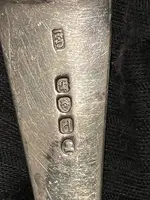
Having studied silver hallmarks for years before this I immediately recognized the archaic Viennese Cross Shield used by Imperial Austria between 1737-1867.
Screenshot_20250807-213055_Gallery.webp

In the shield was the number 13, indicating 13 Loth, the silver standard, which translates to 81.25% silver purity. Above the 13 was the letter A, symbol of the city of Vienna. On the right side of the shield we see the numbers 8 and under it the number 9, these are the 2nd and 4th numbers in the date code which is partially missing, but we can still say with certainty this places the spoon's manufacture between 1809-1859. So without even cleaning it up we can already tell so much about the history of this spoon.
Screenshot_20250807-213033_Gallery.webp

Now the question is, why was it here, and what else is down there? Could a ship from Europe have run aground around here 170+ years ago and this is part of its cargo? I wasn't prepared for this chance discovery, detector was in the car miles away, the tide was rising so I had to leave, but I have marked the location and am going back soon.
20250807_214835.webp

The spoon is just over 11 inches long and weighs 93.3 grams. Based on its purity of 81.25% this translates to 75.7 grams or 2.43 Troy Oz of pure silver, worth about $90 in melt value in today's market.
 
Upvote 41
I stumbled across a curious site today while exploring the coastline at low tide. A large spoon was sticking up almost vertically just below the surface of the water. Thinking it was brass, which is quite expensive in scrap these days, I pulled on it. It offered some resistence, the handle being firmly embedded in the mud below.
View attachment 2220307
When it finaly came free I nearly gasped at the sight I beheld. This wasn't a brass spoon, as I saw the markings on the handle now exposed. This was an Imperial Austrian silver spoon from 19th century Vienna. I knew all of this the moment I saw the handle.
View attachment 2220304
Having studied silver hallmarks for years before this I immediately recognized the archaic Viennese Cross Shield used by Imperial Austria between 1737-1867.
View attachment 2220305
In the shield was the number 13, indicating 13 Loth, the silver standard, which translates to 81.25% silver purity. Above the 13 was the letter A, symbol of the city of Vienna. On the right side of the shield we see the numbers 8 and under it the number 9, these are the 2nd and 4th numbers in the date code which is partially missing, but we can still say with certainty this places the spoon's manufacture between 1809-1859. So without even cleaning it up we can already tell so much about the history of this spoon.
View attachment 2220306
Now the question is, why was it here, and what else is down there? Could a ship from Europe have run aground around here 170+ years ago and this is part of its cargo? I wasn't prepared for this chance discovery, detector was in the car miles away, the tide was rising so I had to leave, but I have marked the location and am going back soon.
View attachment 2220308
The spoon is just over 11 inches long and weighs 93.3 grams. Based on its purity of 81.25% this translates to 75.7 grams or 2.43 Troy Oz of pure silver, worth about $90 in melt value in today's market.

Awesome find! Where there’s one there is more.
 
Awesome find! Where there’s one there is more.
I hope so. This spoon lacks the typical wear pattern found on the edge of the bowl, caused by stirring, that's often present on spoons from this period that have seen extensive use. This could indicate this spoon was lost when it was relatively new, meaning it could have been part of a larger shipment. Conversely it could also have been a one off personal item of a passanger, as the tradition of carrying around a spoon everywhere you went was still common place in the 19th century, especially during the first half. This looks to be a serving spoon, unless it was for a very big person, who carries around a nearly 1 foot long spoon?
20250807_202930.webp

Note the tip of the bowl is bent, this is because the spoon was standing vertically and the bowl would have been nearly flush with the surface of the seabed at some point, likely being crushed down at some point by something heavy rolling over it (something like a log) since it was close to the shore the tides would have brought many things rolling over it and bent it.
 
Last edited:
Great silver find. Looks like its been out in the elements for some. I've got some big silver alloy spoons like that one tucked away.
 
I stumbled across a curious site today while exploring the coastline at low tide. A large spoon was sticking up almost vertically just below the surface of the water. Thinking it was brass, which is quite expensive in scrap these days, I pulled on it. It offered some resistence, the handle being firmly embedded in the mud below.
View attachment 2220307
When it finaly came free I nearly gasped at the sight I beheld. This wasn't a brass spoon, as I saw the markings on the handle now exposed. This was an Imperial Austrian silver spoon from 19th century Vienna. I knew all of this the moment I saw the handle.
View attachment 2220304
Having studied silver hallmarks for years before this I immediately recognized the archaic Viennese Cross Shield used by Imperial Austria between 1737-1867.
View attachment 2220305
In the shield was the number 13, indicating 13 Loth, the silver standard, which translates to 81.25% silver purity. Above the 13 was the letter A, symbol of the city of Vienna. On the right side of the shield we see the numbers 8 and under it the number 9, these are the 2nd and 4th numbers in the date code which is partially missing, but we can still say with certainty this places the spoon's manufacture between 1809-1859. So without even cleaning it up we can already tell so much about the history of this spoon.
View attachment 2220306
Now the question is, why was it here, and what else is down there? Could a ship from Europe have run aground around here 170+ years ago and this is part of its cargo? I wasn't prepared for this chance discovery, detector was in the car miles away, the tide was rising so I had to leave, but I have marked the location and am going back soon.
View attachment 2220308
The spoon is just over 11 inches long and weighs 93.3 grams. Based on its purity of 81.25% this translates to 75.7 grams or 2.43 Troy Oz of pure silver, worth about $90 in melt value in today's market.
Cool find I hope you don’t scrap it
 
I hope it's an indication of an old site with many more goodies, but, that said, it could also just be a loss from a couple of years ago too. Maybe mom or grandma gave an old spoon to their child to use at the beach to make a sand castle. Just because something found is old, doesn't mean it was lost centuries ago. I've found 100 year old coins in modern house yards, school grounds, CoinStars, parks, etc.
 
I hope so. This spoon lacks the typical wear pattern found on the edge of the bowl, caused by stirring, that's often present on spoons from this period that have seen extensive use. This could indicate this spoon was lost when it was relatively new, meaning it could have been part of a larger shipment. Conversely it could also have been a one off personal item of a passanger, as the tradition of carrying around a spoon everywhere you went was still common place in the 19th century, especially during the first half. This looks to be a serving spoon, unless it was for a very big person, who carries around a nearly 1 foot long spoon? View attachment 2220316
Note the tip of the bowl is bent, this is because the spoon was standing vertically and the bowl would have been nearly flush with the surface of the seabed at some point, likely being crushed down at some point by something heavy rolling over it (something like a log) since it was close to the shore the tides would have brought many things rolling over it and bent it.
very nice find, good money too, silver's really goin' up, mind you, relic silver may fetch more
 
That's some serious spoonage right there! Congrats. Hopefully more of set is out there or at least some old stuff to go with it.
 
Congrats! Really interesting and I do appreciate old hallmarked silver. I’d be jonesing for my detector too if I had pulled that out! The size and weight are similar to the 1819 George 3rd Sterling serving spoons (not dug) I have. The 2 matching ones I have are just over 5 Troy oz total.
The best part is that you knew what you had instantly, knowledge is king👍.
 

Attachments

  • IMG_8624.webp
    IMG_8624.webp
    1.2 MB · Views: 64
Congrats! Really interesting and I do appreciate old hallmarked silver. I’d be jonesing for my detector too if I had pulled that out! The size and weight are similar to the 1819 George 3rd Sterling serving spoons (not dug) I have. The 2 matching ones I have are just over 5 Troy oz total.
The best part is that you knew what you had instantly, knowledge is king👍.
Thanks! I enjoy and own a few pieces of George III silver myself, always fun deciphering the shield and letter codes of British silver. Continental silver is so much more complicated than British Sterling. I had found early 19th century Austrian 13 Loth silver once in 2015 and didn't even recognize the hallmarks as silver initially. It took me 3 days to figure out their meaning, but when I did I never forgot them, and never in a million years dreamed of ever seeing them again on something else.

When I saw it on this spoon it floored me. You just made me look at the hallmarks again and I have made another discovery, the overall shape of the shield stamp was different before 1810 so this spoon can't date to 1809, the time frame for this spoon production can now be further pinpointed to between 1819-1859.
20250812_094319.webp

I had initially been skeptical about dating it as early as 1809 since this was the same year that the government passed a law to seize people's silverware to pay for the war debt incurred fighting Napoleon.

Essentially all the silverware made before December 19th 1809 had to be turned in. The owner could pay the value of the silverware to keep it if they wanted to but this would result in the piece being given a new tax-paid stamped onto it by the government. However, and critically, silver spoons were exempt from the confiscation law - but also critically they had had to be stamped also (that's bureaucracy for you) with a tax exemption stamp. Since this spoon is lacking the tax exemption stamp we can tell it never went to the government in 1809/1810.

People who didn't abide by these rules were punished severely, and since most people didn't want to pay a 100% tax to keep their own silverware, the majority of it was turned in and melted down. So as a result most pre-1810 Austrian silver was destroyed - except coincidentally, the silver spoons.
20250812_095146.webp
 
I stumbled across a curious site today while exploring the coastline at low tide. A large spoon was sticking up almost vertically just below the surface of the water. Thinking it was brass, which is quite expensive in scrap these days, I pulled on it. It offered some resistence, the handle being firmly embedded in the mud below.
View attachment 2220307
When it finaly came free I nearly gasped at the sight I beheld. This wasn't a brass spoon, as I saw the markings on the handle now exposed. This was an Imperial Austrian silver spoon from 19th century Vienna. I knew all of this the moment I saw the handle.
View attachment 2220304
Having studied silver hallmarks for years before this I immediately recognized the archaic Viennese Cross Shield used by Imperial Austria between 1737-1867.
View attachment 2220305
In the shield was the number 13, indicating 13 Loth, the silver standard, which translates to 81.25% silver purity. Above the 13 was the letter A, symbol of the city of Vienna. On the right side of the shield we see the numbers 8 and under it the number 9, these are the 2nd and 4th numbers in the date code which is partially missing, but we can still say with certainty this places the spoon's manufacture between 1809-1859. So without even cleaning it up we can already tell so much about the history of this spoon.
View attachment 2220306
Now the question is, why was it here, and what else is down there? Could a ship from Europe have run aground around here 170+ years ago and this is part of its cargo? I wasn't prepared for this chance discovery, detector was in the car miles away, the tide was rising so I had to leave, but I have marked the location and am going back soon.
View attachment 2220308
The spoon is just over 11 inches long and weighs 93.3 grams. Based on its purity of 81.25% this translates to 75.7 grams or 2.43 Troy Oz of pure silver, worth about $90 in melt value in today's market.
Nice score
 
I wouldn't touch it... the way it looks speaks volumes the way it is.
Agreed, I'm going to leave it like this and maybe put it with a picture of something contemporary to early 19th century Austrian history. I was coincidentally reading early 19th century Austrian history the same time I found this artifact.

Franz Joseph, taking the throne at 18 after the abdication of his father is interesting enough, but did you know before he was born his mother Sophie was sort of an unofficial guardian of Napoleon II? The son of Napoleon was a gilded-caged prisoner of luxury to the Habsburgs. Rumor was as a young adult he fathered Franz's younger brother Max who would later become the ill fated Emperor of Mexico, but this was just a rumor and not true. Napoleon II had consumption and wanted to live up to the prestige of his father, but in so trying died riding his horse too much in the cold Austrian winter - broke Sophie's heart. Many people don't know this but Napoleon II actually once held the infant Franz Joseph, think of that the next time you read WWI history and realise who was still on the throne of Austria-Hungary, Franz Joseph still!
 

Users who are viewing this thread

Back
Top Bottom