What's new

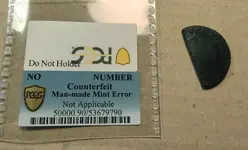
🔎 UNIDENTIFIED I know what this coin is, but PCGS does not seem to know what a clipped coin looks like??

Cape Hunter

Sr. Member
🥇 Charter Member
Joined
May 17, 2019
Messages
305
Reaction score
1,669
Golden Thread
0
Location
Cape Cod
Detector(s) used
Minelab Equinox 900
Minelab CTX 3030
Primary Interest:
All Treasure Hunting
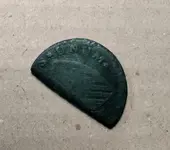
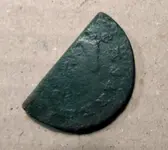
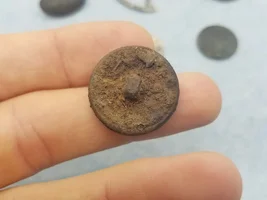
I found this New Jersey State colonial copper on one of the oldest trail here on Cape Cod. Down quite deep as usual. Coin has been clipped just like pieces of eight. One of 3 old coins that I have found clipped over the years. I do find them quite more interesting. So I saw that PCGS did grade clipped a couple of Spanish reales. So I assumed they would find this coin interesting. But in stead, are they saying I am submitting the coin as a mint error??? Clipping coins is very common during the 1700's. It would be stupid to assume this might be a mint error? The clipped edge is as green as the rest of the coin. Does this look like a fake Jersey copper? If so why clip it? Anybody else ever come across this problem. Look forward to any thoughts. Bill
 

Attachments

  • clipped coin 1.webp
    clipped coin 1.webp
    163.9 KB · Views: 158
  • clipped coin 2.webp
    clipped coin 2.webp
    187.4 KB · Views: 105
  • clipped coin 3.webp
    clipped coin 3.webp
    113.1 KB · Views: 105
Last edited:

I found this New Jersey State colonial copper on one of the oldest trail here on Cape Cod. Down quite deep as usual. Coin has been clipped just like pieces of eight. One of 3 old coins that I have found clipped over the years. I do find them quite more interesting. So I saw that PCGS did grade clipped Spanish reals. So I assumed they would find this coin interesting. But in stead, it appears they are accusing me of creating a mint error??? How stupid can you be to assume this might be a mint error? The clipped edge is as green as the rest of the coin. Does this look like a fake Jersey copper? If so why clip it? Anybody else ever come across this problem. Look forward to any thoughts. Bill
Did you question them? Perhaps the coin is a counterfeit before it was dropped and not that they are accusing you of counterfeiting it. People have been counterfeiting coins for as long as coins have been coined.

Anthony
 
Upvote 0
Did you question them? Perhaps the coin is a counterfeit before it was dropped and not that they are accusing you of counterfeiting it. People have been counterfeiting coins for as long as coins have been coined.

Anthony
No I have not questioned them about it. I had seen a copper clipped coin in a NGC case. There are recent counterfeit New Jersey colonial coins. But pretty easy to tell. Mine was under ground for at least 200 years. I have a full New Jersey copper which matches the clipped one very well. If both coins are period counterfeit, that is even better as far as I'm concerned. Thanks for responding, best, Bill
 
Last edited:

Upvote 0
I'd say it's in the wording. Generally in numismatics a clipped coin is an error coin struck on an incomplete planchet, when the planchet was punched out it was too close to the edge of a strip or an overlapping planchet cutout. Usually a Spanish coin that has been cut down as small change is called cut. If you submitted it as clipped, that puts it into the error category, this coin has been cut after minting, so they considered it faking a clip even though there was no intent to fake a mint error. The following coin is identified as "cut"
1761120045826.webp
 
Upvote 0
Thanks for the images. Yes, appears my wording was off.

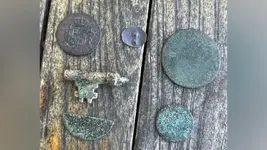
There was a recent article this week in our local paper about a find on Nantucket. Appears a one reales and a "Clipped half penny" coin. Then the article goes on:
"The spot where the coin was found appears to be promising. Nichols previously found a historic penny there — notably, it was clipped to half its value.
"To think on Nantucket, a penny was too much money," the detectorist remarked.

I do think PCGS could have easily contacted me asking if I meant "cut" coin. I do a lot of business with them.

Appreciate your response. Bill
 

Attachments

  • ma-nantucket-metal-detectorist-finds-coin-archaeology-history-4.webp
    ma-nantucket-metal-detectorist-finds-coin-archaeology-history-4.webp
    131.3 KB · Views: 49
Last edited:

Upvote 0
You received this designation because something is not quite right about it.

The typeset is off between lettering and border firstly... it is too close.
Which would be out of line of known error examples and is not a possible error.
OR.... in line with this coin in general.

Also... this could be why it is cut.
At that time someone caught it as a fake and cut and tossed it.
It would not surprise me if you might actually find the other half... IF my theory is correct.

No doubt this is old... and of period.
And still a killer find.
Well done by the way.
I think it is great.
 
Last edited:

Upvote 0
There may be an example out there that debunks what i said....
I am by no means an "expert" in these.... just an observant coin guy. :)
 
Upvote 0
You received this designation because something is not quite right about it.

The typeset is off between lettering and border firstly... it is too close.
Which would be out of line of known error examples and is not a possible error.
OR.... in line with this coin in general.

Also... this could be why it is cut.
At that time someone caught it as a fake and cut and tossed it.
It would not surprise me if you might actually find the other half... IF my theory is correct.

No doubt this is old... and of period.
And still a killer find.
Well done by the way.
I think it is great.
Thanks ARC. I live in Harwich. The known bad town in local Cape Cod history. When I was growing up in Hyannis locals use to tell me stay clear of Harwich.

But I have found more counterfeit coins in this town than anywhere else. Including a brick furnace in deep woods with couple of pewter King George II half penny only feet away.
 
Upvote 0
I'd say it's in the wording. Generally in numismatics a clipped coin is an error coin struck on an incomplete planchet, when the planchet was punched out it was too close to the edge of a strip or an overlapping planchet cutout. Usually a Spanish coin that has been cut down as small change is called cut. If you submitted it as clipped, that puts it into the error category, this coin has been cut after minting, so they considered it faking a clip even though there was no intent to fake a mint error. The following coin is identified as "cut" View attachment 2230410
Sounds like we know better than them. 😂
 
Upvote 0
You received this designation because something is not quite right about it.

The typeset is off between lettering and border firstly... it is too close.
Which would be out of line of known error examples and is not a possible error.
OR.... in line with this coin in general.

Also... this could be why it is cut.
At that time someone caught it as a fake and cut and tossed it.
It would not surprise me if you might actually find the other half... IF my theory is correct.

No doubt this is old... and of period.
And still a killer find.
Well done by the way.
I think it is great.
In the time period of the late 1700s-early 1800s the copper coinage was accepted from Britain/France/Spain as well as what was producing in the US.
Most was accepted on size and the British coinage was 108 half pences to the US 100 cents.
Cutting coinage was done for making change as there was a shortage.
The minting of Half Cents then was introduced.

I can't see them tossing a copper coin if the coin was a counterfeit even. Copper was copper no matter how it was minted.

Tokens were introduced for filling the copper coin currency shortage.
They weren't tossed aside, as they were accepted for their size.
This is where under weight Tokens became an issue.
Also the counterfeit/ Blacksmith Tokens.

The last 2 are worth more today.
 
Upvote 0
In the time period of the late 1700s-early 1800s the copper coinage was accepted from Britain/France/Spain as well as what was producing in the US.
Most was accepted on size and the British coinage was 108 half pences to the US 100 cents.
Cutting coinage was done for making change as there was a shortage.
The minting of Half Cents then was introduced.

I can't see them tossing a copper coin if the coin was a counterfeit even. Copper was copper no matter how it was minted.

Tokens were introduced for filling the copper coin currency shortage.
They weren't tossed aside, as they were accepted for their size.
This is where under weight Tokens became an issue.
Also the counterfeit/ Blacksmith Tokens.

The last 2 are worth more today.
Thank you for your response pepperj.

Yes, copper was where the value stood. Making a counterfeit required equal weight copper. What was the gain for a counterfeiter to fake a Jersey Coppers unless it was lower value metal which mine is not.
 
  • Agree
Reactions: ARC
Upvote 0
In the time period of the late 1700s-early 1800s the copper coinage was accepted from Britain/France/Spain as well as what was producing in the US.
Most was accepted on size and the British coinage was 108 half pences to the US 100 cents.
Cutting coinage was done for making change as there was a shortage.
The minting of Half Cents then was introduced.

I can't see them tossing a copper coin if the coin was a counterfeit even. Copper was copper no matter how it was minted.

Tokens were introduced for filling the copper coin currency shortage.
They weren't tossed aside, as they were accepted for their size.
This is where under weight Tokens became an issue.
Also the counterfeit/ Blacksmith Tokens.

The last 2 are worth more today.
It could have actually been tossed...
by a guy who could have cared less... or was appalled by the fact.
Copper was only worth something to someone who cared. heh

A wealthy merchant would have cared less.
Not like it was silver or gold.
 
Upvote 0
It could have actually been tossed...
by a guy who could have cared less... or was appalled by the fact.
Copper was only worth something to someone who cared. heh

A wealthy merchant would have cared less.
Not like it was silver or gold.
Not sure about the Cape. There were very few wealthy folks here in the 1700's. Sandy soil not good for farming. I find very few Silver coins and forget Gold. Much of the peninsula was still native Americans. But the woods are full of thin copper spoon parts and cast iron pot parts. Copper arrow head now and then as well.
 
Upvote 0
The coin itself is genuine. There were however most likely more counterfeit coins in circulation than genuine during that period. Most people didn't care, a copper was a copper. They were pretty low valued to begin with and by the late 1780's there was a huge copper glut and values kept dropping, they were valued so many coppers to a shilling and it varied from state to state. While Spanish silver coins, other foreign coins, and the New England pine tree and others were certainly cut for small change, the coppers were so low valued to begin with there would be no reason to cut them for small change. I've collected colonial and state coinage for 50 years now, studied everything I could, read as much primary information as I could find and have never heard of coppers being cut for small change. They were so low valued though that they were often used to make other needed items. Need a washer? Drill a hole in a copper. I've seen them made into clock gears, pie crust tools, kid's toys, sight blades for rifles, you name it. That's what most likely happened to this one, the other half may have been made into something needed at the time.
 
Upvote 0
The coin itself is genuine. There were however most likely more counterfeit coins in circulation than genuine during that period. Most people didn't care, a copper was a copper. They were pretty low valued to begin with and by the late 1780's there was a huge copper glut and values kept dropping, they were valued so many coppers to a shilling and it varied from state to state. While Spanish silver coins, other foreign coins, and the New England pine tree and others were certainly cut for small change, the coppers were so low valued to begin with there would be no reason to cut them for small change. I've collected colonial and state coinage for 50 years now, studied everything I could, read as much primary information as I could find and have never heard of coppers being cut for small change. They were so low valued though that they were often used to make other needed items. Need a washer? Drill a hole in a copper. I've seen them made into clock gears, pie crust tools, kid's toys, sight blades for rifles, you name it. That's what most likely happened to this one, the other half may have been made into something needed at the time.
Thanks, I.cutler I'm sure the coin was of no real loss to the owner. I have found coppers with holes drilled in them. Somewhat common on political tokens. Probably worn. Bill
 
Upvote 0

Users who are viewing this thread

Back
Top Bottom