What's new

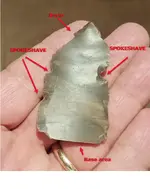
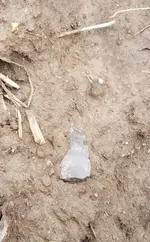
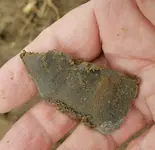
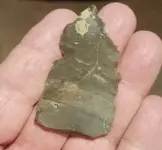
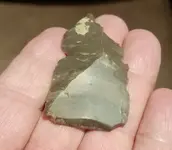
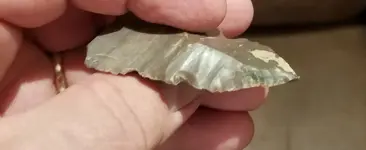
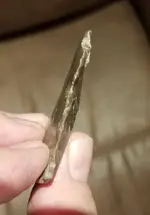
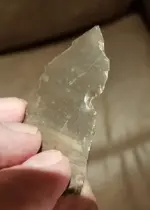
Interesting Harrison County Flint flake scraper

dognose

Silver Member
Joined
Apr 15, 2009
Messages
4,561
Reaction score
13,160
Golden Thread
0
Location
Indiana
Detector(s) used
Fisher F70
Indiana find today 12/13/2020
Includes spokeshaves on each "blade" edge. I term the base the bottom non-knapped edge
BLADE.webp

20201213_185654.webp

20201213_185633.webp

20201213_204328.webp20201213_204408.webp
20201213_204442.webp20201213_204503.webp
20201213_204536.webp
 
Upvote 0
Considering all factors, I'd say Harrison Co. flint is the highest quality in the Eastern US. Gary
 
Harrison County is one of the more widely used flint across the Midwest and eastern united states. It is one of my favorites. I used to find a lot more Harrison County in the 80s and 90s than I do now. But then again once I search a field I tend not to find too many relics in the field in the same season, so those two points may be tied together.

Interesting enough, This flake scraper and another point found the same day, have flake area which appear under magnification to have what some may consider a flake that SHOULD have been removed due to the freeze, thaw, freeze thaw physical weathering.

This manner of weathering occurs when water continually seeps into cracks, freezes and expands, eventually breaking the rock apart.

Some use this as an indicator to determine if a relic is old or not, a basis for authentication.

I have read much about this and tend to agree to a point. However these two relics would indicate this "theory" also has its holes.
 
Harrison County is one of the more widely used flint across the Midwest and eastern united states. It is one of my favorites. I used to find a lot more Harrison County in the 80s and 90s than I do now. But then again once I search a field I tend not to find too many relics in the field in the same season, so those two points may be tied together.

Interesting enough, This flake scraper and another point found the same day, have flake area which appear under magnification to have what some may consider a flake that SHOULD have been removed due to the freeze, thaw, freeze thaw physical weathering.

This manner of weathering occurs when water continually seeps into cracks, freezes and expands, eventually breaking the rock apart.

Some use this as an indicator to determine if a relic is old or not, a basis for authentication.

I have read much about this and tend to agree to a point. However these two relics would indicate this "theory" also has its holes.
Freeze factor does not apply to Florida points,
 
That’s a very formidable lookin tool, ..Thanks, I didn’t know what Harrison col flint looks like,
 
I got back to this thread from the burin thread.
So the burin on this piece was used for engraving? Seems hard to use this tool for that.
I understand that a tool can have many uses, but to try to hold this piece with sharp edges and pressing down with force to engrave seems difficult. Im sure this piece is worn.
These are really all questions to better understand what I'm looking for while out hunting.
Thanks
 
I don't think burins need to be extremely large or long. The tip is the important engraving tool. It could be that harder material needed more swipes.

 

Users who are viewing this thread

Back
Top Bottom