What's new

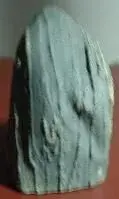
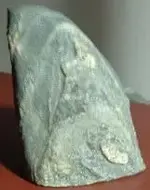
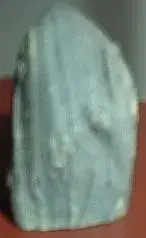
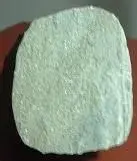
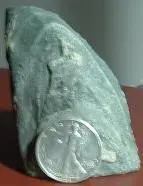
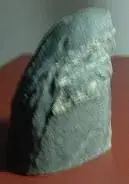
Is this just a rock or Indian made?

Roger Mn.

Silver Member
🥇 Charter Member
Joined
Aug 18, 2007
Messages
3,860
Reaction score
1,939
Golden Thread
3
Location
Rochester,Minnesota
🥇 Banner finds
3
Detector(s) used
Minelab Etrac

Nokta marko simplex
Primary Interest:
Metal Detecting
Found in a gully that gets washed out a lot. Kinda looks like something that was posted awhile ago and can't find it. It had two points and a hole in the center and on the banner.
This looks like slate rock but I'm no expert. roger
 

Attachments

  • DSCF0018.webp
    DSCF0018.webp
    5.4 KB · Views: 330
  • DSCF0019.webp
    DSCF0019.webp
    5.7 KB · Views: 309
  • DSCF0020.webp
    DSCF0020.webp
    7.5 KB · Views: 305
  • DSCF0023.webp
    DSCF0023.webp
    5.2 KB · Views: 311
  • DSCF0024.webp
    DSCF0024.webp
    6.5 KB · Views: 310
  • DSCF0025.webp
    DSCF0025.webp
    6.8 KB · Views: 321
No not Quartz I agree Roger.
It's possible it may be Basalt.

BASALT (buh-salt')
What Type of Rock Is It? Igneous

What Does It Look Like? Basalt is dark gray to black. When exposed to the weather, it may turn yellow or brown on its surface.

How Was It Formed? Basalt is a volcanic rock. It is formed from a magma that is rich in iron and magnesium, and poor in silica (quartz). The magma erupts from a volcano or a fissure (a crack in the earth's surface) as lava. Because the lava cools rather quickly, basalt is fine grained. there is not time enough for the grains to become larger.

This is one of my favorite rock references

http://www.rockhounds.com/rockshop/rockkey/index.html
 
Upvote 0
4-H said:
No not Quartz I agree Roger.
It's possible it may be Basalt. :dontknow:

BASALT (buh-salt')
What Type of Rock Is It? Igneous

What Does It Look Like? Basalt is dark gray to black. When exposed to the weather, it may turn yellow or brown on its surface.

How Was It Formed? Basalt is a volcanic rock. It is formed from a magma that is rich in iron and magnesium, and poor in silica (quartz). The magma erupts from a volcano or a fissure (a crack in the earth's surface) as lava. Because the lava cools rather quickly, basalt is fine grained. there is not time enough for the grains to become larger.

This is one of my favorite rock references

http://www.rockhounds.com/rockshop/rockkey/index.html
I think 4-H has your best answer! :thumbsup: I find them here on the coast mainly around old colonial home sites or ballast rock piles.All have been found here this way so I would think they came from other places and hauled here.But being from underwater volcano's it's possible I guess that they are just old and have always been here.Might be plenty to find after this hurricane Earl is done with us. :D :-\
Take Care,
Pete :hello:
 

Attachments

  • pic090210951[1].webp
    pic090210951[1].webp
    37 KB · Views: 286
  • pic090210952[1].webp
    pic090210952[1].webp
    26.8 KB · Views: 300
Upvote 0
4-H said:
No not Quartz I agree Roger.
It's possible it may be Basalt.

BASALT (buh-salt')
What Type of Rock Is It? Igneous

What Does It Look Like? Basalt is dark gray to black. When exposed to the weather, it may turn yellow or brown on its surface.

How Was It Formed? Basalt is a volcanic rock. It is formed from a magma that is rich in iron and magnesium, and poor in silica (quartz). The magma erupts from a volcano or a fissure (a crack in the earth's surface) as lava. Because the lava cools rather quickly, basalt is fine grained. there is not time enough for the grains to become larger.

This is one of my favorite rock references

http://www.rockhounds.com/rockshop/rockkey/index.html
I would say you have it 4-H. I Read some from the web site. Dark green with pieces of quartz and silica sand.The quartz pieces vary in size. I could go nuts reading about rocks. At least we know it wasn't man made and is just a rock. Thanks.
 
Upvote 0

Users who are viewing this thread

Back
Top Bottom