- Joined
- Jan 27, 2009
- Messages
- 19,212
- Reaction score
- 12,630
- Golden Thread
- 1
- Location
- South East Tennessee on Ga, Ala line
- 🥇 Banner finds
- 1
- Detector(s) used
- Tesoro Conquistador freq shift
Fisher F75
Garrett AT-Pro
Garet carrot
Neodymium magnets
5' Probe
- Primary Interest:
- All Treasure Hunting
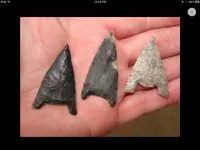
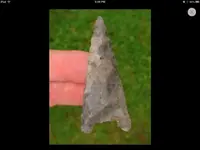
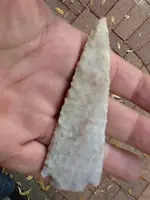
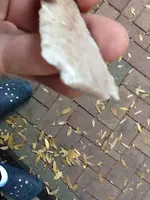
Robert Overstreet Typed this point as a snapped base point. It has been "hotly" (understatement) debated by hunters and collectors since being published. I am going to show 2 examples I found in almost the exact same area if not the same area that he hunted here in Tennessee. Most examples he shows are from Tennessee. One I am showing I dug from a rock shelter the other was from an open air site. In one of his books his description on this type is as follows.
9000 to 6000 bp. Location : Southeastern to Eastern States. Description: A medium to large size,usually serrated blade with long tangs and a base that has been snapped or fractured off. The shoulders are also fractured on some examples. This proves that the fracturing was intentional as in Decatur and other types.
I do not know if it is a true type or just a broken Kirk. The examples I have show the same patina at the break or snap as the rest of the point and seems that the break or snap was done during manufacture. The quality of the knapping is very skilled though the pictures may not show it.
So is it broke or snapped? If snapped why? Feel free to post any like examples and give your opinions on what they were doing 11,000 years ago. Be nice to see other like examples for comparison.
Thanks !!
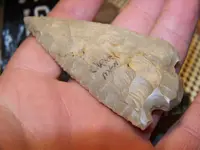
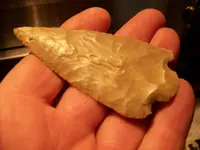
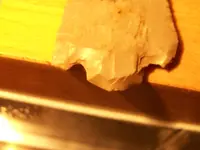
2nd knife/point
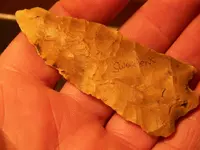
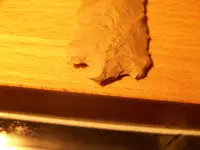
9000 to 6000 bp. Location : Southeastern to Eastern States. Description: A medium to large size,usually serrated blade with long tangs and a base that has been snapped or fractured off. The shoulders are also fractured on some examples. This proves that the fracturing was intentional as in Decatur and other types.
I do not know if it is a true type or just a broken Kirk. The examples I have show the same patina at the break or snap as the rest of the point and seems that the break or snap was done during manufacture. The quality of the knapping is very skilled though the pictures may not show it.
So is it broke or snapped? If snapped why? Feel free to post any like examples and give your opinions on what they were doing 11,000 years ago. Be nice to see other like examples for comparison.
Thanks !!
2nd knife/point
Upvote
0


 That wouldn't make sense now, it surely didn't make sense then. No question on that in my mind. Are the bases a less artistic and more crudely made (by our standards) portion of the artifact, but nonetheless original per it's maker? I think it's possible primarily for two reasons. First, this base type I find on a higher percentage of Kirk blades then on similarly structured other blades. Certainly the stem is a weak point on many types but the 'snapped' base configuration is more common in my experience in Kirk than in other types. Second, many of these blades I find have stem flake patterns that are, or at least to me seem to be, inconsistent with modern damage or ancient use damage. I think they're made that way.