It pays to do a little research before you close your mind to what's already happened when you aren't looking or we're not there when it happened.
Case in point:
Transitional forms between earlier Kirk types and later Newnan styles exist, with some specimens displaying mixed characteristics during the 600-800 year overlap period. These transitional points illustrate the gradual evolution of styles in this classification.
Transition from Kirk Serrated to Newnan
Overview of the Transition
The Kirk Serrated point is recognized as a transitional form between earlier Kirk types and later styles, particularly the Newnan. This transition occurred over a significant period, characterized by overlapping features between the two types.
Characteristics of the Transition
Overlap Period: The transition from Kirk Serrated to Newnan spans approximately 600 to 800 years.
Mixed Features: Some specimens exhibit characteristics of both Kirk Serrated and Newnan, indicating a gradual evolution rather than a sudden change.
Conclusion
The transition from Kirk Serrated to Newnan reflects a gradual evolution in design and function, with evidence of mixed characteristics in some artifacts. This indicates a complex relationship between these two types over time.
Archaeological evidence indicates that both Kirk Serrated and Newnan points were used during overlapping time periods, specifically the Early to Middle Archaic period. This suggests a continuity and evolution in projectile point technology within the same cultural contexts.
The point type that shows a transition between Kirk Serrated and Newnan is referred to as Newkirk. This subtype exhibits characteristics of both point types and represents a transitional form during their overlapping period.
Transitional Point Type
The point type that shows a transition between Kirk Serrated and Newnan is known as Newkirk.
Characteristics of Newkirk Points
Newkirk points exhibit features from both Kirk Serrated and Newnan types, making them unique transitional artifacts. Here are some defining attributes:
Context of Use
Newkirk points are significant as they represent a period of overlap between the Kirk Serrated and Newnan types, indicating that they were used by similar cultures during their respective time frames. This transitional form highlights the evolution of projectile points in the archaeological record.
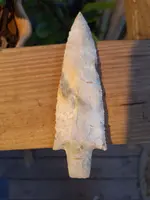
The Newkirk point type is characterized by its triangular shape with a corner notch, typically medium to large in size (1.5 to 4 inches), and features a random flaking pattern. It often has a flattened to elliptical cross-section and may exhibit serrations on the blade.
Newkirk points are variations of Kirk points and are generally considered to be younger than Kirk Serrated points, which date back to the Early to Middle Archaic period. Newnan points, on the other hand, are also from the Mid Archaic period and are less widespread than Kirk points, indicating that while there may be some overlap in usage, they represent different cultural
Newkirk points are indeed variations of Kirk points, specifically associated with the Kirk cluster of projectile points, which includes several styles that are typically triangular and corner-notched. These points reflect the evolution and regional adaptations of the Kirk point types during the Early Archaic period.
Newkirk Points Overview
Newkirk points are indeed variations of Kirk points, which belong to the Kirk cluster of projectile points. This cluster includes several styles that are typically triangular and corner-notched.
Characteristics of Newkirk Points
Shape: Triangular with corner notches.
Edges: Serrated along the edges.
Base: Generally straight or slightly rounded.
Historical Context
Newkirk points reflect the evolution and regional adaptations of Kirk point types during the Early Archaic period. This period is characterized by significant advancements in tool-making techniques and the adaptation of tools to various environments.
Newkirk points and Kirk points were influenced by regional adaptations primarily due to the availability of local materials and environmental conditions. The Kirk points, for example, are associated with the Eastern Seaboard and Gulf Coastal regions, where the design evolved to suit the hunting practices and resources available in those areas.





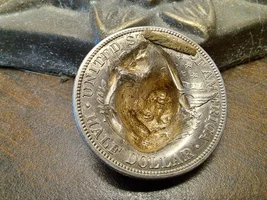


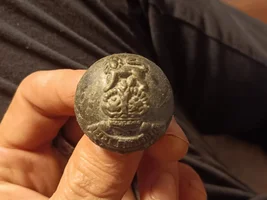
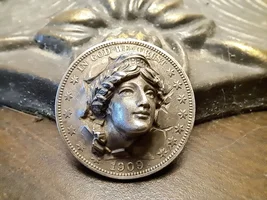
















 Spent a few hours on a old permissions and dug 1 penny 1874 Indian !

