What's new

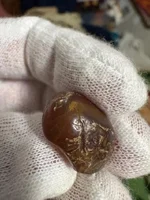
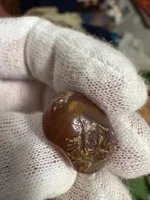
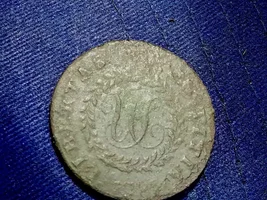
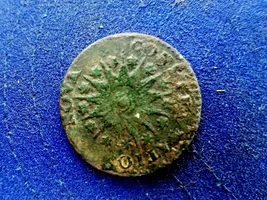
Lincoln City OR, Cascade head Pirate treasure near Salmon River shipwreck, Carnelian Crystal Skull

Pareidolia is not an insult, it is a legitimate psychological phenomenon, it is the brain's attempt to assign meaning to ambiguous images, it happens often when dealing with natural objects like rocks, wood, clouds ect..

Happens to all of us, I walked hundreds of miles of creeks, streams and few rivers hunting artifacts for over 20 years, I found or saw lots of rocks that looked like something, but it was pareidolia and I knew it...
 
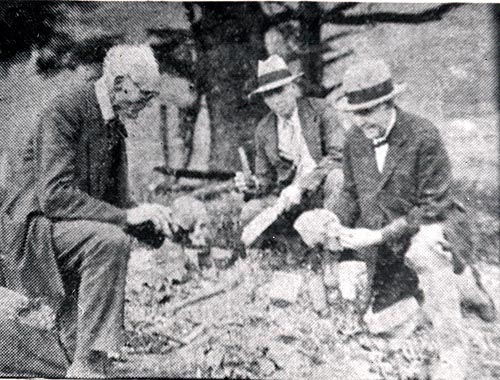
The "8-Foot Pirate Giant" Skeleton (1932): A homesteader named Elmer Calkins dug up three centuries-old skeletons (one of which was remarkably tall) near Cascade Head. Local rumors and media sensationalism quickly transformed these tragic shipwreck survivors into an "8-foot-tall African pirate god" killed by local tribes.
The 1970s "Booty in the Bilge" Hoax: Elmer’s son, Edward Calkins, fueled the fire decades later by launching an expedition to excavate what he claimed was a pirate ship buried in the sand of the Salmon River. He claimed to have a magical metal detector that "only picked up gold and silver." He found absolutely nothing, but the media coverage cemented the pirate myth for a new generation.
 
I was only stating my observation based on your responses on this thread and the one you posted several years ago.

I get it. I’ve been sure of things before that had no public support. First thing to do is seek validation that I’m right and feel a bit disappointed when others don’t agree.

Carry on and enjoy the idea of pirate treasure. It’s a perfectly fine thing to obsess about. Many of us here do that.

Lastly, measure the level of your insults directed at myself compared to what I wrote to you. Had I agreed with you, I think your response would be much different…give that some thought.
 
Last edited:
Even the text you just quoted admits they were real 'shipwreck survivors.' You’re focusing on how 20th-century newspapers exaggerated the words 'pirate god', while missing the point entirely: the core history is real (which predates the discovery). Native oral history accurately predicted the exact location, the exact number of men (3), and the exact physical traits (one being extraordinarily tall) of a 160-year-old burial that scientists later verified. That isn't a 'tourist gimmick'—that is highly accurate historical preservation by indigenous peoples. Which brings us back to the stone. The history isn't just lost; it's physically sitting right here. Nature doesn't carve a cerebellum, parallel baseline alignment, or intentional circular scratching on a curved surface. Instead of relying on a summary meant to minimize the story, look at the physical evidence. The people who survived that wreck left more behind than just their bones. And it appears that yes they were pirates.... yet The native oral tradition explicitly states that the tribe only executed the outsiders because local women began bearing children with distinct African features, proving the giant was a mortal man and not a god.

maybe you will have to download and zoom in on this, but in the area I showed where the face is, still leaves a trace amount of blue pigment dye that the artist used to indicate that man of prominence. now it looks faded, when I first saw this stone I was in disbelief but it was like a renaissance painting of a smiling blue faced man on a jolly raid with a papa smurf style white beard and balding head.... I didn't know about the story then but it all makes sense now. It was soon after it faded I started using gloves. he seemed to be holding a long torch, that another arm was reaching out to light from as a dual image symbolism.

Please keep in mind these stones are slightly porous and the stain has spread over 2-300 years.


1793847046302.webp


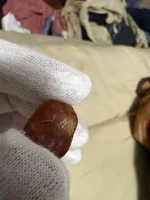
please keep in mind the stone itself is incredibly pure and all the colors are surface level.


1793847039623.webp


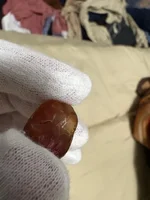
that orange of the flame is not an internal inclusion/ banding of color, it shows through as pure orange and red orange, the yellow is on the surface, as are all the other markings.

1793848298865.webp
 

Attachments

  • 1793846471138.webp
    1793846471138.webp
    63.7 KB · Views: 10
  • 1793848018944.webp
    1793848018944.webp
    41.4 KB · Views: 9
  • 1793848043545.webp
    1793848043545.webp
    41.4 KB · Views: 10
It appears to be fossilized pitch or “Amber” as most people call it. You may be able to verify that by doing specific gravity/hardness tests? Look up “saltwater float test”

“Once amber is cleaned of its outer layers and exposed to air, its appearance—its color, degree of transparency, and surface texture—eventually will change. As a result of the action of oxygen upon the organic material, amber will darken: a clear piece will become yellow; a honey-colored piece will become red, orange-red, or red-brown, and the surface progressively will become more opaque (figure 14).44 Oxidation commences quite quickly and starts at the surface, which is why some amber may appear opaque or dark on its surface and translucent at breaks or when subjected to transmitted light. However, the progress of oxidation is variable and depends on the time of exposure and other factors, such as the amount and duration of exposure to light. In archaeologically recovered amber, the state of the material is dependent upon burial conditions, and the degree of oxidation can vary widely, as the Getty collection reveals. The breakdown of the cortex causes cracking, fissuring, flaking, chipping, and, eventually, fractures. Only a very few ancient pieces retain something of their original appearance,”
 
Last edited:
Supposedly UV Reactive amber has been found on the beaches of Lincoln City, Oregon. Hmm
 
Even the text you just quoted admits they were real 'shipwreck survivors.' You’re focusing on how 20th-century newspapers exaggerated the words 'pirate god', while missing the point entirely: the core history is real. Native oral history accurately predicted the exact location, the exact number of men (3), and the exact physical traits (one being extraordinarily tall) of a 160-year-old burial that scientists later verified. That isn't a 'tourist gimmick'—that is highly accurate historical preservation by indigenous peoples. Which brings us back to the stone. The history isn't just lost; it's physically sitting right here. Nature doesn't carve a cerebellum, or intentional circular scratching on a curved surface. Instead of relying on a summary meant to minimize the story, look at the physical evidence. The people who survived that wreck left more behind than just their bones. You are claiming the legend was made after the bones were found, but the historical archives say otherwise. Decades before Elmer Calkins ever picked up a shovel, 19th-century pioneers had already recorded the indigenous oral history of a 'winged canoe' stranding a crew at the Salmon River, leaving exactly three men behind—one a giant

You are using the failed 1970s search to claim there is no ship, but the North Lincoln County Historical Museum's own archives show that local historians have always treated the Salmon River shipwreck as a genuine historical event. The museum has documented the timeline, and maritime history proves that ships swallowed by changing estuary sands don't just vanish—they get locked beneath the mud. Just because an amateur expedition in the 70s couldn't dig it up doesn't mean it isn't there.

Here a new piece of the puzzle emerges that identifies the sailors another validation of the Indigenous legends. and the story continues on.


You may need to down load and zoom in on this photo, but at certain angles of light a feint remnant of the blue hue is still visible in my mind depicting the African "giant" who at first I saw had a smiling face as if on a jolly raid, with a beard similar to pap smurf, seeing him disintegrate is why I started using the gloves.

1793852280908.webp
 
It appears to be fossilized pitch or “Amber” as most people call it. You may be able to verify that by doing specific gravity/hardness tests? Look up “saltwater float test”

“Once amber is cleaned of its outer layers and exposed to air, its appearance—its color, degree of transparency, and surface texture—eventually will change. As a result of the action of oxygen upon the organic material, amber will darken: a clear piece will become yellow; a honey-colored piece will become red, orange-red, or red-brown, and the surface progressively will become more opaque (figure 14).44 Oxidation commences quite quickly and starts at the surface, which is why some amber may appear opaque or dark on its surface and translucent at breaks or when subjected to transmitted light. However, the progress of oxidation is variable and depends on the time of exposure and other factors, such as the amount and duration of exposure to light. In archaeologically recovered amber, the state of the material is dependent upon burial conditions, and the degree of oxidation can vary widely, as the Getty collection reveals. The breakdown of the cortex causes cracking, fissuring, flaking, chipping, and, eventually, fractures. Only a very few ancient pieces retain something of their original appearance,”

its way too hard and heavy and cold to be amber. Amber does not have the orange and red orange banding of color within it either.

1793852729063.webp

here it is under UV light...


1793852825172.webp


example of UV reactive amber.

1793852853262.webp
 

Attachments

  • 1793852487699.webp
    1793852487699.webp
    63.7 KB · Views: 9
Pareidolia is not an insult, it is a legitimate psychological phenomenon, it is the brain's attempt to assign meaning to ambiguous images, it happens often when dealing with natural objects like rocks, wood, clouds ect..
That is a subjective view when he stated it as " you have pareidolia" I have stones like that, I can make the distinction and would not trouble you or myself if I was not very certain it is not a normal stone. So yes it can be offensive.... if someone claimed to find a gold coin, could show its density and softness, but then just have them hear its just a plastic token from a kids toy replica it would be the same feeling. just like hoping to find an actual expert.... someone who would address the scratches and symmetrical anatomical shape, etc.... its kind of a factual request actually but the tone did mirror the sarcastic condescending response I got.


So I am sorry.... I am passionate... yet not getting much open mindedness... nor explanations from the difference of this stone to any other I have seen of agate and carnelian, or my others in collection.

there are some serious questions I have.... I took some more very close up pictures in diffused light, I will have them shared soon.
 
Last edited:
now lets look at the most preserved image..

The pirate captain in his long brimmed orange hat, with long beard, and the ghostly dreadlock like spirit that follows him to the lake of fire.


1793862201208.webp


I am going to start with a banger to try to keep the attention.... these 2 divots of the same size right next to each other that would be the anchor point for the top of the hat, next to the long gash that anchored the long brim of the hat. holes like that take careful slow grinding to achieve.... if that were an impact it would have shattered the stone.

1793862260930.webp


1793862024909.webp


under certain light conditions that orange brim, quickly becomes a dark stain. its overal shape follows the gash, showing they are related, and that a natural coloring would not care at all if it was worn away naturally to that shape.

1793862229635.webp


Change the light again and the painterly effects are seen of layered colors, shadowy areas under the hat, defining outlines, and peachy cheeks and nose. the white beard brakes up the dark areas of the hat and his own body. interestingly the crack in the side of the stone refracts the light to appear as if they are hovering over the lake of fire.

1793862049900.webp


abruptly when this color reaches the area of the ghostly figure, it stops. and full translucency is visible. a sharp line divides the 2 areas.


1793862110452.webp


1793862128981.webp
1793862163828.webp
1793862178635.webp


in back light the silhouette of captains hat is seen, and the faded streak of the long beard, and the sharp contrast of where that gash divides the dreaded beard of the ghostly figure.


1793862072055.webp


change the angle of light again and it shows some of its bright orange hues

1793862001528.webp


and then I am adding this new photo in that shows the bluish gray area over the face of the African Giant. the only area like it.... very unusual and rare to have blue in a natural red/orange carnelian agate. Notice again the round wheels with concentric inner hubs
1793863372506.webp
 

Attachments

  • 1793862288312.webp
    1793862288312.webp
    71.5 KB · Views: 11
  • 1793858942964.webp
    1793858942964.webp
    96.2 KB · Views: 8
  • 1793859052946.webp
    1793859052946.webp
    52.2 KB · Views: 8
  • 1793859101299.webp
    1793859101299.webp
    52.2 KB · Views: 6
  • 1793859228740.webp
    1793859228740.webp
    75.7 KB · Views: 9
  • 1793859436994.webp
    1793859436994.webp
    69.6 KB · Views: 11
It’s a carnelian pebble that’s been knocked around against other rocks in the surf. Totally natural and not worked by a human hand. Sorry, but it is what it is. The fact that you are seeing anything beyond that is pareidolia.
 
Sorry sir, taking new pictures doesn't change it, it is still case of pareidolia.


Example, this is just a rock unaltered by man, but some see a face.

1000034941.webp


More rocks unaltered by man

1000034946.webp


1000034943.webp


1000034945.webp


1000034944.webp


Natural drift wood, not a duck carving.

1000034947.webp
 
It’s a carnelian pebble that’s been knocked around against other rocks in the surf. Totally natural and not worked by a human hand. Sorry, but it is what it is. The fact that you are seeing anything beyond that is pareidolia.
knocking around in the ocean is not going to form 2 deep impressions like shown here: and the gash aligning with the colors of orange is odds that cant be calculated . Making a gash like that on hard rounded rock is very difficult, not some random scrape or impact


1793892423421.webp
 
Sorry sir, taking new pictures doesn't change it, it is still case of pareidolia.


I think you are mistaken, this has tooling marks, those impressions do not happen by accident, a abraded gash on a hard round surface also does not happen with an impact. and it aligning with the orange color is astronomically rare.... all the pigments are on the surface, not deeply veined inclusionns, but filled in the recessed of circular scratch marks... You wont find those on natural stones.... notice none of the face shapes you sent were actually on symmetrical anatomically represented forms, but just a small part of an image on bigger stone....

this is form, workmanship and art. all in one. Sadly much deteriorated from 2-300 years in the ocean... but still important to the history of Lincoln city non the less.

1793892687656.webp
 
These features you are seeing are so far from recognizable to me that it is laughable. I don’t mean that in an offensive way, I just want you to add one more vote “I see nothing that your seeing”.

With that said, I’ll admit I have a small case of Pareidolia myself. I spent a few evenings last week staring at goulish faces on my dads camo shirt. They almost looked intentionally placed. I know it’s just my nature to see that. Still I see no figures or faces or geometrically unique features on that stone - ZERO. I have two eyes as does everyone else. Sorry bud.
 
if you have to say "i dont mean to be offensive" you know it is.... I will stop there.
 
if you have to say "i dont mean to be offensive" you know it is.... I will stop there.
I certainly can be offensive, but it’s not in my nature and it’s against the rules here. I’ve not thrown a single insult your way.

One direct yes/no question that you obviously do not have to answer.

Do you acknowledge that you see things that others clearly do not?
 
There was nothing offense or against the rules in Tesorodeoro comment.
 
nice carnelians, I have thousands of those picked up along the coast... and yes, a lot of worn smooth just like yours... unusual, but not exceptional.
 

Users who are viewing this thread

Back
Top Bottom