LincolnCityFinder
Jr. Member
- #1
Thread Owner
Way back in the mid-late 80's my family frequently spent weeks and holidays at a beach house in Lincoln city Oregon, about half a mile from the infamous Cascade head landmark. My dad at the time told me that the cave behind the head was a pirate cave. we would take walks to time low tides to get behind it and explore. Now it was not the deepest cave, as child I wondered how anyone could live there with the waves crashing near by but it was an exciting destination, as along the way were star fish and sea creatures and cool rock formations. Along the way we would collect agates, shells and cool pieces of drift wood. We stored the agates in a jar on the fireplace mantle. Later I would learn of the actual histories of the Salmon River shipwreck, and the native lore that can be found at sites like this one: https://www.beachconnection.net/news/skelet021914_809.php AS the story goes a ship was found, and so were 3 skeltons in a native millage shell pile. One of them being about 8' tall that colloborated the native American legend of a giant "winged Canoe" that wrecked on the shore.... most of the crew ventured into the wilderness never to be seen again, but for a time 3 men stayed back to protect the claim. The large black man was said to have been worhiped as a 'god' until something happened that caused the tribe to kill all three. By some miracle I think that story was preserved in a stone.

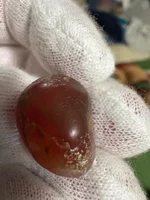
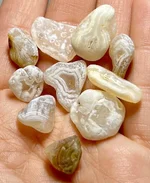
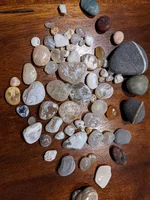
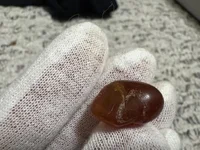
We left Oregon and in my late high school years in the 90's I found the jar of agates and began to examine them closely. One stood out almost immediately. It had a high gloss polish and symetrically smooth shape unlike the other stones that were rough, hazy and amorous. In this photo it is an example compared to other natural stone (not the exact ones in the jar, I am not sure what happened to those) even while dry it still has more polished shine than stones when wet and its polish is not achievable in natural ocean tumbled conditions. If anything the ocean added a secondary finish to the stone.


Then I noticed the shape was not just smooth and polished but actually had symmetrical anatomical features resembling an archaic skull form. the forehead comes to a point so that the sides of the face lead to a bulbous cranial at the back, at the jaw line it is carved. There are 2 bulbous parts of the base of the skull and a faintly carved cerebellum at the back of it. The underside is left more natural as this was not necessary to polish finely, it being more natural than the smooth parts of the rest of it is another indication it was worked. There is also a scratch on the bottom that may be a signature.
symmetrical side of face, crude jaw line, and bulbous back end.

undercuts are difficult, but this is showing 2 bulbous parts of the under side of a skull and how the jaw line was cut out. Also a strange scratch mark that does not look natural as that would be very hard to scratch a stone like this without breaking it. If it were in an aggregate slurry it would have scratched it all over losing the high polish. I think it may have been a makers mark.

back of skull has cerebulum carved in it.

bottom view showing symmetrical side grinding marks to form the jaw line, and chin left natural (possibly to create a lava effect when looking though the stone in light as a lake of fire.... more to show)
if the stone had been ocean tumbled to be perfectly round, then so would have this side been tumbled smooth as well, but this look like someone took a file or stick with a cloth of aggregate to create the indents for the jawline.

Jaw line and bulbous skull from side view. You can see the slanted face and back cranium, and jaw.

round and highly polished, some parts are super smooth... but others have carving marks and divots that seem to have held and some are still holding pigments or binder. Note all the white specs are surface level and not seen in the bright lights as inclusions in the stone.

marks like this should have crushed the stone if was from natural catastrophic event. These to me are gouges using some kind of rotary spindle to create grooves for a binding medium. To get deep cuts in a stone like this is nearly impossible without it being carefully worked. I am guessing the artist used techniques to dye the stone in certain areas but other colors would need these groves to hold a binder to attach the pigments to. The stone itself has different surface conditions all over, from super smooth polish, to divots, gouges, scratches and the chin looking more natural.

different section have different treatments such as the more natural parts on the bottom, perfectly round parts, some have pitts and gouges, and here we can see fine circular scratches as if hand lapped on a plate with aggregate. Smoking gun evidence right here as the top of the skull had no pictures on it and was polished smooth. again notice all the dark spots are surface level pigments trapped in the divots.

Then I began to make out images.... of pirates! the first was the captain in his orange brimmed hat followed by a specter. the divots on the other side of the face still have some kind of white medium in them. the images on the side seem more on the surface level dying and diffusion of color from the porous nature of the stone. but a large gouge and divots make up the shape of the orange hat.


because of the porous nature of the stone the orange has seemed to diffuse out more. also notice how different lights bring out different aspects of the pigments used.

in back light the 2 images seem to overlap but the specter is dominant it creates a sharp edge to where the dark surface level stain ends and it begins, yet the white of the specture is all surface level itself.


there seems to be a crack in the stone, I thought might be an accident the artist had to work around but what it does is refract the light differently so that it looks like the 2 characters are above the lake of fire.... which is why the chin may have been left more natural as to give it a lava like effect looking through it. So it make have been made by a true master that could have done that.

the other side is a more detailed scene.... this is an older photo graph and if you look closely at the face can see hints of the bluish tint it once had. this face was once like renaissance painted detailed. of a blue/ black man. possibly the giant of legend? The issue is soon after I was handling it much of that detail went away. the circles are actual scratches which are so not natural. likely the wheel hubs of a cannon.

at other angles I can make out the inner beams of a large ship and cannon galley. the blue man is holding a stick with fire at the end which is lighting another torch from a hand rising up.all the white parts are some kind of medium left in the divots which the colors have washed out after 2-3-400? years in the ocean.

the color has been diffusing out but the remnants are there. a powerful image

I am not too sure about this one but it looks like a man is aiming or working the cannon.

at the back is a skull n crossbones with a wave washing over it

there is even evidence that it had details of teeth left showing too

note the stone itself is very pure for its color being orange and yellow banded, all the images are on the surface level, all the dark spots are not deep inclusions but surface level

what ever was on the front is completely lost, but the pigments in the divots show the underlay techniques of something that was there.

So that I think is a mountain of evidence to sum it up, is symmetrical, highly polished, showing different surface techniques, pigments/ binders left in divots, colors on the surface, scratch marks, deep gouges, circular scratches, images of themed pirates, found near a pirate cave/ shipwreck.... I think it is nothing short of a miracle this was found and seen, and telling of a legendary story near forgotten. I have no doubt in my mind... the only question is what to do next with it. As it is likely very unique and worn.
It has been nearly 30 years since I discovered this and its been something I want to put to rest as I do not want it to get lost to history in some drawer but I have been having issues with people just not knowing what to think of it. Its unique, worn, and the story is almost lost again as the historian I talked to did not even know there was once a cave at Cascade head.
Thank you for your time and interest.
Sincerely
Lincoln city finder
We left Oregon and in my late high school years in the 90's I found the jar of agates and began to examine them closely. One stood out almost immediately. It had a high gloss polish and symetrically smooth shape unlike the other stones that were rough, hazy and amorous. In this photo it is an example compared to other natural stone (not the exact ones in the jar, I am not sure what happened to those) even while dry it still has more polished shine than stones when wet and its polish is not achievable in natural ocean tumbled conditions. If anything the ocean added a secondary finish to the stone.
Then I noticed the shape was not just smooth and polished but actually had symmetrical anatomical features resembling an archaic skull form. the forehead comes to a point so that the sides of the face lead to a bulbous cranial at the back, at the jaw line it is carved. There are 2 bulbous parts of the base of the skull and a faintly carved cerebellum at the back of it. The underside is left more natural as this was not necessary to polish finely, it being more natural than the smooth parts of the rest of it is another indication it was worked. There is also a scratch on the bottom that may be a signature.
symmetrical side of face, crude jaw line, and bulbous back end.
undercuts are difficult, but this is showing 2 bulbous parts of the under side of a skull and how the jaw line was cut out. Also a strange scratch mark that does not look natural as that would be very hard to scratch a stone like this without breaking it. If it were in an aggregate slurry it would have scratched it all over losing the high polish. I think it may have been a makers mark.
back of skull has cerebulum carved in it.
bottom view showing symmetrical side grinding marks to form the jaw line, and chin left natural (possibly to create a lava effect when looking though the stone in light as a lake of fire.... more to show)
if the stone had been ocean tumbled to be perfectly round, then so would have this side been tumbled smooth as well, but this look like someone took a file or stick with a cloth of aggregate to create the indents for the jawline.
Jaw line and bulbous skull from side view. You can see the slanted face and back cranium, and jaw.
round and highly polished, some parts are super smooth... but others have carving marks and divots that seem to have held and some are still holding pigments or binder. Note all the white specs are surface level and not seen in the bright lights as inclusions in the stone.
marks like this should have crushed the stone if was from natural catastrophic event. These to me are gouges using some kind of rotary spindle to create grooves for a binding medium. To get deep cuts in a stone like this is nearly impossible without it being carefully worked. I am guessing the artist used techniques to dye the stone in certain areas but other colors would need these groves to hold a binder to attach the pigments to. The stone itself has different surface conditions all over, from super smooth polish, to divots, gouges, scratches and the chin looking more natural.
different section have different treatments such as the more natural parts on the bottom, perfectly round parts, some have pitts and gouges, and here we can see fine circular scratches as if hand lapped on a plate with aggregate. Smoking gun evidence right here as the top of the skull had no pictures on it and was polished smooth. again notice all the dark spots are surface level pigments trapped in the divots.
Then I began to make out images.... of pirates! the first was the captain in his orange brimmed hat followed by a specter. the divots on the other side of the face still have some kind of white medium in them. the images on the side seem more on the surface level dying and diffusion of color from the porous nature of the stone. but a large gouge and divots make up the shape of the orange hat.
because of the porous nature of the stone the orange has seemed to diffuse out more. also notice how different lights bring out different aspects of the pigments used.
in back light the 2 images seem to overlap but the specter is dominant it creates a sharp edge to where the dark surface level stain ends and it begins, yet the white of the specture is all surface level itself.
there seems to be a crack in the stone, I thought might be an accident the artist had to work around but what it does is refract the light differently so that it looks like the 2 characters are above the lake of fire.... which is why the chin may have been left more natural as to give it a lava like effect looking through it. So it make have been made by a true master that could have done that.
the other side is a more detailed scene.... this is an older photo graph and if you look closely at the face can see hints of the bluish tint it once had. this face was once like renaissance painted detailed. of a blue/ black man. possibly the giant of legend? The issue is soon after I was handling it much of that detail went away. the circles are actual scratches which are so not natural. likely the wheel hubs of a cannon.
at other angles I can make out the inner beams of a large ship and cannon galley. the blue man is holding a stick with fire at the end which is lighting another torch from a hand rising up.all the white parts are some kind of medium left in the divots which the colors have washed out after 2-3-400? years in the ocean.
the color has been diffusing out but the remnants are there. a powerful image
I am not too sure about this one but it looks like a man is aiming or working the cannon.
at the back is a skull n crossbones with a wave washing over it
there is even evidence that it had details of teeth left showing too
note the stone itself is very pure for its color being orange and yellow banded, all the images are on the surface level, all the dark spots are not deep inclusions but surface level
what ever was on the front is completely lost, but the pigments in the divots show the underlay techniques of something that was there.
So that I think is a mountain of evidence to sum it up, is symmetrical, highly polished, showing different surface techniques, pigments/ binders left in divots, colors on the surface, scratch marks, deep gouges, circular scratches, images of themed pirates, found near a pirate cave/ shipwreck.... I think it is nothing short of a miracle this was found and seen, and telling of a legendary story near forgotten. I have no doubt in my mind... the only question is what to do next with it. As it is likely very unique and worn.
It has been nearly 30 years since I discovered this and its been something I want to put to rest as I do not want it to get lost to history in some drawer but I have been having issues with people just not knowing what to think of it. Its unique, worn, and the story is almost lost again as the historian I talked to did not even know there was once a cave at Cascade head.
Thank you for your time and interest.
Sincerely
Lincoln city finder
Attachments
Last edited: