Agreed. On every online forum I visit.Just my two cents. There is a great deal of Dunning-Kruger Effects going on in internet venues.
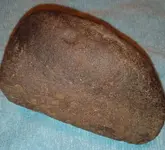
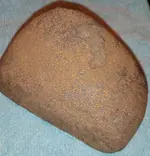
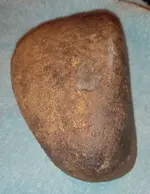
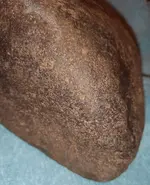
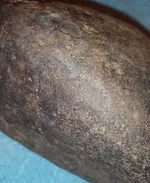
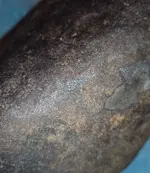
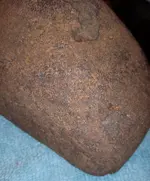
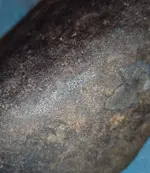
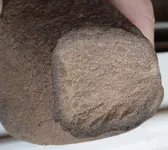
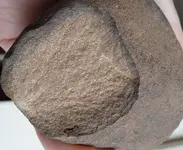
i apologies for my behaviour. you are a vetran meteorite expert and i should accept your feedback.Fusion crust: NO
Ablation face: NO
Shock features: NO
Metallic flecks: NO
Rusting: NO
Regmaglypts: NO
Melt features: NO
Evidence of flight orientation: NO
Chondritic features: NO
Magnetic attraction: UNKNOWN
your wright, but it is also very difficult to indentify a possible meteorite from photo's. because i see allot of interesting inculsions in my rock but would need good macro photo's to show it well wich i can't do with my phone.Red-Coat has collected and curated meteorites for decades. As have I. Your “local natural history museum depot” is highly unlikely to produce a more experienced opinion than the one offered by Red-Coat. I know that, because I know Red-Coat and the level of knowledge he brings to the subject of meteorites. Your very best bet, the winning bet, was to accept what the man told you. Your likes or dislikes of an opinion, has nothing to do with an ID, since you cannot ID meteorites yourself. The presence of the spherical inclusions is absolutely not proof they are chondrules, so why ID them as such? You know you are not an expert in meteoritics or planetary science, so why not admit that is the case and learn from highly experienced individuals?
Just my two cents. There is a great deal of Dunning-Kruger Effects going on in internet venues.
Yes, they look a lot like large pebbles.It looks like water worn magnetite. The tests are easy to ID it. Common in many places.
https://www.jewelerstoolsmall.com/Gem-Identification-Light-224.html
again, my stone does not atract a magnet and magnetite does very strongly. So it is not a magnetite pebble. and my stone has allot of round inclusions which magnetite does not have.Yes, they look a lot like large pebbles.


no man no, who said that, if you go to the desert, especially deserts with hard calcite spots and lesser sand, I can guarantee that you will find one, deserts are a hoard for meteorites with all the color contrast, the meteorites are of course dark and you can pick them up with a magnet, been there done thatHello everyone, well i realy think now i will never find a meteorite. i have hit a piece of the rock and it turnes out to be a plain weathered quarzite or sandstone. so a nice meteorwrong. my sincere apologys for all my stupid behaviour about thinking i can find a meteorite.![]()
it is not a meteorite see last post. and i have picked up before the photo and put it back when thought it could be.In situ like where it landed after rocketing through our atmosphere at who knows how fast 100s of mph and that is its impact on soft sand!?
Maybe im reading it wrong and its meant to mean different but whichever, that looks like its been placed there. Are they ever found on the surface on sand like that? Curious to know.
Are they ever found on the surface on sand like that? Curious to know.
Ok. Thanks for answering that. 👍Yes, under particular circumstances.
Meteorites impacting into sandy areas such as deserts, or even beaches, can be subsequently exposed on the surface as a result of wind action on the sand. Sometimes that can be thousands of years later.

Meteorites impacting into water can also be exposed on the surface of dried-up lake beds, or when impacting into deep snow or ice, if it subsequently melts.
Other than that, surface finds are usually (obviously) fragmentary stones, arising from detonation of fragile meteorites during atmospheric descent and the fragments landing at lower speeds as a shower.

Very occasionally, surface finds can arise if a meteorite hits something else before it hits the ground, such as a tree, building, or whatever.