What's new

My Oldest Coin 1720 Copper

smokedaddy

Sr. Member
Joined
Mar 4, 2008
Messages
329
Reaction score
104
Golden Thread
0
Location
SE Pennsylvania
Detector(s) used
Whites XLT Spectrum / Fisher 1266X / Minelab Sovereign Elite/ Garrett AT/Pro
Primary Interest:
Metal Detecting
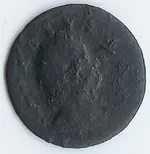
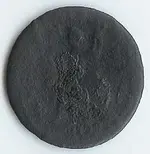
Out field hunting and decided to dig a solid but very weak signal. I had to dig to china to get it. My oldest copper to date. 1720 George I . This one was about 15" deep. It had black oxidation on it rather than the usual green patina. Anyway thought I would share it with you. Hard to see the date in the photo. I had to tweak it in the sunlight to see it myself.
 

Attachments

  • KING_G_Front.webp
    KING_G_Front.webp
    7.2 KB · Views: 914
  • King_G_Reverse.webp
    King_G_Reverse.webp
    8.2 KB · Views: 922
Upvote 0
Congrats smokedaddy! Very nice old coin. Shame PA soil is so unforgiving on old copper.
 
SWEEEETT!!!! Did ya try heated hydrogen peroxide? Works great on copper. I use it on all my copper coins.
 
Congrats on the copper...Did you get a VDI on that or was it beyond the discrimination range?
 
Were you using the XLT? 15 inches is deeeeep!!!! If you were, what program were you using. I dont think I could get my DFX to go that deep. Is it possible you were detecting a larger signal deeper and coincidentally got the coin above it? No matter how you slice it that is one awesome coin find. Congratulations. :thumbsup: :thumbsup:
 
He said he dug 14 inches, so that must be where the coin was. He also said it was a week signal, its called good hunting practices.

Nice work :thumbsup:

Keep @ it and HH!!
 
I am curious... I had a copper cleaned by one of the guys on here.. he said it is a King GeorgeII no date visable.. what is the range on dates for these??

Also, depth wise,,,, I did get my xlt to go 8 1/2-9 1/2 inches for a size 7 ladies gold wedding band.... and about a foot over.... an 1868 IH same depth..... but more than that....... idk.. I hit 2 LC's a few yrs back... at about that same depth.... about a foot apart.... the signal was good enuf that I dug.... but very very broke up.... cant imagine goin 6 inches more.... would like to know what program and settings he used
 
Hi folks, Here is how it happened, I was using the Spectrum XLT. Ramped up Relic Mode. No Tone ID. Icons off. Head phones. I was hunting an open field near a 1740 grist mill. The soil color was black and damp from recent rain. While searching, I always keep a low threshold. At the target, the threshold jumped slightly back and forth over the target. The sound was solid though, not broken. The VDI was jumping from +30 to +60. The signal graph was only showing approximately 1/8" verticle. The XLT was trying its @$$ off to lock on. The depth was reading 8". I figured that it was something 8" but very small. This coin was down at least 15" give or take. After I removed about 8" of soil and no target, I checked the hole again and lost the signal. I knew that something had to be there. I kept digging and checking the dug dirt. I finally observed what I call the wrapped present. Many of you seasoned people will know what I mean by this, The egg shaped compressed ball of dirt that is holding the prize. Inside of that was the coin. I have found other large cents in this area that were more shallow but they had that traditional green patina. I think that this coin may have been deep enough to evade the depth of the chemicals that normally cause the green stuff. I think that every detector has it's VDI and depth reading limitations, but this find was found first by the threshold jump only. Hope this helps, thats how it went down.
 
smokedaddy said:
Hi folks, Here is how it happened, I was using the Spectrum XLT. Ramped up Relic Mode. No Tone ID. Icons off. Head phones. I was hunting an open field near a 1740 grist mill. The soil color was black and damp from recent rain. While searching, I always keep a low threshold. At the target, the threshold jumped slightly back and forth over the target. The sound was solid though, not broken. The VDI was jumping from +30 to +60. The signal graph was only showing approximately 1/8" verticle. The XLT was trying its @$$ off to lock on. The depth was reading 8". I figured that it was something 8" but very small. This coin was down at least 15" give or take. After I removed about 8" of soil and no target, I checked the hole again and lost the signal. I knew that something had to be there. I kept digging and checking the dug dirt. I finally observed what I call the wrapped present. Many of you seasoned people will know what I mean by this, The egg shaped compressed ball of dirt that is holding the prize. Inside of that was the coin. I have found other large cents in this area that were more shallow but they had that traditional green patina. I think that this coin may have been deep enough to evade the depth of the chemicals that normally cause the green stuff. I think that every detector has it's VDI and depth reading limitations, but this find was found first by the threshold jump only. Hope this helps, thats how it went down.

I am very impressed by this claim & wonder whether I should swap my Cortes for your machine. Soil built up varies from place to place & depends on many different variables including tipping. So my question is how do you explain a 1720 coin was so deep? If found in the UK, it would be below the plough soil & within an archaeological layer which we would break to Law to dig in. This is at a depth which Celtic coins have laid undisturbed for 2000 years. 10" - I could understand.
 
Saidly I forgot to add. How ever deep it was, its a great find & even better when its your oldest. Always nice to get a first & oldest at the same time. The 'dump' issue Geo I are hard to find in the UK & harder to find one with a date. Yours is clearly 1720 which is a added bonus.

CONGRATS!
 
Crusader- I am very happy that you are impressed by my claim. As far as swapping your cortez for my machine, maybe you should, Whites have a very good reputation for deep recoveries. You asked, "how do I explain a 1720 coin so deep", I just did and beyond the scope of my text, I would be adding to something that is simply not there. I really cannot explain how it got there or the depth. You do not have to believe me, that is your decision. But I was asked how it was found and I explained it as fact.

PS. If you get some free time, come on over to the states, we can did as deep as we want without breaking the law.
Enough Said.
 
Wow....electrolysis for a few hours. :thumbsup:
 
First off way to freakin go!!!!!!! Second we do have all kinds of different soil types in different locations! I have found regular 80's and 90's clad at 6" and I thought that was deep for fairly new clad!!!!
 
awesome coin.
As far as the depth goes i believe it may be possible to hit a larger copper at that depth. I myself use a Whites IDX Pro which is a much more inferror machine then the XLT and late last year i was detecting a old mill and had a deep sounding dime/quarter fluxuating hit. I dug down and some thing happend to me, i lost the signal. I kept diggin and at about 10" i dug out a 1797 spamish 1/2 reale. I still dont understand how my machine hit such a small target so deep down. The only way i explain it is that even though the target is deep and small the halo around it must be large enough to spit out a faint reading.
Good find again
 
Great going!! If only the coppers would act like silver in the soil!!!!!!!!
 
I can remember a few times I've tried to dig a target and then lost the signal. Sometimes when this happens...especially if I'm in a non manicured lawn area like a farm field...I'll just dig down another 5 or 6 inches to see if i can relocate the signal. This has worked several times for me sometimes up to 10 or 11 inches deep. Some of the deeper signals tend to have a nice halo effect around them that essentially makes them seem more shallow and makes them more easily detectable. Once again, nice find. I love the old colonial coppers.

 
Wow I missed this post. That is a great find. The depth is awesome. KGl is a great find in the states as far as old is concerned. Congrats on your find.


 
Hi nice find....usually when I loose a target it normally means it has just dropped deeper into the hole you have dug :P the deepest standard detector on the market over here is the Minelab Explorer, I have heard these have recovered copper coins at a depth of 12 inches :icon_study:
 

Users who are viewing this thread

Back
Top Bottom