What's new

Natural or Worked Artifact?

Joined
Mar 22, 2019
Messages
17
Reaction score
40
Golden Thread
0
Primary Interest:
All Treasure Hunting
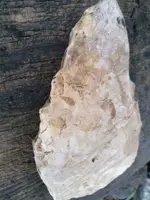
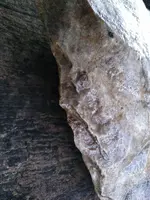
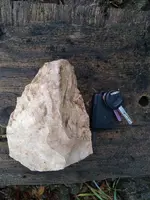
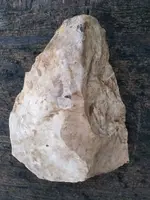
Found this on the surface in an area with flakes, chips etc. I'm purposely trying to avoid exposing it's size for now until I get an idea if it's been worked by human or mother nature.
Thanks in advance for any help/opinions.
 

Attachments
  • IMG_20190407_193715212.webp
    IMG_20190407_193715212.webp
    1.3 MB · Views: 117
  • IMG_20190407_193842130.webp
    IMG_20190407_193842130.webp
    1.2 MB · Views: 97
  • IMG_20190407_193849567.webp
    IMG_20190407_193849567.webp
    2.8 MB · Views: 91
Upvote 0
Looks like a chert artifact cobble that was disgarded.......
 
Well great now I gotta add chert cobble to my list of things to learn :icon_thumright:
Thanks for responding.

It seems to be worked more than typical cobble. I guess it's hard to tell from my pics but both sides are knapped/serated.
 

Attachments

  • IMG_20190407_194250381.webp
    IMG_20190407_194250381.webp
    2.7 MB · Views: 85
Last edited:
Looks like it was hit by a knapper a couple of times, so an artifact. If the name Austin is an indication of where you are hunting, you'll find stuff like that basically anywhere there is exposed dirt. There is so much chert laying around that ancient people just picked up stuff, whacked off a couple of flakes and dropped stuff.

In the middle picture of the first post, that edge is usually a good sign. Knappers make that zig-zag edge like that, and that creates nice places to hit on the next pass of flaking.
​
 
Looks like it was hit by a knapper a couple of times, so an artifact. If the name Austin is an indication of where you are hunting, you'll find stuff like that basically anywhere there is exposed dirt. There is so much chert laying around that ancient people just picked up stuff, whacked off a couple of flakes and dropped stuff.

In the middle picture of the first post, that edge is usually a good sign. Knappers make that zig-zag edge like that, and that creates nice places to hit on the next pass of flaking.
​

Yes, Austin area is correct. The thing that intrigued me with this piece is it's sheer size...it's rather huge. Do you think the original intent was a large scraper or maybe axe?
 
Yes, Austin area is correct. The thing that intrigued me with this piece is it's sheer size...it's rather huge. Do you think the original intent was a large scraper or maybe axe?

My guess is that it is a quarry blank that they whacked and then dropped for some reason. If they could have thinned it, it would have made a great biface.

It could have also been a flake core, which is probably similar to a blank in that it didn't see a lot of use. Flake cores are common down there as a starting point for making knives and points. I have one that produced some 5 or 6 inch flakes, and the leftover piece is better than 10" long and about 8" wide. (Aside from the rounded edges, it's almost the size of a piece of normal printer paper.)
 

Users who are viewing this thread

Back
Top Bottom