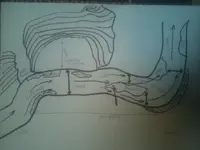
Gaining knowledge of basic hydrology will help determine a starting point on you waterway. Placer gold is gold which has been moved from it's origin location by weather, erosion, gravity or water. In your case these deposits are known as alluvial (deposited by water movement). Eluvial gold is gold deposited by erosion or disintegration from it's primary source (anything but water, wind gravity etc.). Even though gold is heavier than water with enough hydraulic force it can be moved down stream form it's origin. When the hydraulic force needed to move each piece of gold becomes less than it's weight the gold drops out of the flow of water. Stand back and look at the whole picture. The sand or gravel bar you speak of was created in the same way. Look for anyplace on your river/creek where the water slows or eddies (swirls around an object) large boulders, tree roots, etc. You talk about working the outside bend of the river but then talk about digging in the sand bar. Usually on a bend in a creek or river the bars are on the inside of the bend where the water slows. Since water flow/pressure is ever changing the material it moves is dispersed in layers and streaks. The heavier materials (and gold) drop out according to their weight. The proverbial "Pay Streak" is what your looking for so sampling as it has been explained above is how you find one. There most likely will be many. Typically the heavier larger gold would drop out first with the lighter smaller gold further down the flow of water. But high water events such as floods caused by significant rainfall and seasonal snow melt can cause gold to be just about anywhere. Now that I've probably completely confused you...... Welcome to the T-Net, and there's nothing better to cure the "Gold Fever" than getting wet and dirty. Good Luck !