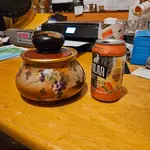
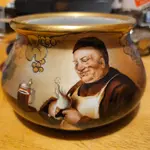
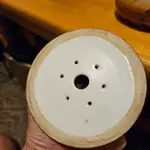
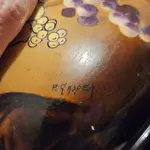
That’s a nice-looking tobacco humidor. You didn’t say how much you already know, but Pickard China was (still is) an American company, founded in 1893 in Edgerton, WI by Wilder Austin Pickard. At the turn of the 20th century, they moved to Chicago, IL and had a business model based on importing china blanks (vases, plates, bowls, tea services etc) from potteries in Limoges, France and employing decorators from the Art Institute of Chicago and all over Europe to hand finish them.
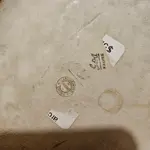
The artist for yours was Paul G. Gasper who emigrated to America from Germany in 1891 and began working for Pickard in 1905, helping to establish the Ravenswood studio in Chicago. The brown ‘Pickard’ mark on your piece was used at Ravenswood between 1905-1910. Your piece also has the ‘GDA France’ mark for Gerard, Dufraisseix & Abbot of Limoges, who made the undecorated blank.
Early Pickard pieces are highly collectible, but the most valued are those in art nouveau and later art deco styles. Nevertheless, $6 was a great price.
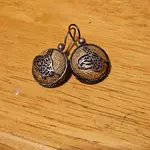
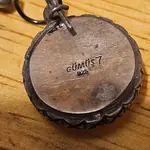
The earrings I think are not tremendously old. None of the compulsory hallmarks used up until 1942 are present (and Turkey was generally using .800 and .900 as its silver standards up until then). Compulsory hallmarking was discontinued in 1943 and many makers then began switching to the 925 sterling standard as a voluntary mark, particularly on pieces destined for export.
Tughras are notoriously difficult to read and, as personal seals for the sultanate, ceased after the abdication of the last sultan, Abdulmejid II, who held power until 1924. On jewellery and as decoration on trays, plates, cups and such they’re often nostalgic for the former glory of the Ottoman empire rather than actually relating to the date the pieces were made.
Gümüş 7 is a jewellery manufacturer still in business today, based in the Kuyumcukent area of Istanbul, which is a major jewellery hub. "Gümüş" is also Turkish for "silver", reinforcing the nature of the company's offerings.