What's new

Pock-marked hammer stones

IMAUDIGGER

Silver Member
Joined
Mar 16, 2016
Messages
3,410
Reaction score
5,202
Golden Thread
0
Primary Interest:
All Treasure Hunting
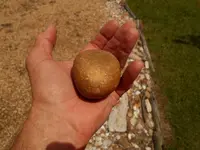
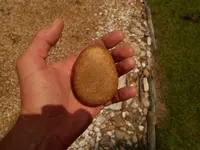
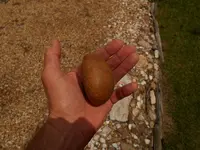
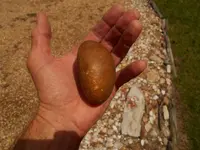
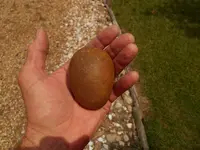
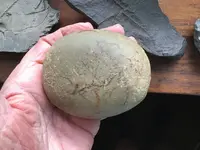
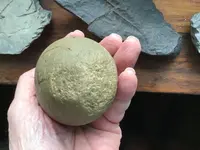
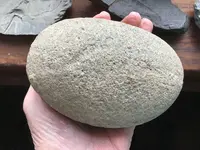
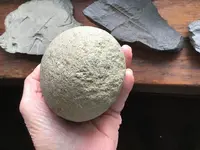
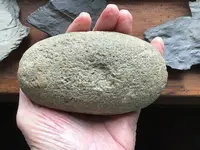
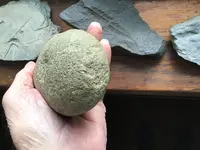
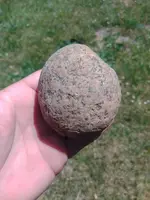
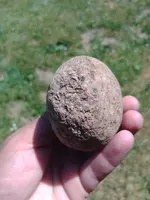
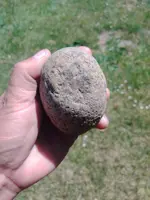
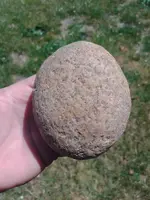
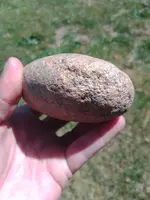
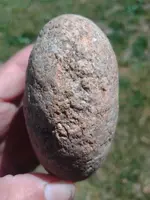
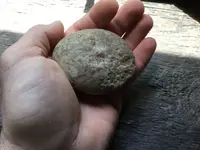
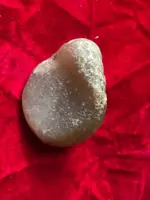
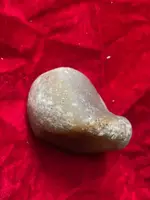
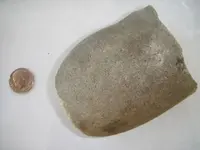
Doing a little research and self education...anybody care to share examples of pock-marked hammer stones they have found?

I’m especially interested in the type with a blunt AND sharp end.

Google image search mainly turns up images uploaded with the caption “Hammer stone?” and show a smooth river stone that could be used for a variety of tasks or could be just a random river cobble.

I’m looking for obvious examples.
 
Last edited:
Upvote 0
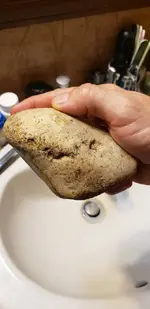
No sharp end, but this is my favorite. Mostly quartz. 20191030_201742.webp
 
I hope you don’t keep that in your bathroom.

Thank you, keep em coming please folks.
 
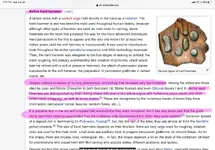
Wiki says this

I found this on Wiki..from how that is written, hard hammer stone examples were either unappreciated or rarely found. The theory being good stones were used up before being discarded. Granted that is the internet and not published studies. Are they really that uncommon?

Untitled.webp
 
Last edited:
Northern Ca. Found near a camp area.

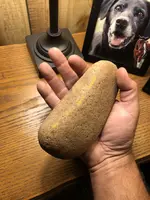
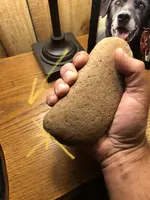
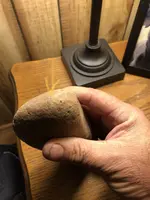
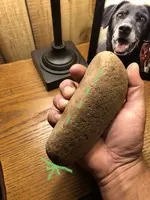
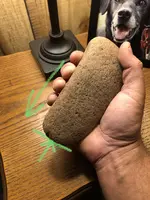
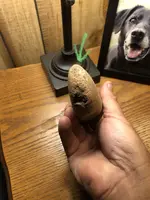
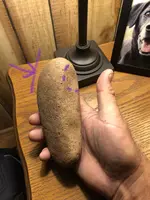
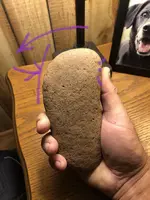
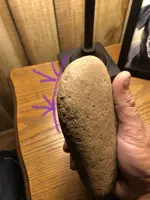
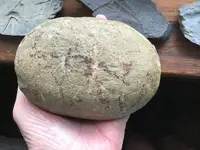
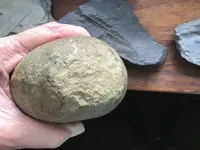
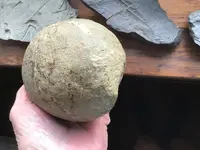
This isn’t what prompted this post, but I believe it to be a hammer stone of some sort..maybe for striking something other than stone? It’s a very competent stone for the area...not extremely hard like basalt, but a hard stone. I think I posted this awhile ago, and was advised it was just a natural rock.

It has slight wear on three faces and what appear to be areas smoothed out for the fingers.


This is the fatter blunt face.

34F4F0D2-35CF-4A31-BF6F-78D18E3EB157.webp

3ECE1D6E-5940-4115-975E-C013059C1B20.webp

5A90F9E2-8117-4E73-9F62-E2552AB81140.webp

Then the narrower face (with more wear)
3D1ACFF7-16BE-4B5E-AAB7-0A58348DF04A.webp

5D9FA1DB-1885-4CAF-8857-8C3E133EC3A5.webp

AFE3C116-54F2-422D-A321-685A5BE32EBC.webp

Then more of a hammering motion..with decent wear.
50AD3158-1C6C-49B6-BA56-4CE805B2C29D.webp

94C020B1-330A-4CA9-8E68-09D878110E01.webp

34D27DC9-75CB-42D6-BC32-671BAD71CF98.webp
 
Last edited:
That's a classic example. There should be crushing on The ends
 
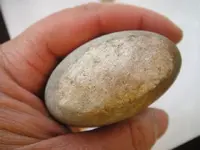
I find them similar to the one you have in your hand and cobble types. Try putting your palm on the curved side and see if the wear matches with a comfortable strike.

Also the narrow face that's flattened and curved was purposely shaped that way for use not from use.
 
Last edited:
Two I've posted before. The 2nd may have have been used as a mano as well.

013.webp014.webp015.webp

DSCN1497.webpDSCN1496.webpDSCN1495a.webpDSCN1495.webpDSCN1494.webpDSCN1493.webpDSCN1492.webp
 
Last edited:
Nice!
 
I have found several quartzite cobble hammerstones in one field. They are decent examples, and all show battering at opposite ends of the cobble.

Here is one, showing battering at each end...

7F88CC27-0A72-4FFA-A283-E3811BF7ED8E.webp

C2CD5FF7-D1FE-46FA-A8D5-92B75A434E32.webp

DC82482F-111D-4EB4-AD18-DA5B20E278D0.webp

And a smaller one, same type of quartzite, battered on both ends, showing just one end here...

BE8D5CDD-9E25-4D98-9FA4-AE26D384B19E.webp

CF087AF2-D7F7-4EAB-AECC-84CA4246890E.webp
 
A third example, quartzite cobble, battering at both ends, from the same field as the previous two:

05A8C921-1149-45A0-955F-D88196EA6A80.webp

AB3E5099-CD54-472B-AF17-F33168D20661.webp
 
Here is a so-called pitted hammerstone, so named for the small pits or dimples that usually appear on opposite faces, as is the case with this one, here showing the pit on one face. Battering at both ends.

E4F64F40-4EB8-4C9F-9863-A8ABACEE0803.webp

5A03BDD0-3B23-4E00-A9CA-87F9CDE60FE2.webp
 
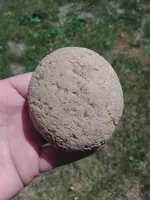
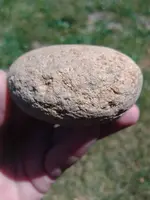
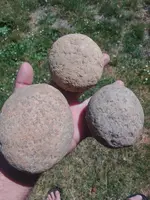
Nice hammer stones guys. Here is a cache I found

This one has a pit

IMG_20200629_111915.webpIMG_20200629_111934.webpIMG_20200629_111918.webp

Another
IMG_20200629_111950.webpIMG_20200629_111955.webpIMG_20200629_112003.webp

A Discoidal shaped one with wear around most of the edge
IMG_20200629_112027.webp
IMG_20200629_112039.webp

The Cache
IMG_20200629_111831.webp
 
Last edited:
Jamus, that discoidal shaped one looks to be a softer type of rock.

I was reading that some mano type hand stones were used on edge to smash the larger chunks of whatever was being ground up. Could that be a possibility?
 
Jamus, that discoidal shaped one looks to be a softer type of rock.

I was reading that some mano type hand stones were used on edge to smash the larger chunks of whatever was being ground up. Could that be a possibility?

It's a Cobble the cortex looks ground so maybe. All three were shaped. I have read the same.
 
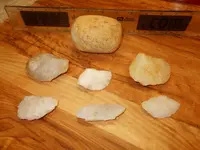
This is the most obvious example I have found. It was recovered from a small area of a field that has produced other artifacts, was surrounded by debitage, is of a classic shape with nice bevel, is hard, consistent grain and has a pit. Possibly worn out as the amount of use damage on the one end could have made it inconsistent or too aggressive. Have some question marks on others I have found so will stick with this one.ImageUploadedByTreasureNet.com1593460443.953839.webpImageUploadedByTreasureNet.com1593460459.320884.webp
 
ImageUploadedByTreasureNet.com1593645201.104677.webp
ImageUploadedByTreasureNet.com1593645217.800302.webp
Hopefully the pictures do it justice

Imported stone, found in a trade era site

And... i hate to say it because I know it’s not a reliable indicator, but if you put the stone in your hand it fits perfectly and the battered edges face right where you would expect.
 
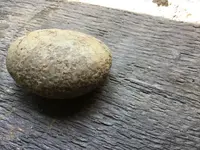
this is the most obvious one I have...classic, with the snapped off end and the skin knocked off on the other.
 

Attachments

  • DSC01622.webp
    DSC01622.webp
    20.2 KB · Views: 59
  • DSC01624.webp
    DSC01624.webp
    21.6 KB · Views: 54

Users who are viewing this thread

Back
Top Bottom