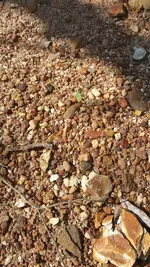
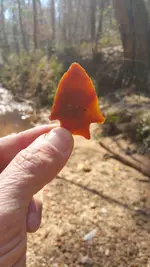
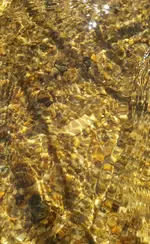
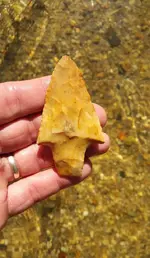
View attachment 1719135Hey guys, quick question. I’m working in Indiana, which is far from the terrain I’m used to and I’m feeling way out of my element. At home in Florida, I have a dry site on a friends land and we primarily (hence my name) sift for items. I have the pleasure of staying out in rural brown county, and I’m surrounded by rocky creeks. I went out one day last week, and found a busted tip but haven’t seen diddly since then, even random pieces of flint seem to be a needle in a haystack. What I’m wondering is, how do y’all pick productive creeks? Do y’all do research, or just walk every creek you see until something pops up? I’m doing the latter and plan on continuing until I refine my technique a little bit. Thanks everyone.
I don't know about how others do it, but for me, it's both research and pure hunting.
Research as far as I can, at least to put NA's in the general area, after that it's a cold search and often limited by access.
Around here you need to ask permission before hunting on other people's land and creeks.
Worth considering the characteristics of any given creek.
In my experience bigger creeks (even if seasonal) are more productive.
Especially when they start to meander and create beaches and sand bars, which is often when they level on reaching a valley floor (also where people tended to live).
Narrow, deep channels are hard search and harder still when they are heavily vegetated.
Artifacts can be found anywhere in a creek environment, along the flood lines, on gravel and sand bars, protruding from mud banks, stuck under boulders and cobbles, either dry or submerged.
But they are hard to find.
If you are used to hunting known productive sites, walking creeks might be frustrating as there are plenty of days you won't find a thing.
But if you love to be outdoors and you don't mind twisted ankles and wet socks (and you have belief) you can find amazing things.
It's not totally random either (which help with the belief).
Creeks are life to people and animals (dwellings, hunting and fishing) and they are the low point in any given landscape so things naturally gravitate into them.
I hunt creeks in northern California. I put in plenty of time and am often successful.
The creek out back of my house is ideal in it's characteristics.
It floods in winter and drys almost completely in summer.
It has banks alternating with beaches as it gently winds through the valley.
I've been searching the same mile stretch for several years and continue to find stuff.
Fresh material enters the creek every winter and the beaches rearrange themselves revealing things previously buried.
When I hunt a new creek I'm always optimistic and, if I find even a single flake of debitage , I'll persist until I find the artifacts that must be there somewhere.
The other day I searched six hours straight in a new site I though had promise. All I found was a single flake and a small complete point and nothing else.
It was a buzz finding that point and it felt worth it.
I move very slowly looking for colour and shape - another way research can help is to know local materials.
I'd rather search one beach well than five badly.
Good luck.

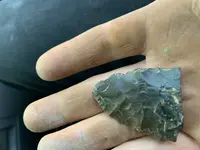 Hey guys, quick question. I’m working in Indiana, which is far from the terrain I’m used to and I’m feeling way out of my element. At home in Florida, I have a dry site on a friends land and we primarily (hence my name) sift for items. I have the pleasure of staying out in rural brown county, and I’m surrounded by rocky creeks. I went out one day last week, and found a busted tip but haven’t seen diddly since then, even random pieces of flint seem to be a needle in a haystack. What I’m wondering is, how do y’all pick productive creeks? Do y’all do research, or just walk every creek you see until something pops up? I’m doing the latter and plan on continuing until I refine my technique a little bit. Thanks everyone.