What's new

🔎 UNIDENTIFIED Seeking Meteorite / Space expert

FS

Greenie
Joined
May 28, 2026
Messages
16
Reaction score
8
Golden Thread
0
Location
Hawaii
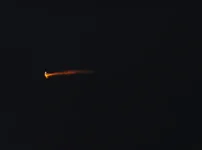
This discovery is from a 1940s WW2 era photo collection from Hawaii. The 35mm film could go into the 1950s, experts couldn't identify the object. The tail trail has a perpendicular line, indicating it had crossed the Karman line (seen overexposed or by eye). The mid trail has clear patterns indicating the image is in focus and not a camera blur, shake, or long exposure. While in forward motion, the head shows a perpendicular white line and 2 detached objects not connected to the main body. Kodachrome technology no longer exists and cannot be replicated or edited.

Thoughts?
 

Attachments

  • 1.webp
    1.webp
    9.2 KB · Views: 167
Well obviously it can be replicated because here it is. Cool picture caught at the perfect time.
 
Upvote 0
Tesorodeoro are you saying if i took a photo of a coin, that is replicating the coin? The value is in the film not the scan.
 
Upvote 0
Color film was around in the 40's, but not common.

Could that be a meteorite? Yes Could it be something else? Yes.
 
Upvote 0
Thanks for the references Red-Coat, I really appreciate it and welcome the commission.

If a comet passes the Karman (100 KM above sea), do you think it prone to break apart and cause the white lines in that angle at 40,000-260,000 KM/H?

My specialty is early years of 35mm color slides. The slide binder is what gives it a date mark, this particular easy mount was used in the 1940s-50s. The photographer's collection was also mainly 1940s with high end camera gear. Ai says the trail is not man made but it is wrong more times then right. I'm new here and thought I'd make a post since there are many meteorite hunters in this space.
 
Upvote 0
Thanks for the references Red-Coat, I really appreciate it and welcome the commission.

If a comet passes the Karman (100 KM above sea), do you think it prone to break apart and cause the white lines in that angle at 40,000-260,000 KM/H?

My specialty is early years of 35mm color slides. The slide binder is what gives it a date mark, this particular easy mount was used in the 1940s-50s. The photographer's collection was also mainly 1940s with high end camera gear. Ai says the trail is not man made but it is wrong more times then right. I'm new here and thought I'd make a post since there are many meteorite hunters in this space.

It wasn't my intention to provide any kind of commission. I referenced the eBay offering merely to highlight the preposterous belief that the slide (whether identified or not) could command a price of $30,000.

The slide mount is from between about 1944 and a latest possible date of 1952.

Both meteoroid and cometary debris could create what is seen in the photograph, but there's very little else that can be said from what is seen. AI could well deduce that the trail is not man made (as did I) if it put together the location, date range, and known activity related to high altitude rocket testing.
 
Upvote 0
It wasn't my intention to provide any kind of commission. I referenced the eBay offering merely to highlight the preposterous belief that the slide (whether identified or not) could command a price of $30,000.

The slide mount is from between about 1944 and a latest possible date of 1952.

Both meteoroid and cometary debris could create what is seen in the photograph, but there's very little else that can be said from what is seen. AI could well deduce that the trail is not man made (as did I) if it put together the location, date range, and known activity related to high altitude rocket testing.
Red-Coat: Do you have examples of other comets photographed with this kind of debris?

ConceptualizedNetherlandr: The photographer's collection (majority Hawaii) had about 200 slides (all kodachrome) from the 1940's in the original old metal container. It is likely the next of kin estate got cleaned out and highly doubt it was manipulated based on the found condition. If thinking about a directional light source with heat, the 2 detached white uniform objects have the brightest white glow compared to the trail. The other factor is viewing the tail under normal light and over exposed light which you can see the trail vs a cut off line.

If this is truly one of a kind, you can compare recently sold pokemon card prices on ebay up to $1 million and multiple pages over $30k USD. There are people who spend this on a weekend outing or one hand in casino.
 
Last edited:
Upvote 0
Tesorodeoro are you saying if i took a photo of a coin, that is replicating the coin? The value is in the film not the scan.
Sorry, I didn’t realize there was a value associated. I see now you have valued it at $30,000. Interesting.

I didn’t know early color photos of space debris was collectible to that extent.
 
Upvote 0
Red-Coat: Do you have examples of other comets photographed with this kind of debris?

ConceptualizedNetherlandr: The photographer's collection (majority Hawaii) had about 200 slides (all kodachrome) from the 1940's in the original old metal container. It is likely the next of kin estate got cleaned out and highly doubt it was manipulated based on the found condition. If thinking about a directional light source with heat, the 2 detached white uniform objects have the brightest white glow compared to the trail. The other factor is viewing the tail under normal light and over exposed light which you can see the trail vs a cut off line.

If this is truly one of a kind, you can compare recently sold pokemon card prices on ebay up to $1 million and multiple pages over $30k USD. There are people who spend this on a weekend outing or one hand in casino.

Google Images is your friend if you want pictures of meteoroids or cometary debris entering the atmosphere; or the NASA website; or the many websites for observatories around the world, including Mauna Kea in Hawaii of course. Have you emailed a copy of the slide to the latter and asked for their opinion?

But just because these kinds of event could produce the kind of phenomenon seen in your photograph doesn’t mean that you’ll be able to find a ‘match’ for a similar event. Every such event is not only pretty much uniquely dependent on things like size and fragility of the incoming material, speed of travel and angle of approach, but also manifests in different ways for the duration of travel through the atmosphere, second-by-second.

If this is truly one of a kind, you can compare recently sold pokemon card prices on ebay up to $1 million and multiple pages over $30k USD. There are people who spend this on a weekend outing or one hand in casino.

That’s a completely unsound bunch of arguments. Rarity, or even uniqueness, doesn’t necessarily equate to value and you’re not in any way comparing like-for-like in the collector market. The slide you have isn’t even identifiable to a specific documented event. Even if it was, there's no precedent for that kind of value apart from things like original prints of Neil Armstrong and Buzz Aldrin on the moon.


My wife took this picture at dusk over Rockland Lake, NJ in January 2013 during the annual Quadrantid meteor shower.

Quadrantid.webp


The Quadrantids are debris from the extinct comet that became the minor planet ‘2003 EH1’ and they break up in the atmosphere before they reach the ground.

I guarantee it to be a unique picture and you can have the original for a mere $20,000
 
Last edited:
Upvote 0
Red-Coat: I am curious to learn how you determined this to be space debris breaking apart without comparing any existing images of a comet breaking apart similar to this? I previously searched images and could not find any in this close detail. I have reached out to 3 space agencies and Mauna Kea with no reply via website (do you have inside contacts?). My take is if it is not space debris, these agencies are not allowed to disclose it. There are UFO sighting discussions with 2 white orbs that spun around the main object.

The OOAK value without history is first established by a sale. This is very early color telescopic photography, no records of 1940s commercial camera mounts made to connect in USA. The military did have advance lenses, not for sale to the general public, used for intel and aircrafts. This could explain the up close detail achieved. Combine that with the Karman crossing, Rare.
 
Upvote 0
Could easily be a directional light source in a smokey or misty environment.

I agree. It could easily be a nighttime shot of one of Hawaii’s several lighthouses during the 1940’s.

Or even a simple beacon.

1780119036800.webp

* Waikiki skyline, viewed from Kakaako Waterfront Park


1780119087481.webp

* Zoomed, rotated and trimmed.

.
 
Upvote 0
Red-Coat: I am curious to learn how you determined this to be space debris breaking apart without comparing any existing images of a comet breaking apart similar to this? I previously searched images and could not find any in this close detail. I have reached out to 3 space agencies and Mauna Kea with no reply via website (do you have inside contacts?). My take is if it is not space debris, these agencies are not allowed to disclose it. There are UFO sighting discussions with 2 white orbs that spun around the main object.

I didn’t determine it to be anything. What I actually said was (emphasis in bold added): “I don’t think there’s much prospect of identifying the object from a single photograph, except to say that it shows something entering the atmosphere on an unknown date. So, likely meteoritic/cometary in origin.” I later added: “Both meteoroid and cometary debris could create what is seen in the photograph, but there's very little else that can be said from what is seen.

No, I don’t have inside contacts in space agencies or in the Mauna Kea observatory.

I was waiting for you to raise a “UFO” argument with conspiratorial “not allowed to disclose it” theories, and you didn’t disappoint.

The OOAK value without history is first established by a sale. This is very early color telescopic photography, no records of 1940s commercial camera mounts made to connect in USA. The military did have advance lenses, not for sale to the general public, used for intel and aircrafts. This could explain the up close detail achieved. Combine that with the Karman crossing, Rare.

Let’s approach this from a different angle.

When Kodachrome slide film was first launched in 1936, the price included mandatory processing and mounting by a Kodak laboratory. Only Kodak’s own labs were licensed to use the unique proprietary development process and they did not use Craftsmens Guild EasyMount holders. They used their own branded cardboard mounts known as ‘Kodak Ready-Mounts’, like this (the exact wording changed over the years, but they were unmistakably Kodachrome branded):

Kodachrome.webp


That situation persisted until 1954 when the Department of Justice ruled that Kodachrome-processing was a monopoly, and the company was forced to allow independent third-party labs to process the film. They sourced their own slide mounts, such as Craftsmens Guild EasyMount among others.

Your slide (pictured below) carries patent numbers 2014743 and 2127940, issued in 1935 and 1938 respectively. Both were Utility Patents with a 17-year expiry. Patent holders or licencees generally didn’t quote expired patent numbers on their items because they no longer had any validity for protection purposes. That’s how I concluded the slide mount dates no later than 1952, because the 1935 patent had then expired.

EasyMount.webp


That doesn’t sit well with the 1954 date for Kodak being forced to allow third-party processing, even allowing for old stock of third-party slide mounts produced in 1952 being used up in the following year or so. However, I checked further, and that 1935 patent was actually filed on 20th October 1933. US patent rules allowed for a protection of 17 years from the date of issue, or 20 years from the earliest filing date, whichever was longer. That means the patent was still valid in October 1953, which sits more comfortably with the film having been third-party processed in 1954 or a little later.

Patent.webp


Although interchangeable long lenses for 35mm cameras first became available to the general public in 1935 (such as the Leica 135mm telephoto), they were expensive… the equivalent of several thousand dollars today. The early Leica lenses were for rangefinder cameras, not SLRs, with consequent difficulty in focussing and suitable only for professionals. That situation changed after WWII with the advent of SLR cameras such as the Zeiss Contax S in 1949 and interchangeable telephoto lenses available up to 1000mm focal length. Still expensive of course, but progressively becoming more affordable in the 1950s.

If your slide is from around 1954/1955, as I believe it might be, that potentially puts a different perspective on things.
 
Upvote 0
I didn’t determine it to be anything. What I actually said was (emphasis in bold added): “I don’t think there’s much prospect of identifying the object from a single photograph, except to say that it shows something entering the atmosphere on an unknown date. So, likely meteoritic/cometary in origin.” I later added: “Both meteoroid and cometary debris could create what is seen in the photograph, but there's very little else that can be said from what is seen.

No, I don’t have inside contacts in space agencies or in the Mauna Kea observatory.

I was waiting for you to raise a “UFO” argument with conspiratorial “not allowed to disclose it” theories, and you didn’t disappoint.


Let’s approach this from a different angle.

When Kodachrome slide film was first launched in 1936, the price included mandatory processing and mounting by a Kodak laboratory. Only Kodak’s own labs were licensed to use the unique proprietary development process and they did not use Craftsmens Guild EasyMount holders. They used their own branded cardboard mounts known as ‘Kodak Ready-Mounts’, like this (the exact wording changed over the years, but they were unmistakably Kodachrome branded):

View attachment 2255243

That situation persisted until 1954 when the Department of Justice ruled that Kodachrome-processing was a monopoly, and the company was forced to allow independent third-party labs to process the film. They sourced their own slide mounts, such as Craftsmens Guild EasyMount among others.

Your slide (pictured below) carries patent numbers 2014743 and 2127940, issued in 1935 and 1938 respectively. Both were Utility Patents with a 17-year expiry. Patent holders or licencees generally didn’t quote expired patent numbers on their items because they no longer had any validity for protection purposes. That’s how I concluded the slide mount dates no later than 1952, because the 1935 patent had then expired.

View attachment 2255244

That doesn’t sit well with the 1954 date for Kodak being forced to allow third-party processing, even allowing for old stock of third-party slide mounts produced in 1952 being used up in the following year or so. However, I checked further, and that 1935 patent was actually filed on 20th October 1933. US patent rules allowed for a protection of 17 years from the date of issue, or 20 years from the earliest filing date, whichever was longer. That means the patent was still valid in October 1953, which sits more comfortably with the film having been third-party processed in 1954 or a little later.

View attachment 2255245

Although interchangeable long lenses for 35mm cameras first became available to the general public in 1935 (such as the Leica 135mm telephoto), they were expensive… the equivalent of several thousand dollars today. The early Leica lenses were for rangefinder cameras, not SLRs, with consequent difficulty in focussing and suitable only for professionals. That situation changed after WWII with the advent of SLR cameras such as the Zeiss Contax S in 1949 and interchangeable telephoto lenses available up to 1000mm focal length. Still expensive of course, but progressively becoming more affordable in the 1950s.

If your slide is from around 1954/1955, as I believe it might be, that potentially puts a different perspective on things.
Ever consider side work for the FBI?
 
Upvote 0
I didn’t determine it to be anything. What I actually said was (emphasis in bold added): “I don’t think there’s much prospect of identifying the object from a single photograph, except to say that it shows something entering the atmosphere on an unknown date. So, likely meteoritic/cometary in origin.” I later added: “Both meteoroid and cometary debris could create what is seen in the photograph, but there's very little else that can be said from what is seen.

No, I don’t have inside contacts in space agencies or in the Mauna Kea observatory.

I was waiting for you to raise a “UFO” argument with conspiratorial “not allowed to disclose it” theories, and you didn’t disappoint.


Let’s approach this from a different angle.

When Kodachrome slide film was first launched in 1936, the price included mandatory processing and mounting by a Kodak laboratory. Only Kodak’s own labs were licensed to use the unique proprietary development process and they did not use Craftsmens Guild EasyMount holders. They used their own branded cardboard mounts known as ‘Kodak Ready-Mounts’, like this (the exact wording changed over the years, but they were unmistakably Kodachrome branded):

View attachment 2255243

That situation persisted until 1954 when the Department of Justice ruled that Kodachrome-processing was a monopoly, and the company was forced to allow independent third-party labs to process the film. They sourced their own slide mounts, such as Craftsmens Guild EasyMount among others.

Your slide (pictured below) carries patent numbers 2014743 and 2127940, issued in 1935 and 1938 respectively. Both were Utility Patents with a 17-year expiry. Patent holders or licencees generally didn’t quote expired patent numbers on their items because they no longer had any validity for protection purposes. That’s how I concluded the slide mount dates no later than 1952, because the 1935 patent had then expired.

View attachment 2255244

That doesn’t sit well with the 1954 date for Kodak being forced to allow third-party processing, even allowing for old stock of third-party slide mounts produced in 1952 being used up in the following year or so. However, I checked further, and that 1935 patent was actually filed on 20th October 1933. US patent rules allowed for a protection of 17 years from the date of issue, or 20 years from the earliest filing date, whichever was longer. That means the patent was still valid in October 1953, which sits more comfortably with the film having been third-party processed in 1954 or a little later.

View attachment 2255245

Although interchangeable long lenses for 35mm cameras first became available to the general public in 1935 (such as the Leica 135mm telephoto), they were expensive… the equivalent of several thousand dollars today. The early Leica lenses were for rangefinder cameras, not SLRs, with consequent difficulty in focussing and suitable only for professionals. That situation changed after WWII with the advent of SLR cameras such as the Zeiss Contax S in 1949 and interchangeable telephoto lenses available up to 1000mm focal length. Still expensive of course, but progressively becoming more affordable in the 1950s.

If your slide is from around 1954/1955, as I believe it might be, that potentially puts a different perspective on things.
Red-Coat: Thanks for the research on the patent, good write up. Kodachrome actually first released in 1935 (online records are wrong) as I had few collections dated. From 1935-1938 the slide binders did not have any brand label from Kodak, only made in USA because the final color process was not released until mid 1938. In 1939-1949 they used that red border font lettering as one you posted. Third party slide binders were available the whole time as people upgraded to encase them in glass binders for more protection, just not done at Kodak. When Ektachrome released home base process around 1946, a lot more binders were released but you can tell the color process difference as early years couldn't compare with Kodachrome. The Craftsmen's Guild from the 1940s I seen hold more the half size frame.

In summary, since 3rd party slides were available, it is possible dating back to the 1940s, they were just not mounted at the Kodak lab.

The 1000mm focal length lenses were sold in Germany and Japan in the 1940s. Based on how close up this is, I think a telescope was used, not a camera mount lens. On a telescope, home made mounts were created to attach the camera. This is also the reason the film's full frame became a half frame to eliminate outside the telescope view.

Puff the tragic wagon: I reviewed your light theory but there are few flaws with this. If you zoom in close as possible to the light trail, you can see it as it is not a matching trajectory. If referring to light coming out the window of a lighthouse at night, the trail has a slight arc, the mid section has a bulge, head section has flares, the trail pattern that shows depth and motion. As for a beacon light in water reflection, your image shows the head portion of the beacon would have a loss of light from the object and similar trajectory mismatch.

Great feedback I really appreciate it and gets us all thinking. I once showed original art to about 3 dozen people and got all different perspectives with no 2 alike. What I found is translations can be based upon peoples background, knowledge, lifestyle so the vision could vary. Similar with this photograph.
 
Upvote 0
Google Images is your friend if you want pictures of meteoroids or cometary debris entering the atmosphere; or the NASA website; or the many websites for observatories around the world, including Mauna Kea in Hawaii of course. Have you emailed a copy of the slide to the latter and asked for their opinion?

But just because these kinds of event could produce the kind of phenomenon seen in your photograph doesn’t mean that you’ll be able to find a ‘match’ for a similar event. Every such event is not only pretty much uniquely dependent on things like size and fragility of the incoming material, speed of travel and angle of approach, but also manifests in different ways for the duration of travel through the atmosphere, second-by-second.


That’s a completely unsound bunch of arguments. Rarity, or even uniqueness, doesn’t necessarily equate to value and you’re not in any way comparing like-for-like in the collector market. The slide you have isn’t even identifiable to a specific documented event. Even if it was, there's no precedent for that kind of value apart from things like original prints of Neil Armstrong and Buzz Aldrin on the moon.


My wife took this picture at dusk over Rockland Lake, NJ in January 2013 during the annual Quadrantid meteor shower.

View attachment 2255231

The Quadrantids are debris from the extinct comet that became the minor planet ‘2003 EH1’ and they break up in the atmosphere before they reach the ground.

I guarantee it to be a unique picture and you can have the original for a mere $20,000
What type of lens did you use here? It is distant with loss of up close detail.
 
Upvote 0
... Kodachrome actually first released in 1935 (online records are wrong) as I had few collections dated.

Nope, not wrong. The 1935 launch of Kodachrome was for 16mm cine film stock only. Stock for 35mm slides didn’t appear until 1936, as stated on Kodak’s own website:

1935
KODACHROME Film was introduced and became the first commercially successful amateur color film initially in 16 mm for motion pictures. Then 35 mm slides and 8 mm home movies followed in 1936.
https://www.kodak.com/en/motion/page/chronology-of-film/
 
Upvote 0
What type of lens did you use here? It is distant with loss of up close detail.

As said, it was my wife's picture. She was using a Panasonic Lumix with a 16X digital zoom. The quality isn't as good as you would get from optical zoom lenses.
 
Upvote 0

Users who are viewing this thread

Back
Top Bottom