Hello ...
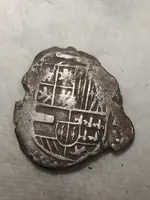
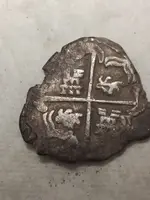
@bigjerryok, what you have here is a Cross & Shield design Spanish Philip IV 2 reales cob, struck c.1632, at the Spanish colonial mint, Potosi, (alto Peru), present day Potosi, Bolivia. The mint mark "P" & mint assayer (Juan Ximenez de Tapia) mark "T", are not visible because of the strike on this cob. The marks, "P above "T" would be left/center of the shield (obverse).
...the denomination mark, to the right/center of the shield, is mostly visible. It is a "Z", used in place of the numeral "2". This practice, although common on European coinage of this era (1500 - 1650's), was, in the Spanish New World mints, exclusive to the Potosi mint. This confirms both the mint as POTOSI, & the original denomination as a 2 reales.
...the weight @6.2 grams is almost full weight (6.7g) for a 2 reales of this period. It's silver purity would be .931.
... Since your cob was nicely struck, the many features that were transferred from the dies to the flan are crisp & clear, helping to narrow the date of it's striking.
...Spanish coins (like all European coinage of this era) are first identified & collected by the ruling monarchs, rather than by date. The overall shield design is that of Philip IV (1621 - 1665).
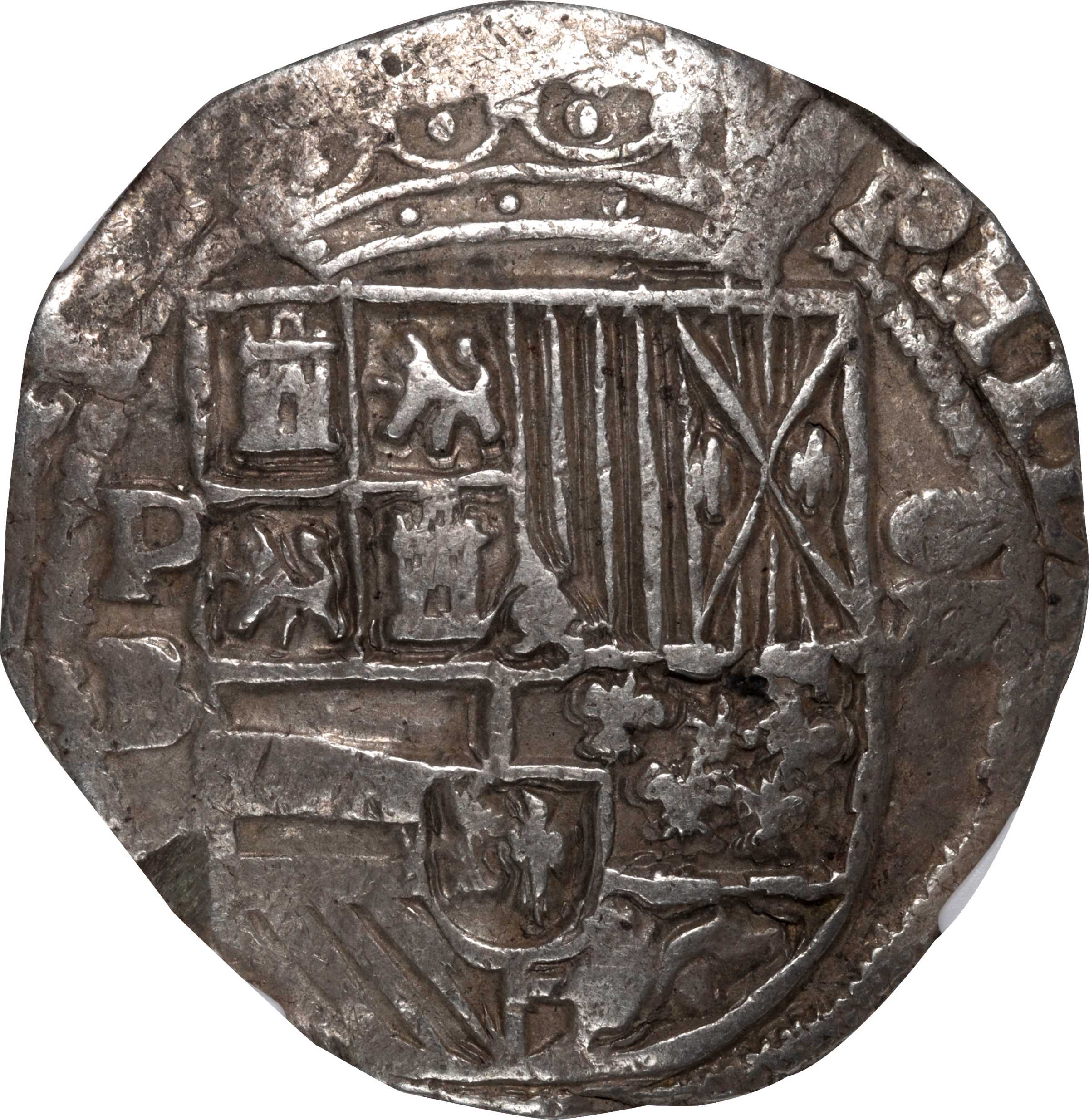
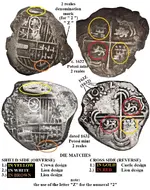
...The various elements in the shield allows, by comparing to dated cobs / same mint & denomination, for pinpointing, within a year, of it's striking. I've attached a comparison of your cob to that of one struck at Potosi, with a clear date (1632). Yours matches on many points. All the features will not match exactly, because various die punches were used to complete the overall design (unlike modern-day coins, with the same features, coin after coin...)
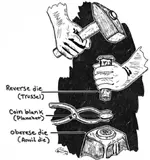
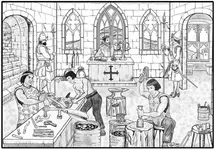
...also, because of the inconstant results of hand-striking, the same die may appear slightly different (a weak v.s. a strong strike, an uneven flan surface, etc.) ...see attached pics depicting cob production..
...Yours is a nice specimine ... congratulations on your find ...If you have any further questions, feel free to contact ... John