
You are using an out of date browser. It may not display this or other websites correctly.
You should upgrade or use an alternative browser.
You should upgrade or use an alternative browser.
SpokeShaves!
- Thread starter old digger
- Start date


GatorBoy
Gold Member
- Joined
- May 28, 2012
- Messages
- 14,812
- Reaction score
- 6,156
- Golden Thread
- 0
- Primary Interest:
- All Treasure Hunting
So what periods used the spokeshaves? I dont think I have found any.
That would be any period that ever removed branches or bark from a shaft. I would say all periods.

NC field hunter
Silver Member
You have a couple of really nice ones.
Thanks for sharing!
Thanks for the view digger!
GatorBoy
Gold Member
- Joined
- May 28, 2012
- Messages
- 14,812
- Reaction score
- 6,156
- Golden Thread
- 0
- Primary Interest:
- All Treasure Hunting
Here's an interesting piece.
Found on a contact period site with bottle glass scrapers.. blades and arrowheads. Spokeshave?
One edge has been ground to a razor sharp edge. Maybe it was for hair cutting.
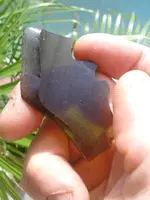
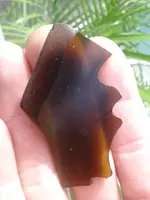
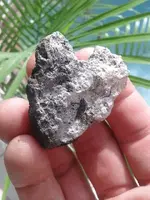
Found on a contact period site with bottle glass scrapers.. blades and arrowheads. Spokeshave?
One edge has been ground to a razor sharp edge. Maybe it was for hair cutting.

old digger
Gold Member
- #27
Thread Owner
Those are Cool Gator!  When modern material was available they seemed to be willing to utilize it.
When modern material was available they seemed to be willing to utilize it.
jojosparks
Jr. Member
May I ask what is a spokeshave and it's purpose. I have a bucket full of flakes that have some resemblance to these.
NC field hunter
Silver Member
May I ask what is a spokeshave and it's purpose. I have a bucket full of flakes that have some resemblance to these.
Spokeshaves are noted for being the tool used for making arrow shafts. They are common on flakes and broken salvaged artifacts.
GatorBoy
Gold Member
- Joined
- May 28, 2012
- Messages
- 14,812
- Reaction score
- 6,156
- Golden Thread
- 0
- Primary Interest:
- All Treasure Hunting
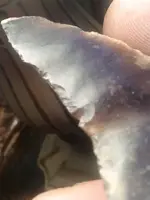
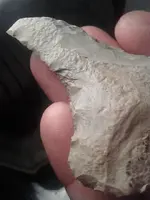
While there are many broken pieces That have shapes that resemble spokeshaves. A true spokeshave is a purposely made tool for removing branch stems and bark from wooden shafts. Just because a piece of broken material is the same shape does not make it a tool made for that purpose. There will be visible intentionally placed flakes removed to create this tool...often followed by fine pressure flaking to create a sharp and durable working edge
NC field hunter
Silver Member
While there are many broken pieces That have shapes that resemble spokeshaves. A true spokeshave is a purposely made tool for removing branch stems and bark from wooden shafts. Just because a piece of broken material is the same shape does not make it a tool made for that purpose. There will be visible intentionally placed flakes removed to create this tool...often followed by fine pressure flaking to create a sharp and durable working edge
<img src="http://www.treasurenet.com/forums/attachment.php?attachmentid=758990"/>
<img src="http://www.treasurenet.com/forums/attachment.php?attachmentid=758991"/>
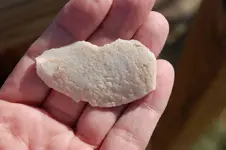
I agree to an extent Gator. Some flakes that look like spokeshave tools are actually reduction flakes from notched points. The flake from around the notched area may appear to be a spokeshave, but normally are far to thin to be used. Here is a reduction flake from a quarts piece, that was thick enough to be used.
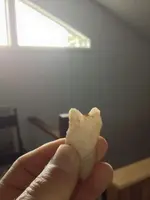
I wish I had a pic of the back of this piece, it's plain to see this piece is a large reduction flake.
GatorBoy
Gold Member
- Joined
- May 28, 2012
- Messages
- 14,812
- Reaction score
- 6,156
- Golden Thread
- 0
- Primary Interest:
- All Treasure Hunting
I don't want to go back and forth with this.. But notching is the final step when producing a notched point. There is no reduction after notches have been added.I agree to an extent Gator. Some flakes that look like spokeshave tools are actually reduction flakes from notched points. The flake from around the notched area may appear to be a spokeshave, but normally are far to thin to be used. Here is a reduction flake from a quarts piece, that was thick enough to be used.
<img src="http://www.treasurenet.com/forums/attachment.php?attachmentid=759047"/>
I wish I had a pic of the back of this piece, it's plain to see this piece is a large reduction flake.
I have a bucket full of reduction flakes with little hooks and angles on them none of which are spokeshaves.
If you have a piece that looks like a reduction flake from a notched point with the notch in it... it's just a broken point.
The piece your showing appears to be a spokeshave and nothing more.
Last edited:

theviking
Bronze Member
- Joined
- Aug 29, 2009
- Messages
- 1,404
- Reaction score
- 921
- Golden Thread
- 0
- Location
- Blue ridge mts, Virginia
- Primary Interest:
- Other
NC field hunter
Silver Member
I don't want to go back and forth with this.. But notching is the final step when producing a notched point. There is no reduction after notches have been added.
I have a bucket full of reduction flakes with little hooks and angles on them none of which are spokeshaves.
If you have a piece that looks like a reduction flake from a notched point with the notch in it... it's just a broken point.
The piece your showing appears to be a spokeshave and nothing more.
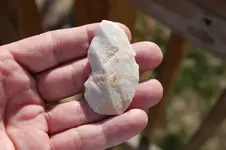
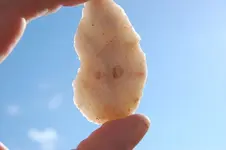
Gator, you know I think the world of you and I'm not trying to prove you wrong. The piece that I posted above is what I have always heard called a notching flake. After looking the term up, I do believe my terminology was wrong and my wording poor. However, tools such as the spokeshave probably vary quite a bit from state to state. Look at the difference between my spokeshave and yours. They really look like two totally different tools. I'd guess that is due to different wood types. The spokeshave implements that I run across are often made of scraps. In fact, I rarely even pick them up. A spokeshave in my neck of the woods rarely shows skilled flaking. Most of them can be identified only by sure sign of wear, such as a smooth notch with a linear pattern present. I'm no expert and I really thank you for calling me out on the notching flake thing. ✌

- Joined
- Jan 27, 2009
- Messages
- 19,213
- Reaction score
- 12,631
- Golden Thread
- 1
- Location
- South East Tennessee on Ga, Ala line
- 🥇 Banner finds
- 1
- Detector(s) used
- Tesoro Conquistador freq shift
Fisher F75
Garrett AT-Pro
Garet carrot
Neodymium magnets
5' Probe
- Primary Interest:
- All Treasure Hunting
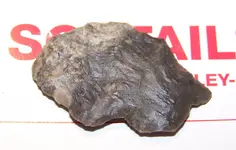
Just think of all the uses for a spoke shave way before an arrow shaft. You know they pulled the bark off of green limbs. Especially in the manufacturing of woven goods. They were used to strip barks to be woven or used to de flesh a round bone. I guess the uses were limitless. Here is one I found that is a thumb scraper,spoke shave and graver.
GatorBoy
Gold Member
- Joined
- May 28, 2012
- Messages
- 14,812
- Reaction score
- 6,156
- Golden Thread
- 0
- Primary Interest:
- All Treasure Hunting
That's a cool one.
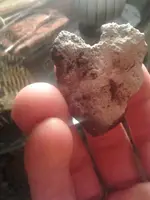
NC... The different shapes and sizes of a spoke shave whas dependent upon what it was "shaving"... not where it was made... the 1 you are holding would have most likely been used for an arrow shaft. Bark was even stripped from certain types of trees to harvest the fiber between the bark and wood for cordage. Ones like yours are here also..
NC... The different shapes and sizes of a spoke shave whas dependent upon what it was "shaving"... not where it was made... the 1 you are holding would have most likely been used for an arrow shaft. Bark was even stripped from certain types of trees to harvest the fiber between the bark and wood for cordage. Ones like yours are here also..
Last edited:
old digger
Gold Member
- #39
Thread Owner
I found a few more in the chip pile.
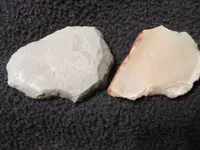
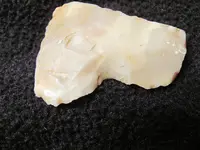
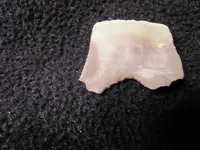
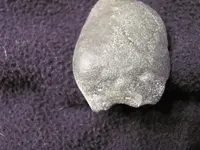
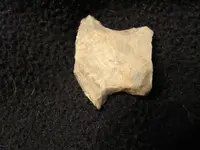 This also has a graver
This also has a graver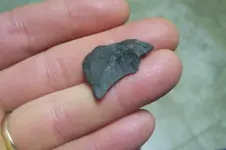




Featured Treasure Finds
Featured Treasure Finds
Similar threads

- Replies
- 7
- Views
- 928
- Replies
- 25
- Views
- 3K


Users who are viewing this thread
Total: 1 (members: 0, guests: 1)















