rockcollect
Full Member
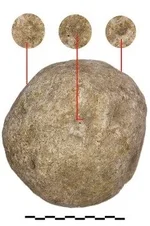
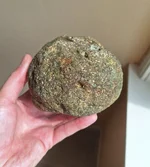
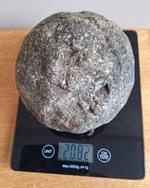
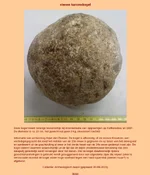
WOW i have found a stone cannonball in the river waal across Nijmegen and i have full proof this time. see screenshot. I found this cannonball on the oposite side of Nijmegen on the Waal beach among rubble that came from the center of Nijmegen and was once dumped on the Waal beach. There were also many old bricks mixed in. My stone cannonbal is also made of trachyte and it clearly has been used in anger because of the missing underside. So it is part of a siege in nijmegen in the 13th-14th century.It is now half round and is 12,5 cm wide. super cool. This is the translation of the tekst found on the internet:
This cannonball recently surfaced during an inventory of excavations at Kelfkensbos from 1997.The diameter is approx. 13 cm, the weight just under 3 kg, and the stone type is trachyte.Information from archaeologist Arjan den Braven: The cannonball originates from the novum fossatum, a defensive ditch that was dug around the middle of the 13th century and, based on the stoneware and pottery found in the ditch fill, must have been filled in as early as the third quarter of the 14th century. Consequently, the cannonball likely dates from the time when the trebuchet (medieval name for a catapult) was gradually replaced by the cannon. That the cannonball was actually used during combat is suggested by a flattened side, which was almost certainly caused by the cannonball ricocheting off a hard surface (stone wall?) at high speed.
This cannonball recently surfaced during an inventory of excavations at Kelfkensbos from 1997.The diameter is approx. 13 cm, the weight just under 3 kg, and the stone type is trachyte.Information from archaeologist Arjan den Braven: The cannonball originates from the novum fossatum, a defensive ditch that was dug around the middle of the 13th century and, based on the stoneware and pottery found in the ditch fill, must have been filled in as early as the third quarter of the 14th century. Consequently, the cannonball likely dates from the time when the trebuchet (medieval name for a catapult) was gradually replaced by the cannon. That the cannonball was actually used during combat is suggested by a flattened side, which was almost certainly caused by the cannonball ricocheting off a hard surface (stone wall?) at high speed.
Attachments



Last edited:
Upvote
4