US Tiger... please never feel embarrassed to ask a question, at least here in this forum. Asking questions is how each of us learned the facts we know. Anybody who tries to make you feel stupid for asking a question is deliberately forgetting all the times they themselves asked a "stupid" question.
You asked, "When was the Indian Wars?" To Military-relic historians, a particular "War" era ends in the year which that war ended. Thus, the Indian Wars era began in 1866 (just after the end of the Civil War era in 1865), and continues into the mid-1890s (when the last Indian Wars battles ended). For Military-relic collectors, the next era is the Spanish-American War, which occurred in 1898. The World War One era begins roughly about 1900 and ends in 1918.
Other fields of Historical relic-collecting mostly use different terms. Such as, the Victorian era ...referring to distinctive forms of civilian clothing, architecture, and antique furniture manufactured during the many decades when Queen Victoria ruled the British Empire (1837-to-1901).
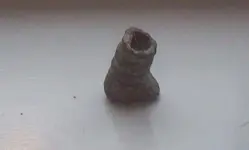
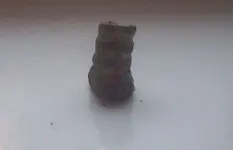
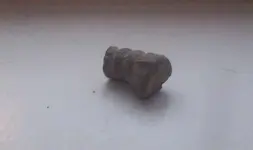
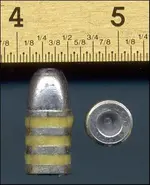
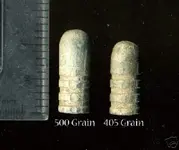
About the age of your bullet. Your photos show that its base-rim is thinner (and its base-cavity apparently deeper) than what we see on the modernday Reproduction which Dixie Charger helpfully posted. So, I'd say your bullet is an 1870s-to-1890s Original one.
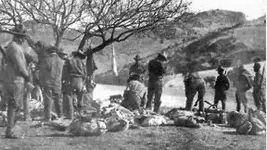
Here's my theory on how it got to where you found it. Modernday Americans tend to overlook (or not know) the fact that the vast Suburbanization we see nowadays didn't get going until the 1960s. Prior to that, most land hadn't changed much from the mid-1800s. Vast tracts of land were still raw "undeveloped" rural land. Thus, the US Army had free reign to conduct training exercises in those wide-open, lightly populated lands. Relic-diggers are shocked to find Indian Wars, Span-Am, and WW1 military relics in Civil War areas here in Virginia. I myself have dug 45/70 Indian Wars era bullets on the Fredericksburg area battlefields. Also, alongside a highway one-half mile south of Fredericksburg's city limits, you can see a monument which says "Dedicated to Fredericksburg's soldiers in the War Against Spain, who camped on this spot in 1898."
One more example: diggers are surprised at the number of WW1 era artillery shell fuzes they find around Richmond, particularly at the old Civil War fortifications along the James River. Like I said, in the 1870s-to-1950s the US Army conducted training-exercises in a lot more places (far away from military bases) than you can imagine ...including many "live fire" exercises.
I should also mention that a great many "war surplus" firearms (and Military ammunition for them) were sold the the public, and got used for hunting everything from buffalo (as Kuger helpfuly mentioned) to deer to rabbits.





 )
)