Darren in NC
Silver Member
- Joined
- Apr 1, 2004
- Messages
- 2,905
- Reaction score
- 1,965
- Golden Thread
- 0
- Detector(s) used
- Tesoro Sand Shark, Homebuilt pulse loop
- Primary Interest:
- Shipwrecks
- #1
Thread Owner
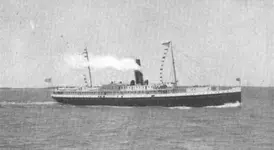
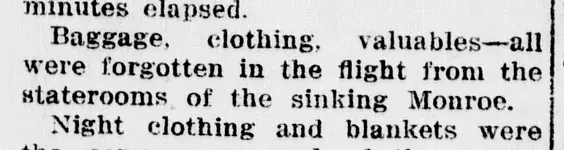
Not too far from the Merida is a much more accessible wreck in 90 feet of water. Approximately 25 miles due east of Wachapreague, Virginia is the shipwreck of the SS Monroe. She was a passenger-freighter rammed by the SS Nantucket on January 30, 1914. And within 12 minutes, she was resting on the bottom of the Atlantic. There was no time for retrieving luggage. There was a mad scramble for the lifeboats. 98 survived, with 41 dead. The court proceedings make for interesting drama, with plenty of blame accused by all parties.
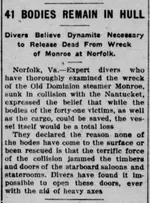
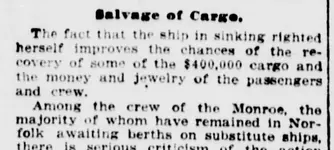
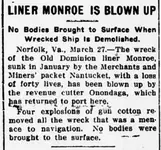
The masts of the Monroe were sticking up out of the water, and she was deemed a hazard to navigation. Before flattening her with explosives, divers were sent down to assess the damage and see if any bodies could be recovered. In the search, it was noted that the stateroom doors were jammed and difficult to open, so they thought there were many bodies still trapped. Later, there were no bodies found, as the current had swept them all away. There is no official report of personal belongings or valuables of any kind being recovered.
The Monroe was then demolished, creating a large debris field present even til today. The site is well broken down, but several portholes and other artifacts have been seen and are worth recovering if one has the time and skill. The wreck can be challenging to a new diver because of low visibility that is sometimes on the wreck. Lots of fish can be found on the wreck in the fall. The engine and stern rise high from the bottom. It is possible that due to the quick exit, that there are many valuables remaining from the first class passengers still in the debris field.
Gary Gentile has a chapter dedicated to her story in his book Shipwrecks of Virginia with much more detail. I highly recommend his various shipwreck books, covering many wrecks up and down the eastern seaboard of the U.S.
The masts of the Monroe were sticking up out of the water, and she was deemed a hazard to navigation. Before flattening her with explosives, divers were sent down to assess the damage and see if any bodies could be recovered. In the search, it was noted that the stateroom doors were jammed and difficult to open, so they thought there were many bodies still trapped. Later, there were no bodies found, as the current had swept them all away. There is no official report of personal belongings or valuables of any kind being recovered.
The Monroe was then demolished, creating a large debris field present even til today. The site is well broken down, but several portholes and other artifacts have been seen and are worth recovering if one has the time and skill. The wreck can be challenging to a new diver because of low visibility that is sometimes on the wreck. Lots of fish can be found on the wreck in the fall. The engine and stern rise high from the bottom. It is possible that due to the quick exit, that there are many valuables remaining from the first class passengers still in the debris field.
Gary Gentile has a chapter dedicated to her story in his book Shipwrecks of Virginia with much more detail. I highly recommend his various shipwreck books, covering many wrecks up and down the eastern seaboard of the U.S.