What's new

What do you look for?

bottlecap

Hero Member
Joined
Feb 22, 2014
Messages
595
Reaction score
320
Golden Thread
0
Location
West Metro, Mn
Primary Interest:
Metal Detecting
Hello crazy gold seekers! I am new to finding gold and live in Minnesota so right off the bat I know I'm not really in a great spot geographically, however I have heard there is some really fine gold in this state, and I'm going to find some. What are you looking for structurally when looking for gold? A certain type of soil? Rocky creek beds? Large boulders? One thing we do have in this state is a lot of rivers and streams, maybe that's a start? I want to stress here I am NOT looking for hot spots, just trying to get some general knowledge. Thank you for any replies!
 
Upvote 0
Last edited:
It did spark something! One of the areas listed is my old stomping grounds that I am very familiar with, thanks for the link, super helpful!

You can pay me in gold later when you hit it big ;-)
 
I checked out that mapping site and I guess I'm not really sure if I need to switch layers or what? Looked like they have a typical road map, topo map, and some other stuff but I'm not sure what it was.

Like I said, you have to spend alot of time getting familiar with it. Here is a quick how to
You will need these two links open -
GeoCommunicator
Pub MC Geo Report Reporting Application Criteria Selection

The first one is the map where you can find the township range section. Make sure 'Roads' & 'PLSS' are checked. Zoom in the area you live to find rivers/creeks (topo is very effective) write down the Township and Range your interested in; Or better yet write down a 20 or 30 of them. Now goto the second link.

On the report page select "Meridian, Township, Range." and "Geo State"
Next
Select 'Eastern States' (for Minnesota)
Select 'Active & Closed'
Select '#46' for your Meridian
Then fill out each Township and Range that you wrote down from the map
Select Your State
Run Report (a pop up will come up, select ok, then run report again) BOOM There you go. Easy
 
Like I said, you have to spend alot of time getting familiar with it. Here is a quick how to
You will need these two links open -
GeoCommunicator
Pub MC Geo Report Reporting Application Criteria Selection

The first one is the map where you can find the township range section. Make sure 'Roads' & 'PLSS' are checked. Zoom in the area you live to find rivers/creeks (topo is very effective) write down the Township and Range your interested in; Or better yet write down a 20 or 30 of them. Now goto the second link.

On the report page select "Meridian, Township, Range." and "Geo State"
Next
Select 'Eastern States' (for Minnesota)
Select 'Active & Closed'
Select '#46' for your Meridian
Then fill out each Township and Range that you wrote down from the map
Select Your State
Run Report (a pop up will come up, select ok, then run report again) BOOM There you go. Easy

LRC253 That was an excellent explanation of how to use the system. I could have used this about 6 months ago when I was banging my head on my computer desk.....

GM
 
LRC253 That was an excellent explanation of how to use the system. I could have used this about 6 months ago when I was banging my head on my computer desk.....

GM

There are many searches you can do including just placer claims (casetype 384201) I spend hours and hours reading the tutorial and trial and error. I was just so nervous about going onto someones claim.

A project I'm puting together for tracking purposes is actually turning out quite nice. I use Google Earth because it shows the exact terrain and elevation, also you can use it to look for smaller creeks that aren't on many maps. I downloaded the BLM overlay so it displays the township/range/section right on top of google earth. WORKS AWESOME. I actually use this tool instead of the geomap. I then store active/closed claims as little flags on the exact location on google earth and can type in special notes for each location.

Anyways, goodluck!
 
Hi Bottlecap and welcome to the net. There are GPAA chapters in Minnesota you should contact. Go to the GPAA website and go under memberships and chapters and on the right is a dropdown for the state chapters info. They will know where to go there. Not only do you have alot of creeks and rivers you also have alot of gravel pits in Minnesota. I know because I lived there and on the SD/ MN boarder most of my life. As stated before you need to learn to pan first. I do not believe in using bbs or sinkers to learn with for one reason. You will not learn how gold acts or how it looks in a pan. If you get to a gold bearing area in Minnesota how are you going to recongnize what is gold or pirite if you have never seen gold in a pan before? BBs and lead sinkers aren't going to show you. It isn't enough to just know how to pan you need to know what you are looking at. Forget the sinkers and bbs. Make a one time purchase of a bag of paydirt from a reputable dealer like GPAA, Felix, or some who are members here and come highly recomended. Pan the material over and over. You will then know how it acts and what it looks like. Just my thoughts and reasons.

Good Luck!

BH Prospector
 
Try getting some of the Gold Hogs concentrates, they got some great gold in their bags. You will definitely get some fine gold in there so it's good practice since you said you have fine gold in MN
 
You guys are super helpful, I appreciate all of the help, I really do. Who is Gold Hog? I will poke around on the Mn GPAA web site tonight after I get the kiddo sleeping. I am really excited for this. Usually all spring means to me is going back to work for the season, allergies, mud, mud in the house, mud on the floor, mud all over my equipment at work, the end of trapping season, all sorts of depressing stuff...I can honestly say between getting a metal detector and trying my hand at some gold I am looking forward to the big melt!
 
The gold hog is a company that sells various top of the line gold equipment. They sell their concentrates on ebay and on their website. Just look up Gold Hog and it should come up. Give them a visit.
 
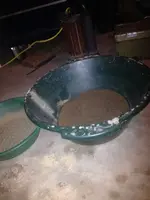
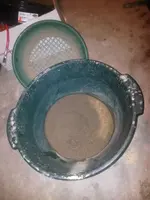
Bottlecap. Here is what I use next to the stream or in my garage and when my wife is gone..... On the kitchen counter. :)

image-3108542201.webp


image-628044198.webp
 
Welcome to the forum.

If you're after glacial gold, it gets deposited in a similar manner.

Find a stream and look for gravel bars. Where you find rocks concentrated in the bar that are fist-sized and larger, dig some dirt and start to pan. Do a check on your local area to see what other heavies are running with your glacial gold: magnetite, hematite, garnets, etc. These super-heavies will be known as your indicator materials, in other words, they will run with the gold. So, when they start to show up in your pan, you'll either be close to the gold (just to the right, to the left, slightly above it, and so on) or right in the middle of it.

So, find out what the common super-heavies in your area are, as they are like bread crumbs for you to follow.

After you dig down around those fist-sized rocks, keep sampling as you go down. The gold should be concentrated in the upper six inches or so. There may be other pay layers, but glacial gold is so light that it gets shifted quite easily, and it's usually found near the surface. So, if you dig a hole to China, you'll very likely punch right through the pay, so sample very carefully as you dig down.

All the best as you go out to try and catch the fever,

Lanny

http://www.treasurenet.com/forums/metal-detecting-gold/69-bedrock-gold-mysteries.html
 
Awesome advice. Thanks Lanny! I like your set up blue!
 
Hi Bottlecap and welcome to the net. There are GPAA chapters in Minnesota you should contact. Go to the GPAA website and go under memberships and chapters and on the right is a dropdown for the state chapters info. They will know where to go there. Not only do you have alot of creeks and rivers you also have alot of gravel pits in Minnesota. I know because I lived there and on the SD/ MN boarder most of my life. As stated before you need to learn to pan first. I do not believe in using bbs or sinkers to learn with for one reason. You will not learn how gold acts or how it looks in a pan. If you get to a gold bearing area in Minnesota how are you going to recongnize what is gold or pirite if you have never seen gold in a pan before? BBs and lead sinkers aren't going to show you. It isn't enough to just know how to pan you need to know what you are looking at. Forget the sinkers and bbs. Make a one time purchase of a bag of paydirt from a reputable dealer like GPAA, Felix, or some who are members here and come highly recomended. Pan the material over and over. You will then know how it acts and what it looks like. Just my thoughts and reasons.

Good Luck!

BH Prospector

BH Prospector you are correct that gold acts differently in the pan than BBs or pellets and should be the first and only choice for starting panners. Also gold is more fun to work with than daisy shot.
 

Users who are viewing this thread

Back
Top Bottom