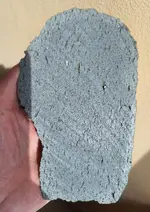
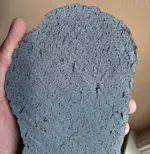
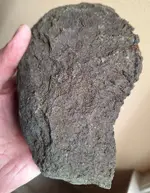
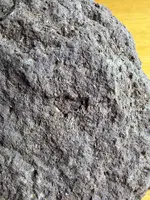
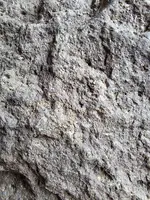
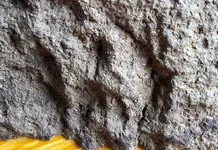
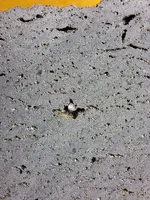
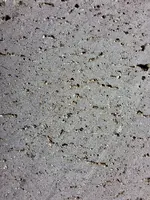
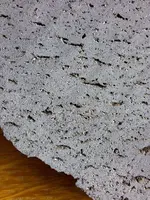
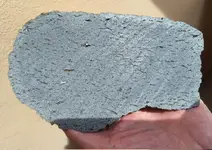
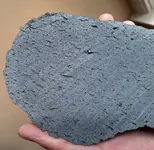
Dear Red-coat, you mentioned the high degree of alignment in my rock, but i have google it in many terms but can not find any examples of basalt that have that feature. Is that feature rare or common? I have also noticed that the rock has pale yellow olivine crystals with a black glassy rim. Do you know how that forms?
This schematic from Alex Strekeisen’s website explains how magmatic flow can influence alignment. Although the diagram specifically references the effect on crystalline minerals within a basaltic magma, exactly the same effects influence the stretching and/or flattening of vesicles in rocks such as basalt, whether the vesicles become crystal-lined or not.
No, it’s not particularly common and depends entirely on the mass, density and viscosity of the magma, the pressures that forced it to the surface, its temperature, and the rate at which it cooled to below solidification point.
You can see the effect very clearly in this sample of porphyritic basalt (picture from Michigan Tech Keweenaw Geoheritage website) with crystalline flow-markers:
This microphotograph (University of Durham, Creative Commons Attribution-NonCommercial-ShareAlike 2.0 Licence) shows an elongated vesicle in basalt that has become crystal-lined:
This one (also from Alex Strekeisen’s website) shows an undistorted vesicle with a crystalline lining. The deposits are usually the result of low-temperature alteration of minerals from groundwater, with the concentric deposits being zoned and progressively growing inwards from the walls of the vesicle as a result of variations in water penetration. The banded colour variations are not always because the minerals are different, but sometimes arise from differential staining as a result of those variations.