rings and jewelry can be lost essentially anywhere on the beach. Both up at the towel line, and down to the water, and anywhere in-between. But in the water, where people frolic around, and cool water's shrink fingers, and prone swimming positions (horizontal with arms flailing in swimming motions) is most condusive for jewelry losses.
However, it really doesn't matter on a beach, where the most-likely-places are, for jewelry or target losses, to begin with. Because mother nature re-arranges sand constantly anyhow. Sand is constantly on the move, with the seasons (barring the higher-up dry sand, beyond the reach of the recent years/decades high water marks).
One storm takes sand out, another brings sand in, etc...
So just because a ring was lost up high, or down low, doesn't mean it stays in that one spot anyhow. Your best bet is to study for when erosion is occuring (on-shore swells and winds that are well-above average, ie.: storm conditions, combined with high tides to aid the surf to crash up high and erode out). When mother nature does this, then figure out where the sluice-box action of the lay-of-the-beach is, to find out where targets are grouped on the wet after such storms. Sometimes that's right at the foot of the cut or scallop/slopes, other times its mid-way out on a parrallel, and other times it right at the lowest tide mark.
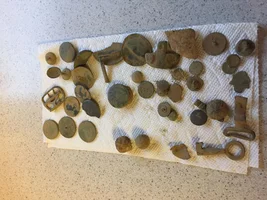
If you've ever gotten into such a "zone" where you can dig 100's of targets non-stop, in an area no bigger than your living room, you'll never go back to dry sand hunting again

And better yet: those conditions often time remove all light-weight objects, leaving only heavy dense items. So kiss foil, tabs, and zinc goodbye 8)