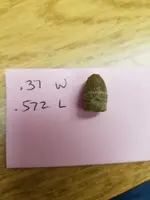
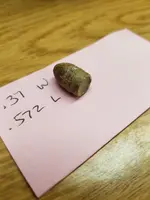
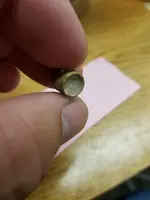
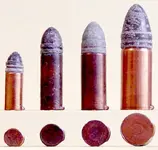
Your pistol bullet has been fired, which had the effect of compressing and thereby widening the raised ring(s) on its body. The small groove above its base isn't actually a groove, it is a "rebate" for allowing the bullet to fit tightly into a metal cartridge's lip. In view of the evidence, including your report of its very-precise diameter measurement (thank you for providing that crucial info), I believe your bullet is a civil war era Ethan Allen patent .36-caliber Lipfire Cartridge bullet. It was made for use in a civil war era Allen & Wheelock .36 revolver. See bullet #51-C in the "Handbook Of Civil War Bullets & Cartridges" by James E. and Dean S. Thomas.