What's new

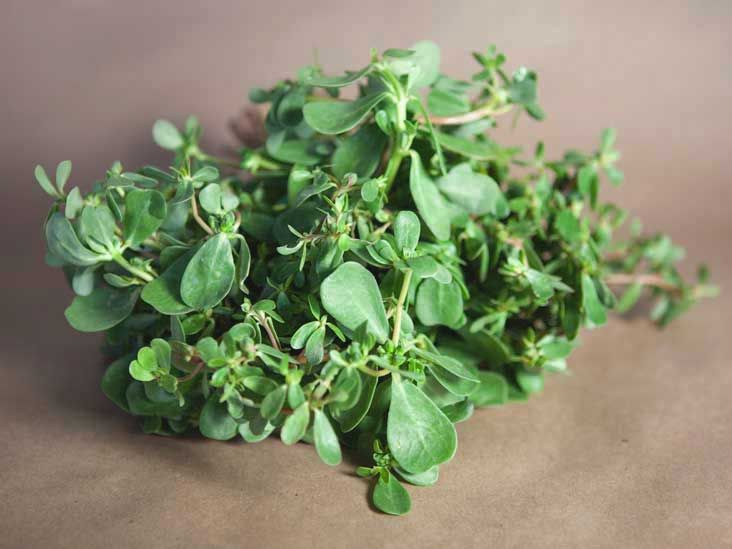
Whos ever eaten this weed

LOL, I eat ir in all forms, raw and cooked. Wife puts whole spinach leaves she pick from pots we have it planted in in her soups, along with ginger, red onions red and yellow bell peppers and lemon grass then chicken or country pork ribs .
Sounds delicious. Did you make enough for all of us?
 
I am now officially someone 'Whos ever eaten this weed ' .

I like it. Adds crunch to a salad. And cooks up with hints of spinach.

I picked a 5 gal pail in about 2 minutes. Cleaning that up was a chore.

Putting most if it up as 'greens' in the freezer, adding to my vast selection of freezer veggies to use in chili, soup, or any meat dish.

So learned something here! Thanks.

I came across this link:

 
We have it around the thousands of hundred [or so] acre fields under irrigation circles all around us. Sometimes, it drives farmers nuts.

The upside is, that means we can get starts for free.

If I grow it here, it would be in a contained environment (e.g., my raised planters).

MEANWHILE, if you lived in Briton, you could buy it in the veggie section of your store.
 
SIDE NOTE: ALL the soil around me is sand, for the most part. For that reason, my wife worries, excessively, about being able to grow anything in it. Accordingly, she buys bags of topsoil to mix in with the sand and rock.

Comes the comedy: We are surrounded by thousands of acres of orchards, vineyards and row crops that grow well in the sandy soil, and the farmers don't add topsoil to make it happen.

Yes, they add fertilizers. Some have started adding compost. They till the organics back into the soil, helping build it.

Local farmers complain, because water drops through the sand (my last farm water bill, fifteen years ago, was $20,000.00 for 200 acres (two fields under irrigation circles). And the fertilizers go with it.

If you want to find zeolite (the best known secret out there), read the ingredients on the bags of stuff autoparts sell for cleaning up oil spills. Some of it is zeolite.

These things said, two things you can add to your soil to hold water and nutriments: (1) Up to 45% biochar /charcoal; and, (2) Zeolite, which latches on to metals (magnesium, etc.) and holds water.

 
Last edited:
SIDE NOTE: ALL the soil around me is sand, for the most part. For that reason, my wife worries, excessively, about being able to grow anything in it. Accordingly, she buys bags of topsoil to mix in with the sand and rock.

Comes the comedy: We are surrounded by thousands of acres of orchards, vineyards and row crops that grow well in the sandy soil, and the farmers don't add topsoil to make it happen.

Yes, they add fertilizers. Some have started adding compost. They till the organics back into the soil, helping build it.

Local farmers complain, because water drops through the sand (my last farm water bill, fifteen years ago, was $20,000.00 for 200 acres (two fields under irrigation circles). And the fertilizers go with it.

If you want to find zeolite (the best known secret out there), read the ingredients on the bags of stuff autoparts sell for cleaning up oil spills. Some of it is zeolite.

These things said, two things you can add to your soil to hold water and nutriments: (1) Up to 45% biochar /charcoal; and, (2) Zeolite, which latches on to metals (magnesium, etc.) and holds water.

Thanks for the tip. I tossed old short branch cuttings all over the top of my garden plot and then torched it over with a weed burner until most of it took on a charcoal appearance. I lightly tilled that in a about three or four inches to the surface. That was all my idea to see if I could replicate a biochar mixture. I believe it did help retain water better in the soil. Mama's not saying anything about the water bill lately.
 
Last edited:
I through short branch cuttings over the top of my garden plot and then torched it over with a weed burner until it turns to a charcoal appearance. I lightly tilled that in a about three or four inches. That was all my idea to see if I could replicate a biochar mixture. I believe it did help retain water better in the soil.
One fellow used his Cat to dig about a 3' deep pit way wide and long. He filled it with branches, lit them, then after they were going good, pushed the dirt he'd mounded making the huge pit back over the burning wood.

After that, it smoldered and turned into charcoal. He, then, tilled that into his fields.

Noting the monster water bill I mentioned above, it could well be a smart farmer would work the $90.00/ton zeolite and charcoal into his soil to see dramatic cuts in his fertilizer and water bills.
 
One fellow used his Cat to dig about a 3' deep pit way wide and long. He filled it with branches, lit them, then after they were going good, pushed the dirt he'd mounded making the huge pit back over the burning wood.

After that, it smoldered and turned into charcoal. He, then, tilled that into his fields.

Noting the monster water bill I mentioned above, it could well be a smart farmer would work the $90.00/ton zeolite and charcoal into his soil to see dramatic cuts in his fertilizer and water bills.
The use of biochar is catching on in this high plains desert country because of the concerns over water usage. I saw a news clip on the use of it in western Colorado and what results they were finding. You got me thinking about adding some zeolite also in my little fart-around operation that keeps me thinking now I've retired.
 
The zeolite thing tickles my funny bone. I happened on it chasing rabbit trails, a couple decades back, and concluded it was the best kept well known secret out there.

NASA uses it in space by pre-charging. It's used to collect heavy metals. It was used it in Chernoble, to capture radiation. It can be found in floor sweep. They use it in horse stalls, because it absorbs all the ammonia. If they set it in the sun and lay glass over it, the sun cooks the ammonia off, and it can be used again. And so in it goes.

Because it has a cation action effect (attracts heavy metals), it can be found in health food stores. When I priced it in one store, it was $60.00 a bottle. Gulp.

I did some research and learned it was the product of volcanic emissions landing in alkaline lakes, and there were several companies around the U.S. harvesting it.

I wrote one relatively nearby company, to learn more about it. They sent me two bags of different fine mesh sizes. I had to laugh, each was about 5 pounds, so, going by the health food prices, I was filthy rich. ;) By the way, they quoted me $90.00/ton.

Again, imagine a field with several hundred tons worked into it. That seems expensive, but the compost we bought and laid on the field was more expensive.
 

Users who are viewing this thread

Back
Top Bottom