What's new

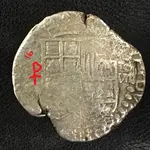
8 Reale Shield Cob Info Please

Mecha1166

Tenderfoot
Joined
Apr 9, 2018
Messages
4
Reaction score
2
Golden Thread
0
Primary Interest:
All Treasure Hunting
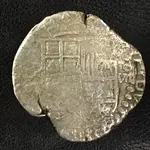
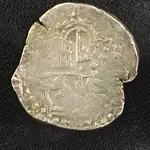
Hello, I am posting here for the first time, like many others. I am not sure where I got this cob. I have researched it as best I can, and think it may be an early 1600s Bolivia cob. Any help would be greatly appreciated. I noticed the letters DV on the RHS of the shield side. What is the full inscription? Thank you very much for any help.
 

Attachments

  • IMG_2762.webp
    IMG_2762.webp
    510.4 KB · Views: 236
  • IMG_2761.webp
    IMG_2761.webp
    502.2 KB · Views: 192
It's possible, but I think Ferdinand V was 1400s to early 1500s, and Ferdinand VI was mid 1700s. This coin looks like 1600s era I think, but I really don't know.
Thanks for helping,
jim
 
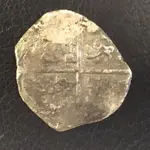
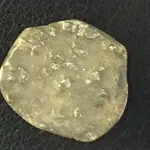
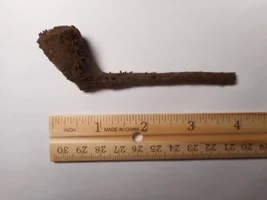
I also have this 2 reale piece, I cannot read anything on it.IMG_2763.webpIMG_2764.webp
 
Let's deal with the first cob. The second piece while hammered doesn't appear to be Spanish. My guess is that it is British. But back to your first piece in question.

It is an early Potosi piece (1617-1640). The use of roman numerals instead of arabic to denote the denomination and there is a faint trace of a date at 10 o'clock on the shield side. I can make out the x6xx. Dates didn't appear on Potosi cobs until 1617. So you have a 23 year window when your piece was minted. Most likely it was produced during the reign of King Philip IV. King Philip III reign came to end in the early years of the stated date range. Now, the assayer is in question. From my deciphering, there appears to be a faint vestige of the upper right bar of a "T". If that is accurate, then it would be Juan Ximenez de Tapia. The problem in nailing down a closer date range is that Juan served multiple terms.

With regards to the legend, it would "normally" read [Name of the King], BY THE GRACE OF GOD, KING OF SPAIN AND OF THE INDIES. It would start at 12 o'clock and proceed clockwise around the outer edge ending at 12 o'clock. So in your specific piece, it would read REX PHILIPVS IV, DEI GRATIA, REX HISPANIARVM ET INDIARVM. That would be the ideal phrasing, but nothing is ideal in these early pieces. There can be much variation. PHILIPVS IV or PHILIPVS IIII is possible. DEI GRATIA can be DEI G., DEI GRAT., or D.G. or just D. INDIARVM can be INDIAR., or IND., or even IN. Confused? Well sometimes the the first "I" in INDIARVM is rendered with a "Y". HISPANIARVM is often abbreviated as HISP. or HISPA. or HISPANI. and in some cases the letter "H" is omitted. During later periods there can be more identifiers in the legend, but that doesn't pertain to your piece.

What you see as "DV" is likely "PV" in philiPVs (I wrote in lowercase to emphasize the visible part that is in question). While it looks evident that it is a DV and not a PV, keep in mind that the "tail" of the "P" could be obscured with the comma-dot delimiter border.

Anyways, that is my WAG.
 
I have a different take... I see the first as a Ferdinand....

And the second as... a hhhh letme look
 
Second... look like a Felipe IV.
 
Thank you very much for the huge amount of information on these, Diver Down and AARC. You seem very knowledgable on these coins - I appreciate the kind help. You have been very nice to this newbie. :)
 
I just drew on your original picture some of the elements that I mentioned. Bear with me as it was the first time I ever used that feature. Old, shaky hands don't make the best art.
Cob_LI (2).webp
 
Mecha1166,
This is a tough one, but its not Ferdinand VI for sure...the obverse is the Hapsburg Shield so its before 1700. On the reverse the Lion (Leon) looks like he's on 1 leg-front 2 paws up and 1 bottom paw off ground, do you see? Those are one of the clues that can help you decipher and help narrow down your example.
Good luck, nice tester its a tough one. I like Diver's thinking of Tapia.
Trez
 
Last edited:
Just based on the dots seeing how it's an early 1600's Potosi, it's probably a sp-18 of Phillip III 1618.
 
It looks like a Potosi 1618 probably off the Atocha ? The lion in the SW corner of the cross has his head on the cross bar of the cross.

There is a better example in the Sedwick auction catalog of Nov 2-3, 2017, item number 240.
 

Users who are viewing this thread

Back
Top Bottom