What's new

A couple Surf-Beaten, Water-worn and Sand-Polished Points

MAMucker

Bronze Member
Joined
Feb 2, 2019
Messages
1,636
Reaction score
2,982
Golden Thread
0
Location
Massachusetts
Primary Interest:
Other
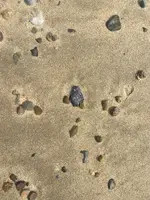
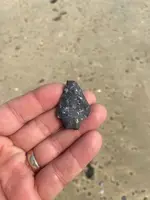
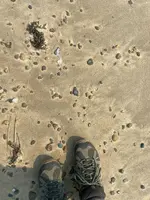
The first is a well-worn Neville made of Black Rhyolite speckled with White Phenocrysts. Both shoulders have been completely rounded over. The only identifier left is the slightly bifurcated narrowing stem
ImageUploadedByTreasureNet.com1632399235.585744.webp
ImageUploadedByTreasureNet.com1632399248.891798.webp
ImageUploadedByTreasureNet.com1632399263.599052.webp

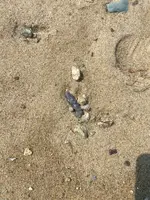
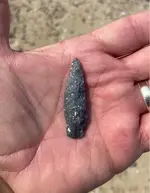
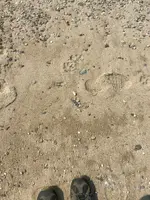
The second I?ll categorize as an Orient Fishtail type. But I could make the argument that it fits in the Lamoka type. It?s well-worn and hard to nail down precisely. Notice that before I got there, somebody almost stepped on it.
ImageUploadedByTreasureNet.com1632399531.346063.webp
ImageUploadedByTreasureNet.com1632399647.690019.webp
ImageUploadedByTreasureNet.com1632399721.452640.webp

Thanks for looking.
 
Last edited:
Upvote 0
Good eye on the two, always a little more satisfying, almost getting it out of someone's else's footprint.
 
Good ones Mucker. I like that naturally polished look.
 
Nice pick ups.
 
It appears marbled rhoylite was the go to lithic in your areas. You find so many made of that material!
The second one is interesting. I found on similar but the base is slightly different. I do agree with with a worn orient fishtail. Back in the day that was a slick point, still really nice find with the wear.

You dont have to answer this but is this on the Atlanric Ocean or is it a bit inland? Not looking to find your location. I ask this because I have terrible luck directly on ocean front. Always have to go slightly inland weather it's a river, bay, creek, extra.
 
Another question.
Would you consider the Neville Slightly fluted? How would you define the small depression on the stem In the photo?
 
Another question.
Would you consider the Neville Slightly fluted? How would you define the small depression on the stem In the photo?

So, I would lean toward both being made of a low quality of black Marblehead Rhyolite. It seems more porous and softer than the higher quality.

Both of these were found inside Cape Cod Bay and open to the Atlantic Ocean. Probably why they are so worn and polished.

The base on the Neville is actually a classic feature of the type. The Stem narrows and the centered indent is a solid identifier. Without that base intact that battered and worn point could not be identified. There is no fluting on the base, but just a small single thinning flake removal.
 
Last edited:
The fishtail point is very nice. I also want to point out that that point could also be typed as a Lamoka point. Indeed, Lamoka was my first thought, and if one reads the discussion of the two types on page 107 of Boudreau’s expanded typology, you can see why it could be a Lamoka. As soon as one sees that convex base, I think the thought arises. Just my two cents, because it can easily be seen as an Orient as well….
 
Roger that Mucker.
Now I know that depression is characterized as thinning.

When I've hunted Oceanfront in the past I always loose patience thinking how many thousand of years of sand has been thrown on top of them. I know a spot that has huge dunes behind a beach directly on Atlantic and some storms due reach the dunes. The spot does have an inlet to a salt marsh. I am going to check it out. I just have terrible luck out front but you seem to do darn good.
Thanks
 

Users who are viewing this thread

Latest Discussions

Back
Top Bottom