What's new

Alzheimer’s patient just REGAINED her memory, speech, mobility, AND bladder control after a SINGLE dose of psilocybin.

Assembler

Silver Member
Joined
May 10, 2017
Messages
4,793
Reaction score
2,682
Golden Thread
0
Detector(s) used
Fisher AQ Pulse, Fisher water old detectors, Older Whites TRs.
Primary Interest:
All Treasure Hunting
This is insane…

An advanced Alzheimer’s patient just REGAINED her memory, speech, mobility, AND bladder control after a SINGLE dose of psilocybin.

 
If it sounds like BS, maybe it is...

I recommend checking out the source:

Nicolas Hulscher, MPH
McCullough Foundation
@NicHulscher
Epidemiologist and Administrator at the McCullough Foundation (@mcculloughfund). Stay informed

"The McCullough Foundation is not considered credible by mainstream medical, scientific, or public health organizations.

Key Credibility Concerns

• Lack of Peer Review: Reports published or promoted by the foundation (such as self-published documents on autism and vaccines) typically bypass independent peer review, instead using open pre-print repositories or unverified platforms rather than established scientific journals.

• Misinformation and Debunked Claims: The foundation's outputs frequently recycle long-debunked anti-vaccine narratives and incorrect claims regarding COVID-19 treatments and vaccine safety, which directly contradict robust global scientific consensus.

• Controversial Leadership: The organization is headed by Dr. Peter McCullough, a cardiologist who has a heavily documented history of spreading medical misinformation and whose past public claims have led to severe professional criticism, loss of board certifications, and legal actions regarding institutional affiliations.

• Association with Discredited Figures: Their publications and reports have involved or cited figures associated with retracted research and scientific fraud, including Andrew Wakefield."

- Geowizard
 
Interesting. hopefully it will give them an avenue for research. I just lost my sister-in-law to that horrible disease about a month ago.
Research could be interesting and possibly productive.
 
It's already been tried in controlled scientific testing. :hello:

One uncontrolled test doesn't prove anything. Looking at credible sources is a beginning.

The earliest formal clinical trials evaluating psilocybin in patients with cognitive decline began around 2021, led by researchers at the Johns Hopkins Center for Psychedelic & Consciousness Research evaluating its safety and efficacy for treating depression linked to early-stage Alzheimer's disease and mild cognitive impairment.


Johns Hopkins University Pilot Study: Initiated in March 2021 (estimated completion 2027), this pioneering trial tests synthetic psilocybin paired with psychological counseling to treat depression and improve quality of life in participants with early-stage Alzheimer’s disease or mild cognitive impairment.


UC Berkeley PLASTICITY Study: Launched to examine how psilocybin impacts brain plasticity, memory, and emotional regulation in healthy older adults (ages 60 to 85), establishing foundational safety and neuroimaging data for older cohorts.


UCSF Trial on Aging and Biomarkers: Registered to analyze functional brain changes, electrical activity (EEG), and neuroinflammation markers in older adults relative to Alzheimer's disease pathology.


Notable Observations and Case Reports

• Advanced Alzheimer's Case Report: Published recently in 2026, a documented observational case of an octogenarian with advanced Alzheimer's disease given a high-potency supervised dose of psilocybin-containing mushrooms reported transient multi-domain functional recovery, including temporary lucid speech and restored continence. Researchers heavily caution that this single, uncontrolled observation does not prove disease reversal and emphasize that rigorous clinical trials are mandatory.


Relevant, credible research is needed! :thumbsup:

Edited to improve content.

- Geowizard
 

Attachments

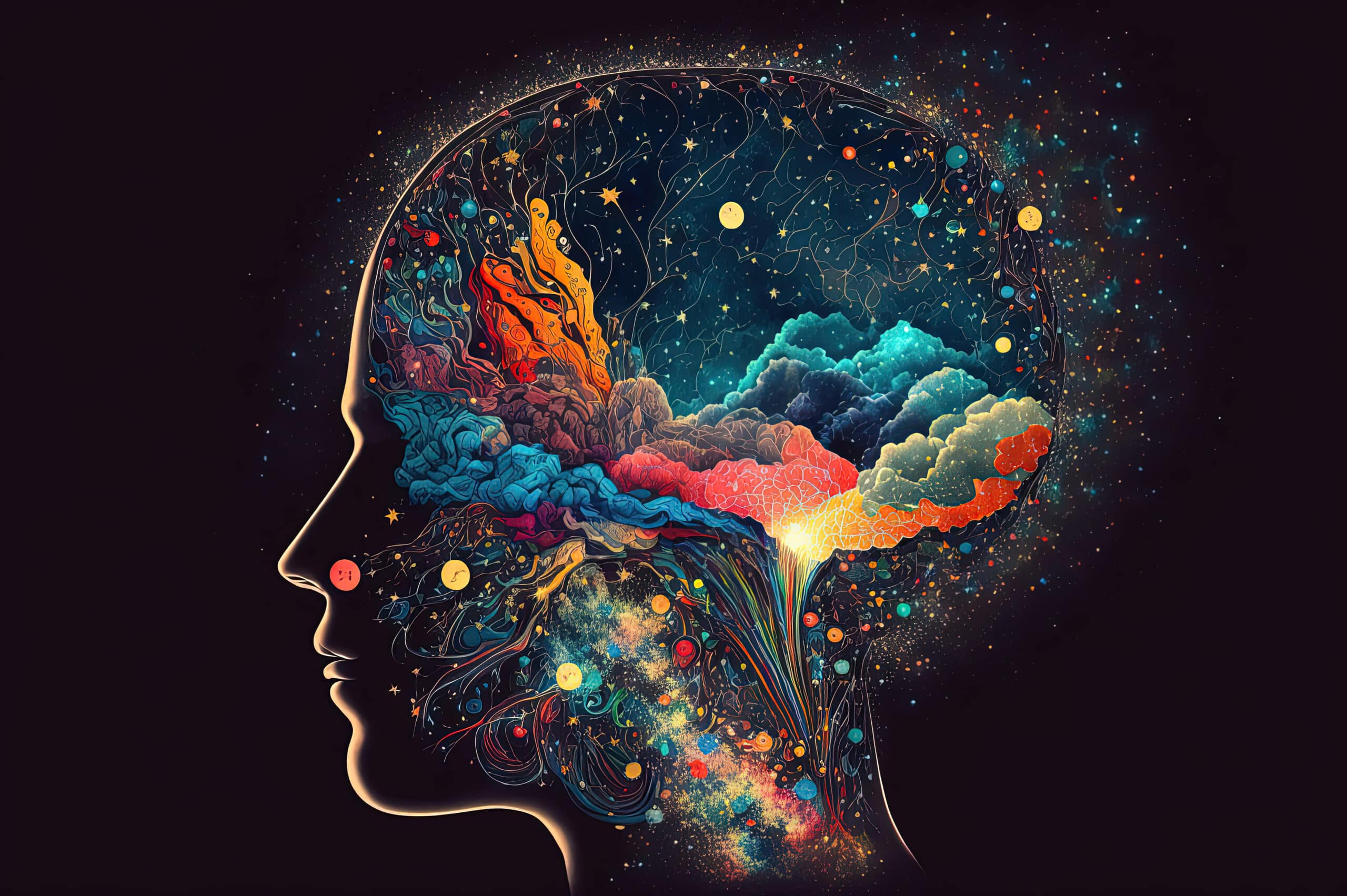
  • AdobeStock_560996596-1536x1022.jpeg.webp
    AdobeStock_560996596-1536x1022.jpeg.webp
    147.6 KB · Views: 18
Last edited:
By example, other studies demonstrate the process:

Modern clinical research is investigating LSD (lysergic acid diethylamide) as a potential treatment for mental illnesses like depression and anxiety, though it is not yet an approved standard medicine.

How LSD is Studied in Psychiatry

• Clinical Trials: Scientists are testing small, controlled doses of LSD paired with talk therapy to see if it helps reset brain patterns.

• Target Conditions: Current studies focus on major depressive disorder, anxiety related to life-threatening illnesses, and substance use disorders.

• Therapeutic Process: Treatment models involve preparation sessions, a supervised dosing session where the drug is active, and integration sessions to process the experience.

Risks and Current Status

• Regulatory Status: LSD remains a Schedule I controlled substance in many places, meaning it is illegal outside of approved research settings.

• Side Effects: Risks include intense psychological distress, high blood pressure, increased heart rate, and potential triggering of underlying psychotic disorders.

• Medical Supervision: Taking LSD without a doctor's care is unsafe and unpredictable.

Editorial Note:

This is for informational purposes only. For medical advice or diagnosis, consult a professional.

- Geowizard
 
The hard part;

Confirmation bias enters in to observation because we want a positive outcome and dismiss other possibilities like "cause and coincidence"!

"My Manticore detected a one gram gold nugget at three feet!" Conclusion?

- Geowizard
 
The hard part;

Confirmation bias enters in to observation because we want a positive outcome and dismiss other possibilities like "cause and coincidence"!


- Geowizard

actually That Works Both Ways with Those That Have been Told all Their Life That psilocybin Will Kill Ya , by Parents , Politicians & Police Who Never Even Seen it Let Alone Tried it, Will Be Hard Pressed To Convince :coffee2:

It's The Cannabis thing all over again

Of course I Can Believe the Memory & Speech as It's a Brain Thing

The Mobility & Bladder Control Seem Very odd if true.
I Don't see How It can Improve Muscles
 
Last edited:
One uncontrolled test doesn't prove anything. Looking at credible sources is a beginning.
"Credible sources" have lost almost all credibility since 2020, IMO. I am highly skeptical of the claim made in the opening post, but just because "experts" disagree doesn't mean anything to me.
 
"Credible sources" have lost almost all credibility since 2020, IMO. I am highly skeptical of the claim made in the opening post, but just because "experts" disagree doesn't mean anything to me.
Just how many millions of people have died since 2020 in part due to 'Credible sources'????????
 
Many more people have died because of BS? :dontknow:

- Geowizard

 
Critical thinking dictates "readers beware";

Readers have a choice in verifying what they read. Credible sources are recognized for their "foundation" of knowledge. You can take it to the bank! :thumbsup:

- Geowizard

 
Ask,

Why do certain cultures excel in technology, medicine, science, mathematics and engineering? Maybe one clue is...

There is a common thread in social systems that recognize and accredit certain values. ::)

- Geowizard

 
"Credible sources" have lost almost all credibility.
Highly agreed. I feel bad for my grandma because she keeps reading mis-information, she says the world is going to end the next week every week, she stays on calls with people trying to scam her saying she won $2,000,000, she thinks YouTube ai cat-dances are real, etc. :angry2:
 
Well time will tell more if there is a follow up research.
 
The research is on-going;

It's a "thing". Research follows money and opm follows research! :icon_study:

- Geowizard

 
The last time I tried it, the tracers and visions started, then the couch I was on stood up on the end and started swirling around as I was clinging to it to try to hold on. I couldn't and was "tossed onto the floor".

All I can say after the experience I was at ease for months reflecting on the phenomenon.
 
allopathic medicine vs alternative medicine

Allopathic medicine and alternative medicine represent two fundamentally different approaches to healthcare, distinguished by their underlying philosophies, treatment methods, and scientific validation. While allopathic medicine serves as the cornerstone of mainstream global healthcare, alternative medicine encompasses a diverse array of traditional and holistic practices.

The primary differences between the two systems are organized below:

Core Comparison

FeatureAllopathic MedicineAlternative Medicine
Common NamesConventional, Western, mainstream, or orthodox medicine.Non-traditional, holistic, or non-allopathic medicine.
Core PhilosophyDisease-centric. Focuses on isolating and treating specific symptoms, pathogens, or organ failures using a system of "opposites" (e.g., using an antibiotic to fight a bacterial infection).Whole-body (Holistic). Focuses on balancing the body’s overall energy, environment, and interdependence to stimulate its innate healing ability.
Primary MethodsPharmaceuticals, radiation, surgery, and physical therapy.Herbal remedies, acupuncture, chiropractic adjustments, homeopathy, and lifestyle changes.
Scientific BackingHeavily reliant on rigorous clinical trials, peer-reviewed data, and strict regulatory oversight.Often relies on historical tradition and anecdotal evidence; generally faces skepticism due to a lack of extensive clinical trials.
Main StrengthsHighly efficient in acute emergencies, trauma care, complex surgeries, and managing severe infections.Excels in preventive care, wellness optimization, and managing some chronic lifestyle conditions.
 

Users who are viewing this thread

Back
Top Bottom