What's new

Am I doing something wrong?

JTnew

Greenie
Joined
Mar 12, 2010
Messages
13
Reaction score
0
Golden Thread
0
I'm about 5-6 hours into this now and I had a few questions. I've found a ton of the normal junk and a few coins here and there.

What I can't figure out is why my detector comes up with ring/gold so often and when I dig it's just scrap metal of some sort. Very annoying. I had my first signal today that stuck right in the middle of ring/gold no matter how many times I scanned it (usually it bounces around a bit) and it ended up being a rusty piece of some metal. Definitely not gold or decorative or anything.

Am I doing something wrong? Also, when I dig down a few inches and rescan... it then comes up as iron or foil... but never on the first few swipes before digging.

Any advice?
 
Upvote 0
No you are not doing anything wrong. Machines can not tell if the object is a ring or pull tab. The reading of ring/pull tab is correct.
Your machine is reading alloys and metals. The alloys in a pull tab are also in a ring. No matter what machine you have it takes time to learn it and the readings and tones it is telling you. If you want to find rings you will have to dig all the signals until you master your machine and the tones. Remember what the readings are on what you find and don't always believe what the screen is telling you. I got a strong quarter signal once and it was actually a silver wedding band. Another was a pull tab reading and it actually was an earring. Welcome to this great hobby and post what you find. I have been doing this for 30 years and I am still learning.
 
Thanks for the response. I had one other question too...

I have a "50 cents" and "$1" indicator on my detector. What metals would those likely be? Just wondering what type of things I might be hovering over... I have gotten quite a few "$1" indicators with large sizes that I have passed on because they were larger than 4 inches in diameter.
 
JTnew, rest assured ....... treasurehound has it all wrong when he says there is no way to tell the low conductive trash, from the low conductive gold. Unlike you and I, he obviously hasn't seen the Whites commercial: "See what's in the ground before you dig". I, however, have the secret programming instructions which allow you to actualy dig only rings, and not junk in those categories.

Naturally, I can't go posting the program on an open forum like this. So I'll tell ya what: Send me $100, and I'll send you the program to edit into your machine. This offer is open to anyone else too: paypal me $100, and I'll send it to you too. The cost will be quickly off-set, as you effortlessly go into junky blighted parks, and dig only gold, while leaving the rest behind.

It's the least I can do for the furtherance of our great hobby! :icon_thumleft:
 
what kind of MD are you using ?
 
my DFX did the same thing on big steel, it would either ring up as 50 cents or a dollar
the way I detect now, is to make sure I have a good repeatable signal, the smaller the better.
it does sound like you are using it correctly, it just takes time to learn your MD
 
JTnew said:
Am I doing something wrong? Also, when I dig down a few inches and rescan... it then comes up as iron or foil... but never on the first few swipes before digging.

Any advice?

Practice, practice, practice. Unfortunately, in spite of the advertising and salesman's pitch, a metal detector can only measure conductivity and inductance of those objects which pass within it's field. It can be a relative thing: that is, a quarter at four inches has about the same conductivity as a 40" tractor tire rim at four feet depth.

The better detectors will tell you iron (and ferrite-type minerals) from other metals, and some will truly mask out iron when you wish them to. But all detectors depend on the relative conductivity of metals and ASSUME you are over a single coined sized object. A fast detector will isolate multiple targets under the coil, but a not-so-fast one will average the conductivity of whatever is there and suddenly two bottle caps and a gum wrapper read "Quarter!"

Don't trust a detector with a dozen icons that attempts to describe the millions and millions of possible metal items buried in the top foot of soil. Starting out you'll have to dig everything to find out what the detector is trying to tell you. It has a very limited vocabulary.

Gold rings are not nearly as conductive as clad quarters. The bad news is if you want to dig rings you'll have to dig a lot of pull-tabs and bottlecaps. That's called "paying your dues" and we've all done it.

Takes a while to learn some tricks. And even then I'm surprised almost every time out. I still have days I dig evetything. You never stop learning metal detecting. You just get complaicent. :wink:
 
Sniffer said:
my DFX did the same thing on big steel, it would either ring up as 50 cents or a dollar
the way I detect now, is to make sure I have a good repeatable signal, the smaller the better.
it does sound like you are using it correctly, it just takes time to learn your MD


The 1350 works the same way and it's just a given you have to chase some.
 
Your doing NOTHING wrong.


Wecome to the world of detecting.
Keep digging one of those hundreds of tones is truly a gold ring.
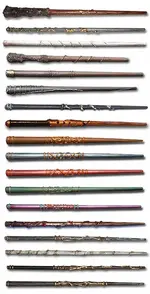
They have yet to master the "magic wands in our field" :icon_scratch:

More_wands_array_425.webp

Wouldn't it be nice?
 
As stated by everyone else, you are doing nothing wrong! Sometimes it takes a lot of trash to find the good stuff. Rings and pulltabs go hand in hand. The next one you dig just might be the $5000 ring!
 
the advice to "dig trash till your arms fall off, lest you discriminate out gold rings" is only part of the equation to finding gold rings. The BIGGER part, is a question of WHERE you hunt. If you want to up your ring odds per trash ratio, try swimming beaches.

I always get a chuckle when a frustrated trash digger gets the advice that ....... to find gold rings, they merely need to lower their disc. The poor newbie heads out to blighted urban parks, and proceeds to dig 1000 aluminum items. Doh! ::) What good did that do? So you see, it's also a bigger function of where you're hunting, to get to places where the rings ratios are better, to begin with.

I've been at ocean beaches after storms, where there is literally no aluminum whatsover (because all the lighter debri is taken out by the erosion processes, leaving only the heavier coins, jewelry, fishing sinkers, etc....). In-land lake beaches wouldn't have that "erosion", but as long as they're swimming beaches, their jewelry ratio would be higher. Things like slippery suntan lotion, and cooler waters that shrink fingers, are a perfect recipe for jewelry losses. Other factors are: Taking jewelry off for "safekeeping", frolicking around on the sand for volleyball and such, lying prone/vertical to swim or lie on beach blankets (an un-natural normal position), digging in the sand with your hands/fingers, etc..... All bode well for higher jewelry ratios. Sand is easier to dig in too :)
 
So I'll start digging the ones that bounce between pull tab and gold/ring. Do you guys even recommend touching the ones that come up as solid pull tab and don't switch between the two?
 
JTnew, there is absolutely no way to know what is aluminum, and what is gold (to answer your question of ones-that-lock-on, verses ones-that-bounce, etc....). If anyone ever tells you there is a recipe to discern gold vs aluminum (whether by TID bounces, tones and sounds, etc...) then do this: Quickly take them out to the nearest inner-city blighted urban park, and turn them loose. See how much gold they find, while leaving trash in the ground ::)

Gold jewelry comes in all different shapes, sizes, and karots, and is at a million different depths and angles of placement in the ground. Therefore it can mimic every single conceivable pulltab, foil wad, etc.... Sure: a nice perfect round pulltab may ring nicely on "pulltab" every single time, with no bounce. But so too will there be gold rings that can do that too, also at that exact same TID setting.

About the only thing you can do is what's called "ring enhancement" programs. For that, you're merely nixing out the most commonly recurring types of junk. So for example, if there are lots of ring tabs that all hit nice and steady at the same spot on your TID, you nix that one signal/tid out. If there's lots of little foil, then you nix that out. The way it works, is someone 25+ yrs. ago, when TID scales first came out, went and tested hundreds of gold rings, and made a computer program of where they hit on the scale. Then they went and tested hundreds of typical park trash. By using mathematical odds formulas, they were able to come with programs that will up your ring odds. So for example, even though a ring could ring right at pulltab, they discovered that only a small percentage of rings actually really read right on pulltab. And so on, and so forth. But rest assured, you will miss gold rings doing this, and you will still dig lots of junk. Especially when you're in a place with can slaw, which can read all over the spectrum of TID's. And especially with a machine that gives bouncing TIDs.

The bottom line is, as I say, if gold rings are your goal, give up trying to think you can pass aluminum to get them. Go to a place where gold jewelry ratios are better, to begin with, and THERE you can dig all your low conductors.
 
Thanks to everyone for the replies.
 
JTnew said:
So I'll start digging the ones that bounce between pull tab and gold/ring. Do you guys even recommend touching the ones that come up as solid pull tab and don't switch between the two?

JT, Tom is giving you excellent advice......

One of my hunting partners pulled up multi-thousand dollar ring out of the water at a beach, all indications on both his and my high dollar water detectors said it was a pulltab, that is till it came out of the water and you look in the scoop.

If you try to skip digging pull tubs you may as well give up on gold rings. If you try to descriminate out aluminum you are descriminating out a lot of gold.....

The secret to finding more then the "once in a blue moon" gold ring is to go where they are lost most often....Beaches and swimming areas are #1 place. And dig all signals......What kind of detector aree you using? If your using a Minelab, then don't dig the "nulls" if target nulls in all directions... I have seen corroded bottle caps that sound just like a good target as well...
 

Users who are viewing this thread

Back
Top Bottom