What's new

Any silver here?

rickertmork

Sr. Member
Joined
Jul 5, 2024
Messages
397
Reaction score
828
Golden Thread
0
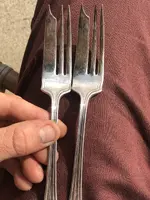
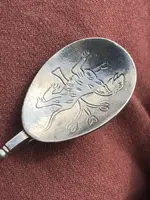
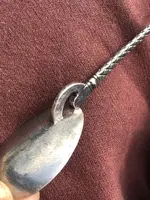
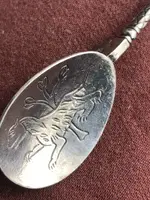
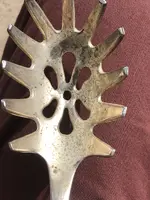
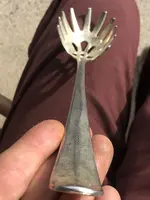
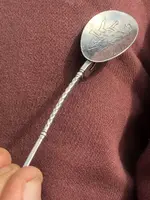
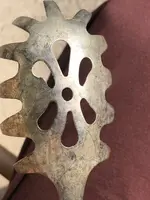
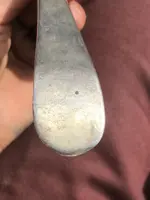
The salad spoon /fork has no markings same with the weird little spoon. The other forks I can’t identify
 

Attachments

  • IMG_7351.webp
    IMG_7351.webp
    2.7 MB · Views: 151
  • IMG_7342.webp
    IMG_7342.webp
    4.2 MB · Views: 125
  • IMG_7341.webp
    IMG_7341.webp
    2.9 MB · Views: 118
  • IMG_7345.webp
    IMG_7345.webp
    2.7 MB · Views: 129
  • IMG_7344.webp
    IMG_7344.webp
    2.9 MB · Views: 127
  • IMG_7343.webp
    IMG_7343.webp
    2.2 MB · Views: 114
  • IMG_7348.webp
    IMG_7348.webp
    2.1 MB · Views: 112
  • IMG_7347.webp
    IMG_7347.webp
    875 KB · Views: 109
  • IMG_7346.webp
    IMG_7346.webp
    2.8 MB · Views: 106
  • IMG_7349.webp
    IMG_7349.webp
    1.4 MB · Views: 101
  • IMG_7350.webp
    IMG_7350.webp
    1.2 MB · Views: 107
Upvote 8
I don't see any sterling.
A1 is like a triple plated piece of cutlery.
I buy it as a premium over yellow brass.
Just for deplating the silver.
 
Rogers cutlery is almost always silver plated. A1 is definitely plated. Coin silver from the 1840's or so isn't always marked, but you can test it two ways. Run your metal detector over it and it should read in the low 80's (AT Pro) or whatever a silver dime should ring up as on your detector. Another test is to clean it with silver polish and a paper towel. Sterling or coin silver will turn the paper towel really black with minimal effort. Silver plated items might turn it slightly black as well, but it doesn't clean up as well. You might see dull spots from wear, which is a sure sign it's just plated.
 
Likely all are plated. If you're just going to scrap them, cut them in half and see what's inside.
 
Likely all are plated. If you're just going to scrap them, cut them in half and see what's inside.
So you think I did good with identifying the silver plated? Or are the unmarked ones not even
Silver?
 
Hard to tell if the plating is in good shape. I've never run across a Sterling item that wasn't marked Sterling, but, I guess it's possible.
 
Hard to tell if the plating is in good shape. I've never run across a Sterling item that wasn't marked Sterling, but, I guess it's possible.
It’s too not uncommon for it not to be marked sterling, there are different hallmarks, especially older ones and foreign ones.
 
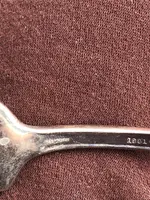
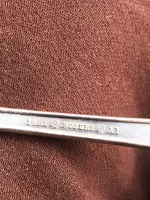
The forks with one tine broader than the others are cake/pastry forks. The ‘1881 Rogers’ mark is just a trademark, not the date the forks were made. It’s William A. Rogers’ boastful claim for the year he founded his business, although that was actually in the 1890s. The pattern is ‘Scotia’, designed by William A. Jameson and first produced in 1915 (some sources say 1908, which I believe to be incorrect). The same trademark was also used by Oneida Ltd. from 1929 onwards after they acquired the Rogers business. As already said the ‘A1’ mark is a silverplate quality mark.

The spoon with the animal in the bowl is for jam, honey, and other preserves. The depiction is a ‘heraldic tyger’ (customarily spelled with a ‘y’ to distinguish it from a zoologically accurate tiger). It might be a souvenir spoon or, conceivably, depict a family crest. It’s probably silverplate, unless otherwise marked (but the word ‘STERLING’ is of course not the only term used to distinguish silver from plate).

The utensil with the spikes and piercings is for serving ‘long’ pasta (spaghetti et al.) Again, that’s probably going to be silverplate, unless otherwise marked.
 
The forks with one tine broader than the others are cake/pastry forks. The ‘1881 Rogers’ mark is just a trademark, not the date the forks were made. It’s William A. Rogers’ boastful claim for the year he founded his business, although that was actually in the 1890s. The pattern is ‘Scotia’, designed by William A. Jameson and first produced in 1915 (some sources say 1908, which I believe to be incorrect). The same trademark was also used by Oneida Ltd. from 1929 onwards after they acquired the Rogers business. As already said the ‘A1’ mark is a silverplate quality mark.

The spoon with the animal in the bowl is for jam, honey, and other preserves. The depiction is a ‘heraldic tyger’ (customarily spelled with a ‘y’ to distinguish it from a zoologically accurate tiger). It might be a souvenir spoon or, conceivably, depict a family crest. It’s probably silverplate, unless otherwise marked (but the word ‘STERLING’ is of course not the only term used to distinguish silver from plate).

The utensil with the spikes and piercings is for serving ‘long’ pasta (spaghetti et al.) Again, that’s probably going to be silverplate, unless otherwise marked.
Thank you, the tiger spoon and big pasta spoon have zero markings.
 
I've sold quite a few coin silver spoons on eBay that had no markings to reveal that it was coin silver. Some companies probably did that to hide the fact that they were selling silverware that was less than .925 silver.
 
I've sold quite a few coin silver spoons on eBay that had no markings to reveal that it was coin silver. Some companies probably did that to hide the fact that they were selling silverware that was less than .925 silver.
I saw a video some guy was cutting old community plate silverware to scrap the silver plate, and he realized it was pure silver (almost) he was bummed, it’s a tricky business.
 
flame silver with a cigarette lighter or any flame and it turns color instead of metallic then it is silver, if the silver doesn't turn color after firing, it is prob. platinum.

Jamison
 
flame silver with a cigarette lighter or any flame and it turns color instead of metallic then it is silver, if the silver doesn't turn color after firing, it is prob. platinum.

Jamison

Solid platinum would be an unlikely choice for flatware, primarily because of the cost, unless produced to order as a very high end luxury or collectible item. Flatware advertised as ‘platinum’ is more readily obtainable, but is made from high grade stainless steel (Austenitic, so non-magnetic) coated with a thin mirror platinum finish, such as the Lenox ‘Federal Platinum Collection.’

The flame test is not a reliable diagnostic for silver versus platinum. The tarnishing seen on silver when exposed to a flame is a result of copper oxidation. For sterling silver with 7.5% copper it’s readily seen and also on average quality silver plate. Platinum of course will not tarnish, but neither will ‘fine’ silver because it’s 99.9% pure with no added copper. Fine silver isn’t generally used for flatware because it’s too soft, but quality electroplated items may not tarnish either (depending on the thickness of the plate) because the silver is deposited as essentially pure metal.

Silver is the best thermal conductor of all metals, so it can often be distinguished by a hot water test. Silver items (both fine and sterling) immersed in hot water will heat up rapidly and retain the heat for longer compared to plated and base metals (or platinum). Some experience is needed to judge this (by pressing against your cheek for example) and, ideally, something of known composition to act as a comparison.
 
Last edited:

Users who are viewing this thread

Back
Top Bottom