What's new

Beach machine

dhearn

Jr. Member
Joined
Jan 3, 2012
Messages
61
Reaction score
8
Golden Thread
0
Location
Sallisbury MD
Detector(s) used
Minelab Explorer Se Pro
Primary Interest:
All Treasure Hunting
What is the best beach machine. I just want to hear some opinions. Has anyone used the F75 Ltd on the beach.
 
dhearn, when you say "what is the best beach machine", that question is way to vague and "loaded". You have to be specfic on the type beach, your type goals, etc...

For example, did you mean the balls-to-the-walls absolute deepest seeking? Then you can get a nugget pulse machine, of various sorts, and GAURANTEED you "won't miss a thing". You can find birdshot and staples, pinheads, bobbypins, to insane depths. And coins to 1.5 ft. or more! And you'll be utterly content you "haven't missed a thing" and can look smuggly at those poor souls who only have a standard coin machine, who *only* reach to 11", and miss dangly gold tinsel thin chains, and earing studs, etc...

However, you might find yourself "hating life" by having no disc, and digging nails or bobby pins at 1 ft! I mean, pity you when you're trying to work the beach after a storm, where targets are everywhere, and depth becomes a non-issue, and speed becomes the name of the game. Your pulse machine may make you the laughing stock on days like that, where you'll suffer 10 bent nails for any conductor you dig :(

Or as one person humorously put it: The good news on the beach pulse, is that it's SO sensitive, that you can pick up bobby pins at 1 ft deep! And you know what the bad news is? That the beach pulse is SO sensitive, that you can pick up bobby pins at 1 ft. deep! :tongue3:

So it just depends on what you want, your patience and tolerance, the type beach you're hunting, mineralization, etc....
 
Tom in CA is right, depends on how you use it. I use to use my xt-505 or my compadre for dry sand hunting. both were not good in the surf or wet sand. So i bought a sand shark for the surf, works great, also do'es the ndry sand great. Best thing is now i only use one machine for the whole beach. I went with the sand shark for the reputation and the price, never looked back.
 
yes, as hunter says, the question also needs to know: wet sand or dry sand? And fresh water (lakes) or salt-water beaches? There are hunters who, for example, use one type machine when hunting the dry sand (the 1266, for instance), yet another type for the wet salt (Sov. or Excal, for instance). Or if you're at a touristy clean upscale beach, that doesn't allow beach bonfires (which tend to introduce nails via wood that people burn), then you can try some beach pulse machines.
 
The quest for the perfect metal detector to this point has been quixotic. Minelab, has come the closest to building a fully submersible beach machine that can discriminate out iron in wet sand and saltwater. The “Excalibur” uses Broad Band Spectrum, or “BBS” technology, and retails for about $1,300.00. According to Minelab, their BBS operating system, “simultaneously transmits, receives and analyses a broad band of multiple frequencies to deliver substantial detection depth, high sensitivity and accurate discrimination for a wide range of target types.” The key takeaway here is “multiple frequencies.” Unfortunately, radio waves regardless of their frequency still have to be filtered and balanced in heavily conductive wet-ocean sand and highly mineralized saltwater. That limits the systems depth capabilities.

Single frequency VLF machines (Very Low Frequency), have even more limitations in the harsh saltwater environment. Take for example the Tesoro Lobo Super Traq. This VLF single frequency machine (17.9Khz) is one of the finest and deepest gold nugget finders on the market today. The Lobo Super Traq, is capable of finding BB-sized gold nuggets eight-inches deep in heavily mineralized ground, or a nickel in dry beach sand at 14-inches. Put that same nugget – or even the nickel, seven-inches deep in wet saltwater sand and the Lobo could walk right over it while chattering, or maybe without seeing it at all. Why?

The magnetic iron sands (“Black Sands”), salt, and high concentrations of other minerals in the water and sand conspire to bounce the radio waves away from the target. Conductivity and mineralization act like a shield around the target and create white noise that must be filtered electronically. Think of it as turning on your bright headlights in a heavy fog at night. All that powerful light is diffused and causes a complete white out – you can’t see anything three-feet past the hood of your car! However when you turn on your yellow fog lights, you can see a little further – not as far as you could in clear daylight, but further. That is why all radio wave machines must be “ground balanced” or tuned, to maximize their depth potential, and why BBS filters and multi-frequencies are so effective – yet still limited.

Unlike BBS and VLF metal detectors, which constantly send and receive thousands of low frequency radio waves per second, a Pulse Induction (PI) metal detector fires high-voltage pulses into the sand several hundred times per second. If no metal is present the electric pulse decays at a uniform rate with no anomalies. When metal is present a small “eddy” current flows through it causing the voltage decay time to increase, which creates a measurable anomaly. Unlike VLF radio waves, electronic pulses are impervious to the effects of conductivity and mineralization, and are unaffected by salt or black sands.

PI metal detectors give the user superior depth capabilities in all metal detecting situations and soil conditions. Using the same heavy fog at night metaphor that I referred to earlier, pulse induction is like headlights that cut completely through the fog as if it were not there at all. The trade-off for that added depth and clarity is the inability to discriminate, or block out iron targets that you generally don’t want to waste time and energy digging. While a pulse induction machine detects all metals without discrimination, the minute differences in the signal tone and quality can give a skilled and experienced operator a clue as to what the target may, or may not be.

Will one machine do it all? Not in my opinion. I always advise new beach metal detecting hobbyists to have a VLF machine for dry sand (as well as their other dirt detecting needs), and a PI machine for the water and wet-sand (and deep farm field and relic hunting). In truth, it all comes down to what you prefer and can afford. Good Luck!
 
Tom in CA is right, depends on how you use it. I use to use my xt-505 or my compadre for dry sand hunting. both were not good in the surf or wet sand. So i bought a sand shark for the surf, works great, also do'es the ndry sand great. Best thing is now i only use one machine for the whole beach. I went with the sand shark for the reputation and the price, never looked back.
Heard good about about the xt 505. Curious where you are, and what you hunt? Perhaps with rough %'s? I'll google for good price on one. After I check our sponsers. Here in Louisiana we have heavy ground mineralization(mid to high 70's), with a low in salt water(gulf coast), which is good for my At-pro at the beach, I understand. But I haven't done the salty beach yet. (soon)
THanks,Ray
 
I won't try to tell which one to buy. That is a decision you have to make and live with. What I will tell you is what I use and why. I use a ten year old White Surfmaster PI. I can use it on wet or dry sand. Salt or fresh water beaches. It finds to much, it is true and I dig all signals, big and small. It pickes up fine gold chains and just about anything else. I use a custom made long handled scoop and usually have the target on the first or second scoop. This detector can fast scan so I don't waste time poking along. I also use it for some of my cache hunts. Good luck on your choice. Frank
 

Attachments

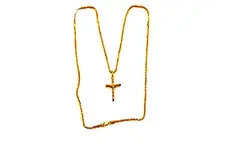
  • gold cross chain.webp
    gold cross chain.webp
    11.8 KB · Views: 164
Minelab...FBS Technology great on the beach!
 
Yes, just checked. 505 a bit over $500 But where are you guys, Hunter12 and frankin? Seems some parts of the country have ** asterisks. Mineralization differences.
 
Relic, You can probably get a used Whites Surfmaster for less than that. I am in Maryland, But most beaches are the same except for black sand, and the Surfmaster will pull coins from black sand . I know, I have done it. It is basicly a turn on and go detector, no hard learning curve. Frank
 

Attachments

  • hand print-2_edited-6.webp
    hand print-2_edited-6.webp
    8.1 KB · Views: 197
Take a look at the Garrett Infinium. Waterproof to 200 feet and with a Pulse Induction Circuit tuned for nugget hunting,
as in "Good on gold." Get the 10X14 Mono coil if you get one.
Rich
 
I aways recommend go watching the locals, see what is used in your area.

I would guess you are going to hunt the Bay, and possiblely The Ocean. Most here that go into the waters of the Chesapeake Bay use CZ20/21's, And for the dry I have seen everything used. At the Ocean, OC, VB, in the water most used the excaliburs, then the dry you will see everything again. Which is the Best, None..No one detector can do it all. The F75 would work for you in the dry, the good is you know it.
 

Users who are viewing this thread

Back
Top Bottom