You are using an out of date browser. It may not display this or other websites correctly.
You should upgrade or use an alternative browser.
You should upgrade or use an alternative browser.
Flint type ?
- Thread starter russau
- Start date

tamrock
Platinum Member
Seems any microcrystalline quartz rock such as agate or chert would do the job, from what I'm finding online.
russau
Gold Member
- Joined
- May 29, 2005
- Messages
- 9,498
- Reaction score
- 10,788
- Golden Thread
- 0
- Location
- St. Louis, missouri
- #3
Thread Owner
Thankyou Sir ! I should have asked there to begin with but your reply did the trick ! 
tamrock
Platinum Member
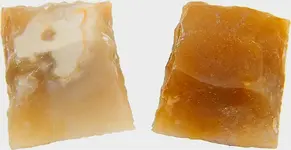
I did find on one site this product being offered as premium English flint for your muzzle loader. So maybe in the days of the flintlocks there could've been a material thought to be better than others.Thankyou Sir ! I should have asked there to begin with but your reply did the trick !
Attachments

Red-Coat
Gold Member
- Joined
- Dec 23, 2019
- Messages
- 7,919
- Reaction score
- 25,124
- Golden Thread
- 0
- Location
- Surrey, UK
- Primary Interest:
- All Treasure Hunting
For centuries, Brandon in Suffolk was the centre of the gunflint industry in Britain because of the high quality flint found in the area. The town was a major exporter, including to colonial America, along with gunflints from France, Spain and the Netherlands.
America doesn't have any true flint by geological definition apart from 'Niobrara Blue' coming principally from Kansas. The way the term 'flint' is generally used in America came from a non-geological distinction between cherts of differing quality, with the term 'flint' being used for the higher qualities.
Geologically they aren't the same thing, although flint is regarded as a type of chert but coming from specific sedimentary origins of a type not common in America.
America doesn't have any true flint by geological definition apart from 'Niobrara Blue' coming principally from Kansas. The way the term 'flint' is generally used in America came from a non-geological distinction between cherts of differing quality, with the term 'flint' being used for the higher qualities.
Geologically they aren't the same thing, although flint is regarded as a type of chert but coming from specific sedimentary origins of a type not common in America.
tamrock
Platinum Member
I figured there had to be more to it and you'd be the one to point that information out. Thank you RC.
russau
Gold Member
- Joined
- May 29, 2005
- Messages
- 9,498
- Reaction score
- 10,788
- Golden Thread
- 0
- Location
- St. Louis, missouri
- #7
Thread Owner
tamrock I don't have a flintlock riffle but I was going to Knapp some material for those riffles for the experience of it ! GREAT REPLY'S from Red-Coat and you! Thanks
Red-Coat
Gold Member
- Joined
- Dec 23, 2019
- Messages
- 7,919
- Reaction score
- 25,124
- Golden Thread
- 0
- Location
- Surrey, UK
- Primary Interest:
- All Treasure Hunting
tamrock I don't have a flintlock riffle but I was going to Knapp some material for those riffles for the experience of it ! GREAT REPLY'S from Red-Coat and you! Thanks
You’re welcome.
Just some additional info. Pyrite has excellent sparking ability against steel, but isn’t durable enough for use as a gunflint. However, some flint contains tiny (but visible) inclusions of pyrite which gun users traditionally swore improved the reliability of gunflints made from it. Some areas of France in particular have flint exhibiting these inclusions and even the knappers in Brandon sometimes imported it as blades for conversion into gunflints. Generally it’s a lighter honey-colour rather than the more typical black, grey or dark brown colours of English flint.
Principle flint mining and knapping centres of France and England [from Vol 11, Rocky Mountain Fur Trade Journal, 2017.]
russau
Gold Member
- Joined
- May 29, 2005
- Messages
- 9,498
- Reaction score
- 10,788
- Golden Thread
- 0
- Location
- St. Louis, missouri
- #9
Thread Owner
Thankyou Red-Coat for the info !

- Joined
- Mar 2, 2018
- Messages
- 9,197
- Reaction score
- 33,138
- Golden Thread
- 0
- Location
- Todds Point, IL
- Primary Interest:
- Metal Detecting
As a flint knapper I was asked by members of a black powder rifle group to test different types of US chert to see how they stacked up against British and French flint. I tested every type I could get my hands on. The result, 99% of US materials really suck. Only two types I tested put out enough sparks for a rifle. One was a type of Coshocton from OH called Zaleski chert. The other was a tabular chert from So IL called Mill Creek. What it amounts to is the silica content of the material. There are hundreds of other types of US material I didn’t test so there may be others that work well. I can say for sure all the chert I tested from the Midwest performed poorly or not at all.
tamrock
Platinum Member
Red Coat mentioned Niobrara Blue flint from Kansas which Im not finding anything online about as being a good material in a flintlock mechanism. I'd like to see a picture of this Niobrara Blue material and see if by chance I might have a piece in all the various materials I've picked up in Colorado.As a flint knapper I was asked by members of a black powder rifle group to test different types of US chert to see how they stacked up against British and French flint. I tested every type I could get my hands on. The result, 99% of US materials really suck. Only two types I tested put out enough sparks for a rifle. One was a type of Coshocton from OH called Zaleski chert. The other was a tabular chert from So IL called Mill Creek. What it amounts to is the silica content of the material. There are hundreds of other types of US material I didn’t test so there may be others that work well. I can say for sure all the chert I tested from the Midwest performed poorly or not at all.
- Joined
- Mar 2, 2018
- Messages
- 9,197
- Reaction score
- 33,138
- Golden Thread
- 0
- Location
- Todds Point, IL
- Primary Interest:
- Metal Detecting
We do have a source of true flint in the US. It’s found at a modern quarry in Georgetown TX. It fits the geological definition of flint. It’s Cretaceous in age and found in chalk. I don’t remember testing any for sparks.
russau
Gold Member
- Joined
- May 29, 2005
- Messages
- 9,498
- Reaction score
- 10,788
- Golden Thread
- 0
- Location
- St. Louis, missouri
- #13
Thread Owner
OH WELL ! I was just wanting to Knapp some to have a display for myself . I was just dreaming waaaaaaaaaaay ahead of myself!

Older The Better
Silver Member
- Joined
- Apr 24, 2017
- Messages
- 3,833
- Reaction score
- 8,098
- Golden Thread
- 0
- Location
- south east kansas
- Detector(s) used
- Whites Eagle Spectrum
- Primary Interest:
- All Treasure Hunting
I suppose for display any of it would work, sounds like functionality is a different matter, here’s a French gun flint, the older D shaped style I found in Kansas.

- Joined
- Mar 2, 2018
- Messages
- 9,197
- Reaction score
- 33,138
- Golden Thread
- 0
- Location
- Todds Point, IL
- Primary Interest:
- Metal Detecting
There are at least two types of French flint. The golden colored material I’ve seen comes from Le-Grand Pressigny and was used for gun flints. I’ve also worked dark flint found along the French coast. That material looked identical to flint I’ve worked from Beer, England. England and also Denmark have so much flint it’s crazy.
Red-Coat
Gold Member
- Joined
- Dec 23, 2019
- Messages
- 7,919
- Reaction score
- 25,124
- Golden Thread
- 0
- Location
- Surrey, UK
- Primary Interest:
- All Treasure Hunting
Red Coat mentioned Niobrara Blue flint from Kansas which Im not finding anything online about as being a good material in a flintlock mechanism. I'd like to see a picture of this Niobrara Blue material and see if by chance I might have a piece in all the various materials I've picked up in Colorado.
The Fort Hays member of the Niobrara chalk formation does extend as far as the Dakota Hogback in Colorado but the ‘blue’ flint nodules are rare... even in Kansas. I thought I had a picture filed away somewhere, but can’t now find it.
Just to clarify, I don’t know if it would make for good gunflints or not… just that it’s the only true geological flint found in America (and so has a better chance of being useful than more typical American cherts).
Red-Coat
Gold Member
- Joined
- Dec 23, 2019
- Messages
- 7,919
- Reaction score
- 25,124
- Golden Thread
- 0
- Location
- Surrey, UK
- Primary Interest:
- All Treasure Hunting
Red Coat mentioned Niobrara Blue flint from Kansas which Im not finding anything online about as being a good material in a flintlock mechanism. I'd like to see a picture of this Niobrara Blue material and see if by chance I might have a piece in all the various materials I've picked up in Colorado.
We do have a source of true flint in the US. It’s found at a modern quarry in Georgetown TX. It fits the geological definition of flint. It’s Cretaceous in age and found in chalk. I don’t remember testing any for sparks.
The Fort Hays member of the Niobrara chalk formation does extend as far as the Dakota Hogback in Colorado but the ‘blue’ flint nodules are rare... even in Kansas. I thought I had a picture filed away somewhere, but can’t now find it.
Just to clarify, I don’t know if it would make for good gunflints or not… just that it’s the only true geological flint found in America (and so has a better chance of being useful than more typical American cherts).
Sincere apologies! @ToddsPoint is quite correct.
While searching my archives for a picture, I came across my original geological notes. I was mis-remebering that information when I replied.
What my notes actually said is: Although there is a flint-like nodular material which comes out of the Niobrara chalk, there is only one deposit in the whole of North America that might be described as “flint” by European terminology. The Austin Chalk in Texas yields a material known as “Georgetown Blue”.
So, my use of the term "blue" in relation to the Niobrara material was in error. It relates to the Texas material which, as @ToddsPoint says, is a true geological flint.
tamrock
Platinum Member
It's all an interesting topic, particularly the flint industry of Britain which I've never looked into before now.The Fort Hays member of the Niobrara chalk formation does extend as far as the Dakota Hogback in Colorado but the ‘blue’ flint nodules are rare... even in Kansas. I thought I had a picture filed away somewhere, but can’t now find it.
Just to clarify, I don’t know if it would make for good gunflints or not… just that it’s the only true geological flint found in America (and so has a better chance of being useful than more typical American cherts).
Red-Coat
Gold Member
- Joined
- Dec 23, 2019
- Messages
- 7,919
- Reaction score
- 25,124
- Golden Thread
- 0
- Location
- Surrey, UK
- Primary Interest:
- All Treasure Hunting
For anyone interested, these were my original notes, compiled some years ago for use in an information centre on another forum where I am a moderator:
The terms “flint” and “chert” are used interchangeably these days, but there is a geological difference.
Both chert and flint are composed primarily of quartz in the form of microcrystalline or cryptocrystalline silica. Outside America, the term “flint” is usually reserved for material which has originated from chalk deposits (or marl – a carbonate-rich mudstone) and “chert” for material from limestone deposits, but they are essentially formed in the same way. Chert tends to contain a proportion of microfibrous quartz and – although still fine-grained - consequently has a less uniform structure.
Beyond that, there is a spectrum of possibilities for which the distinctions have no clear boundaries. As the microfibrous nature increases, the material would more likely be termed “chalcedony”. When the quartz is composed of silica with extremely high purity it’s sometimes called “silex”. Jasper is essentially an opaque form of chert coloured by iron oxide inclusions.
Formation
Most chalk was formed principally from tiny planktonic sea-critters called Coccolithophores (a form of green algae) which had tiny “plates” of calcium carbonate and this accumulated in sea-bed layers over millions of years. Limestone more usually formed from the degraded calcium carbonate skeletons of corals and the tiny “shells” of Foraminifera (amoeboid protists). In both cases, that was also supplemented by partly decomposed molluscs and other organisms with a calcium carbonate structure. Within those layers there were also the skeletal remnants of vast numbers of simple sponges, composed of tiny needle-like spicules of silica.
When the sediments accumulated sufficient depth and became buried by enough subsequent material to create high pressures (and also high temperatures) the calcium carbonate compacted to chalk (or eventually limestone) and the silica dissolved. The dissolved gelatinous silica solution accumulated by replacement, filling any cavities in the chalk – such as burrows made by crustacea or burrowing marine organisms and voids left behind by decaying organic debris. Later, it also seeped into the zones representing the major bedding planes of the chalk arising from climatic change and geologic history.
A subsequent change in chemical conditions was the trigger for the silica to recrystallize in solid form and that’s what ultimately became flint (or chert). Those chemical changes may have arisen from the decomposition of organic material and/or diagenesis in the rock itself. Frequently some organic debris acted as a nucleus and the silica accumulated gradually by accretion. Flints sometimes contain a white or cream coloured soft powdery chalk deposit known as “flint meal” and this frequently contains remnant Echinoids and other marine fossils.
The re-deposition is seen mostly in the bedding plane layers of chalk or limestone. When it’s a continuous layer we normally call it “tabular” and when it’s in the form of scattered nodules or lenses we call it “nodular” but those nodules still normally represent a bedding plane and are not as randomly distributed as may appear to be the case.
The preservation of uncompressed fossils such as Echinoids and Ammonites in flint indicates that the replacement commenced early in the lithification of the chalk. The presence of flint sheets along joints and faults shows that the quartz remained mobile and recrystallised during subsequent burial, folding and faulting. Flint or chert beds (whether tabular or nodular) closely parallel the bedding planes in the chalk or limestone respectively.
Terminology
For early Europeans, the differentiation between flint and chert embraced a difference in quality, which is in turn a reflection of their geological formation. Flint was regarded as higher quality and that’s a function of it being formed in chalk deposits with a particular geological formation history, having a particular water content associated with dissolved silica originating from the sponge spicules. When Europeans arrived in the New World, the distinction based on quality was reinforced by the term “flint” being adopted to also distinguish between differing qualities of local chert. There was also a tendency to use the term “flint” to describe nodular chert (as opposed to chert in massive layers or beds), which also generally reflected that same quality difference.
It helps if you remind yourself that terms like flint, chert and jasper are not strict geological terms and certainly are no longer used as such with any universal agreement on form and composition. The popular use of the terms in a non-geological sense has been influenced more by the users of the materials and archaeologists than by geologists. As a general rule, geologists primarily classify rocks according to what they are – not how they formed – and may further qualify those terms with descriptions concerning formation.
Other than that, flint as it is generally geologically defined comes from European importation [with the exception of Georgetown Blue from Texas]. Flint cobbles were frequently used as ballast in empty ships arriving to take cargoes of tobacco, cotton and such. That material was often re-utilised for construction purposes and there are quayside roads in ports like Savannah, Georgia composed entirely of English flint.
The terms “flint” and “chert” are used interchangeably these days, but there is a geological difference.
Both chert and flint are composed primarily of quartz in the form of microcrystalline or cryptocrystalline silica. Outside America, the term “flint” is usually reserved for material which has originated from chalk deposits (or marl – a carbonate-rich mudstone) and “chert” for material from limestone deposits, but they are essentially formed in the same way. Chert tends to contain a proportion of microfibrous quartz and – although still fine-grained - consequently has a less uniform structure.
Beyond that, there is a spectrum of possibilities for which the distinctions have no clear boundaries. As the microfibrous nature increases, the material would more likely be termed “chalcedony”. When the quartz is composed of silica with extremely high purity it’s sometimes called “silex”. Jasper is essentially an opaque form of chert coloured by iron oxide inclusions.
Formation
Most chalk was formed principally from tiny planktonic sea-critters called Coccolithophores (a form of green algae) which had tiny “plates” of calcium carbonate and this accumulated in sea-bed layers over millions of years. Limestone more usually formed from the degraded calcium carbonate skeletons of corals and the tiny “shells” of Foraminifera (amoeboid protists). In both cases, that was also supplemented by partly decomposed molluscs and other organisms with a calcium carbonate structure. Within those layers there were also the skeletal remnants of vast numbers of simple sponges, composed of tiny needle-like spicules of silica.
When the sediments accumulated sufficient depth and became buried by enough subsequent material to create high pressures (and also high temperatures) the calcium carbonate compacted to chalk (or eventually limestone) and the silica dissolved. The dissolved gelatinous silica solution accumulated by replacement, filling any cavities in the chalk – such as burrows made by crustacea or burrowing marine organisms and voids left behind by decaying organic debris. Later, it also seeped into the zones representing the major bedding planes of the chalk arising from climatic change and geologic history.
A subsequent change in chemical conditions was the trigger for the silica to recrystallize in solid form and that’s what ultimately became flint (or chert). Those chemical changes may have arisen from the decomposition of organic material and/or diagenesis in the rock itself. Frequently some organic debris acted as a nucleus and the silica accumulated gradually by accretion. Flints sometimes contain a white or cream coloured soft powdery chalk deposit known as “flint meal” and this frequently contains remnant Echinoids and other marine fossils.
The re-deposition is seen mostly in the bedding plane layers of chalk or limestone. When it’s a continuous layer we normally call it “tabular” and when it’s in the form of scattered nodules or lenses we call it “nodular” but those nodules still normally represent a bedding plane and are not as randomly distributed as may appear to be the case.
The preservation of uncompressed fossils such as Echinoids and Ammonites in flint indicates that the replacement commenced early in the lithification of the chalk. The presence of flint sheets along joints and faults shows that the quartz remained mobile and recrystallised during subsequent burial, folding and faulting. Flint or chert beds (whether tabular or nodular) closely parallel the bedding planes in the chalk or limestone respectively.
Terminology
For early Europeans, the differentiation between flint and chert embraced a difference in quality, which is in turn a reflection of their geological formation. Flint was regarded as higher quality and that’s a function of it being formed in chalk deposits with a particular geological formation history, having a particular water content associated with dissolved silica originating from the sponge spicules. When Europeans arrived in the New World, the distinction based on quality was reinforced by the term “flint” being adopted to also distinguish between differing qualities of local chert. There was also a tendency to use the term “flint” to describe nodular chert (as opposed to chert in massive layers or beds), which also generally reflected that same quality difference.
It helps if you remind yourself that terms like flint, chert and jasper are not strict geological terms and certainly are no longer used as such with any universal agreement on form and composition. The popular use of the terms in a non-geological sense has been influenced more by the users of the materials and archaeologists than by geologists. As a general rule, geologists primarily classify rocks according to what they are – not how they formed – and may further qualify those terms with descriptions concerning formation.
Other than that, flint as it is generally geologically defined comes from European importation [with the exception of Georgetown Blue from Texas]. Flint cobbles were frequently used as ballast in empty ships arriving to take cargoes of tobacco, cotton and such. That material was often re-utilised for construction purposes and there are quayside roads in ports like Savannah, Georgia composed entirely of English flint.
Last edited:
Older The Better
Silver Member
- Joined
- Apr 24, 2017
- Messages
- 3,833
- Reaction score
- 8,098
- Golden Thread
- 0
- Location
- south east kansas
- Detector(s) used
- Whites Eagle Spectrum
- Primary Interest:
- All Treasure Hunting
I think niobrara is Cretaceous for what it’s worth so really Kansas was the only part off





Featured Treasure Finds
Featured Treasure Finds
Similar threads


- Replies
- 4
- Views
- 1K


- Replies
- 9
- Views
- 1K
Users who are viewing this thread
Total: 1 (members: 0, guests: 1)