What's new

Fungus Finds

Th3rty7

Silver Member
Joined
Jan 24, 2009
Messages
3,315
Reaction score
250
Golden Thread
0
Location
»»--------->
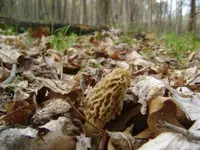
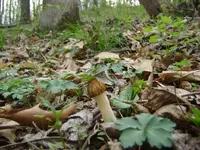
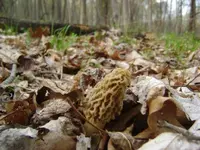
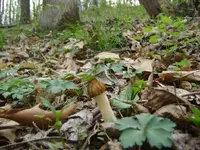
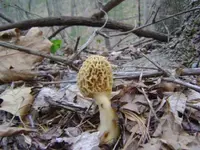
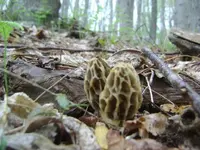
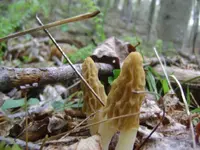
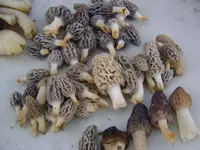
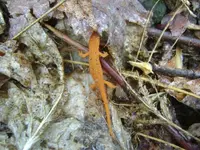
A few morel shots and a red spotted newt.
 

Attachments

  • phpGWQOwUPM.webp
    phpGWQOwUPM.webp
    59.7 KB · Views: 319
  • php5VHQjWPM.webp
    php5VHQjWPM.webp
    87.5 KB · Views: 320
  • phpGWQOwUPM.webp
    phpGWQOwUPM.webp
    59.7 KB · Views: 300
  • php5VHQjWPM.webp
    php5VHQjWPM.webp
    87.5 KB · Views: 324
  • phppEMSZIPM.webp
    phppEMSZIPM.webp
    67.3 KB · Views: 307
  • phpbadIQMPM.webp
    phpbadIQMPM.webp
    65.9 KB · Views: 305
  • phpfBSoFHPM.webp
    phpfBSoFHPM.webp
    47.9 KB · Views: 314
  • phplb9BdoPM.webp
    phplb9BdoPM.webp
    54.9 KB · Views: 315
  • phpEQRbDfPM.webp
    phpEQRbDfPM.webp
    93.9 KB · Views: 319
First photo looks to be Morchella esculenta; second photo Morchella semilibera (Half-free morel). Your accumulated photo shows several different species: an interesting collection of different species. As you do not indicate where these come from (state, county, etc) it's difficult to say much more with certainty. You appear to have at least several species present, which could be M. deliciosa, M. angusticeps, M. elata, and M. esculenta, M. semilibera.
 
Tuberale said:
First photo looks to be Morchella esculenta; second photo Morchella semilibera (Half-free morel). Your accumulated photo shows several different species: an interesting collection of different species. As you do not indicate where these come from (state, county, etc) it's difficult to say much more with certainty. You appear to have at least several species present, which could be M. deliciosa, M. angusticeps, M. elata, and M. esculenta, M. semilibera.

Thanks for the i.d. help Tuberale, I'm in the western Va. mountains. I didn't know there were that many varieties around here, they're all deliciosa to me, lol. I'd have to say the mountain blacks and greys are tastier than the lower elevation and larger yellows imo. How has your season been? I see you're in one of the best areas for mushrooms.
 
1320 said:
These are harder to find than arrowheads, I'm impressed!

Thanks man I know what you mean. Finding artifacts is sometimes easier than finding the elusive morel.
 
Tuberale said:
First photo looks to be Morchella esculenta; second photo Morchella semilibera (Half-free morel). Your accumulated photo shows several different species: an interesting collection of different species. As you do not indicate where these come from (state, county, etc) it's difficult to say much more with certainty. You appear to have at least several species present, which could be M. deliciosa, M. angusticeps, M. elata, and M. esculenta, M. semilibera.

nice haul. watch out for those half free morels. they're sorta edible in small quantities, but i leave them alone.
 
dwayne sueño said:
Tuberale said:
First photo looks to be Morchella esculenta; second photo Morchella semilibera (Half-free morel). Your accumulated photo shows several different species: an interesting collection of different species. As you do not indicate where these come from (state, county, etc) it's difficult to say much more with certainty. You appear to have at least several species present, which could be M. deliciosa, M. angusticeps, M. elata, and M. esculenta, M. semilibera.

nice haul. watch out for those half free morels. they're sorta edible in small quantities, but i leave them alone.


Thanks Dwayne, half frees are usually the first type to pop around here, most were expired and pretty funky looking. I took them home and crumbled them into my compost pile. I did eat 2 or 3 fresh ones.
 
Th3rty7 said:
Thanks for the i.d. help Tuberale, I'm in the western Va. mountains. I didn't know there were that many varieties around here, they're all deliciosa to me, lol. I'd have to say the mountain blacks and greys are tastier than the lower elevation and larger yellows imo. How has your season been? I see you're in one of the best areas for mushrooms.
Thanks for the location. I don't think you have any danger of my interloping on your picking sites.<G>

A lot of people don't know there are different types of morels. Neither do a lot of mycologists. Nancy Smith Weber is one of the experts in the area. I suppose I am too, as I have cultivated morels since 1985. One of the keys to identification of species being able to cultivate them.

Locally the fire morel (Morchella angusticeps) is the most common and probably the easiest to grow. It is a devastation fungus, being the first to fruit after forest devastation events. Within a week of Mt. St. Helens eruption in 1980, it was found growing in the ash. It is one of the fastest growing fungi in the world. It can cross a 3.5" Petri dish in a day at 77 degrees F., and because of that can fruit 30-150 yards from where it is started growing at.

Growing it outside has many advantages. Putting any morel pieces or residue into a compost pile is an excellent idea, as that appears to be the preferred food source (substrate). I have also grown morels on freshly-chipped green Douglas-fir branches. Wheat straw is another known substrate.

M. deliciosa should be mostly conical with white ridges.

You are right about Oregon being among the choice spots for morels. I have personally seen specimens which measured 17-22 inches tall, but weighed less than 4 ounces. On the other hand, I have also seen Morchella caespitosa (Clustered morel) nearly a foot tall in clumps that weighed over 1 pound. Sad thing (but someone's gotta find 'em).

Cultivators in OR and WA are starting to see surprising results. At least some morel species, such as M. esculenta and Oregon White oak, appear to form mycorrhizal relationships (mutually beneficial with growing trees). Older Black cottonwood can also have some dramatic mycorrhizal fruitings, which is where those very tall morels came from.
 
Tuberale said:
Th3rty7 said:
Thanks for the i.d. help Tuberale, I'm in the western Va. mountains. I didn't know there were that many varieties around here, they're all deliciosa to me, lol. I'd have to say the mountain blacks and greys are tastier than the lower elevation and larger yellows imo. How has your season been? I see you're in one of the best areas for mushrooms.
Thanks for the location. I don't think you have any danger of my interloping on your picking sites.<G>

A lot of people don't know there are different types of morels. Neither do a lot of mycologists. Nancy Smith Weber is one of the experts in the area. I suppose I am too, as I have cultivated morels since 1985. One of the keys to identification of species being able to cultivate them.

Locally the fire morel (Morchella angusticeps) is the most common and probably the easiest to grow. It is a devastation fungus, being the first to fruit after forest devastation events. Within a week of Mt. St. Helens eruption in 1980, it was found growing in the ash. It is one of the fastest growing fungi in the world. It can cross a 3.5" Petri dish in a day at 77 degrees F., and because of that can fruit 30-150 yards from where it is started growing at.

Growing it outside has many advantages. Putting any morel pieces or residue into a compost pile is an excellent idea, as that appears to be the preferred food source (substrate). I have also grown morels on freshly-chipped green Douglas-fir branches. Wheat straw is another known substrate.

M. deliciosa should be mostly conical with white ridges.

You are right about Oregon being among the choice spots for morels. I have personally seen specimens which measured 17-22 inches tall, but weighed less than 4 ounces. On the other hand, I have also seen Morchella caespitosa (Clustered morel) nearly a foot tall in clumps that weighed over 1 pound. Sad thing (but someone's gotta find 'em).

Cultivators in OR and WA are starting to see surprising results. At least some morel species, such as M. esculenta and Oregon White oak, appear to form mycorrhizal relationships (mutually beneficial with growing trees). Older Black cottonwood can also have some dramatic mycorrhizal fruitings, which is where those very tall morels came from.

Thanks, I enjoyed reading that interesting bit of info. Cultivation of the morel has always been of interest to me. Two years after spreading the non edible parts and pieces I finally had some come up in my compost pile, a small harvest but it was exciting nonetheless. They popped up around ten feet from where I spread the pieces around a locust tree. This year nothing has come up but they usually continue to fruit through most of May in my area. Poplars, Elm, Ash, and Apple trees are the best host trees in my area.

Do you think I'd have more success transplanting the sclerotium into my compost rather than spreading spores?
 
I wouldn't put sclerotia in an active compost pile. Sclerotia is nature's way of holding the energy reserve necessary to fruit morels when conditions are better: at least 10 years later in known cases. Sclerotia will not produce mushrooms until they are supersaturated with water. In some cases, that means being underwater. Morels have been found fruiting under standing water.

Active compost pile can reach 400 degrees F., or just under the temperature necessary for fire starting.

Many fungi die at 110 degrees F.

OTOH, adding mycellium/spores to a compost pile can assist in fruiting morels, or other fungi. One of the first fungi I cultivated was first found growing in my neighbor's compost pile.

Since some morels are now known to be mycorrhizal (needing a host plant to grow), it is unwise to attempt growing those the same way as growing saprophytic morels (those which "eat" dead leaves, wood, chips, etc.).

BTW, few mushroom species I'm aware of form sclerotia.
 

Users who are viewing this thread

Back
Top Bottom