What's new

Gold,Silver and Green Rocks

Gypsy Heart

Gold Member
Joined
Nov 29, 2005
Messages
12,689
Reaction score
379
Golden Thread
0
Location
Ozarks
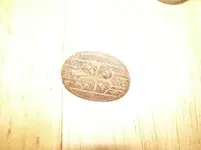
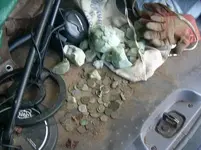
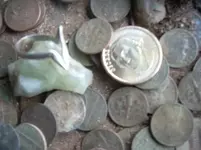
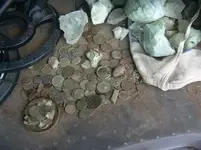
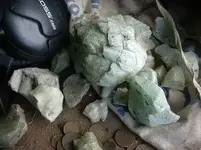
Hunted the river bank yesterday near an old park....pulled out these green translucent rocks.....the old 4 H pin .....and all this cruddy clad...a few wheats in the mix....then headed under the bridge....right off the bat I saw something shiny in the water and here was one of the brand new Washington dollars, not old ..but I will take it...within five minutes I dug a Susan B Anthony and to end the day I dug this sterling silver V ring....almost missed it because there were two pull tabs above it ...but dug a couple inches deeper and there she was .....any help on the rocks would be appreciated.

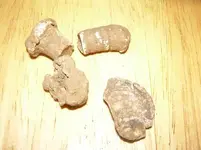
Also....are these bullets? I dug them all at the base of an oak tree in the woods.
 

Attachments

  • 4H Copper Pin.webp
    4H Copper Pin.webp
    10.3 KB · Views: 1,802
  • Bullets Maybe.webp
    Bullets Maybe.webp
    15.8 KB · Views: 1,810
  • green rocks.webp
    green rocks.webp
    19.7 KB · Views: 1,809
  • silver and gold.webp
    silver and gold.webp
    12 KB · Views: 1,809
  • Monday.webp
    Monday.webp
    19.7 KB · Views: 1,805
  • rock.webp
    rock.webp
    23.9 KB · Views: 1,817
Upvote 0
Way to dig Gypsy! Nice big pile of coins.
Cool little silver ring. Sorry I can't help ID the green rocks though.

Keep safe...
 
Great finds, those rocks are cool. The bullets look to be post Civil War.
 
Bump!

Perhaps I have discovered something about these mysterious green kryptonite crystals of Gypsy's. ;D
I now have a sample of them, and think I have solved the riddle.
Possibly they are glass slag left from some nearby glass manufacturing plant.
(I can't see where Gypsy ever said exactly where she found them!)

I believe this USGS report is dated from turn of the last century, and indicates significant glass making activity.
Kinda fun, because it lends a bit of possibly historic origin to Gypsy's Green Rocks.
The first paragraph identifies deposits across a number of states, and the last paragraph I've clipped here specifically identifies green bottle glass and places it has been produced significantly.


GLASS SAND OF THE MIDDLE MISSISSIPPI BASIN.

By Ernest F. Bukchakd.

INTRODUCTORY STATEMENT.

A conservative, estimate of the value of the glass products manufactured in the United States in 1905 is in round numbers $55,000,000. The cost of material used approximates $18,000,000, and in this the cost of glass sand was somewhat more than $1,000,000, exclusive of freight charges. Within the half century preceding 1900 the value of glass products showed an average increase of 70 per cent for each decade, and the growth is still vigorous. In view of the remarkable development of an industry so largely dependent for its raw materials on mineral deposits, a brief study has been made of the principal sand-producing areas of the middle Mississippi basin and of their relations to manufacturing centers in the same district. Undeveloped sands in Arkansas, Missouri, Kansas, Wisconsin, and Iowa have been examined in connection with geologic surveying in progress in those States. It is hoped that the information published in this and the preceding paper may be of service to owners of land on which deposits of sand are found and to persons engaged in the production or use of glass sand who may wish to know where further supplies of the material may be obtained.

Topographic maps covering the greater part of all the areas mentioned herewith and geologic maps covering a small part of the same have been issued by the survey. Lists of these'maps are given in the sections devoted to the respective areas.

In the paper "Requirements of sand and limestone for glass making," pages 452-458 of this bulletin, are outlined those characteristics which render a sand suitable or unsuitable for making glass, and in tabular form data are presented concerning the chemical composition and physical character of several sands at present in successful use. Below are given similar data regarding sands of hitherto unknown or doubtful value.

To the producer the questions of physical conditions affecting quarrying and milling, of the amount of available sand, and of location with respect to transportation routes and to markets are as important as that regarding the quality of the sand. Some details are therefore given in the descriptions of properties which illustrate conditions and limitations of successful operation.

GLASS-MAKING INDUSTRY OF THE REGION.

In connection with the examination of sand plants several representative glass factories were visited. Glass of four general classes—plate, window, green bottle, and flint— is made in the middle Mississippi basin from materials obtained, for the most part, in the region. The majority of the glass factories are grouped into two districts—the St. Louis district and the southeastern Kansas district. Fuel and raw materials are naturally the controlling factors in the location of glass plants, and of the two the proximity of fuel seems to be regarded as the more important. Where coal is the basis of the fuel, if it requires 1 ton of coal to 1 ton of glass, nearly as much coal by weight as raw material lias to be transported, yet the freight rates on sand, lime, and salt cake are decidedly higher than on coal...


And here's the page cite, if anyone wishes to learn more about glass making in the Middle Mississippi Basin...

http://books.google.com/books?
id=bB0MAAAAYAAJ&pg=PA460&lpg=PA460&dq=glass+bottling+plants+in+kansas&source=web&ots=vm-ctqdxeg&sig=pvQ0I64Np7hrBENfYDWwsyeOXzw&hl=en&sa=X&oi=book_result&resnum=10&ct=result#PPA460,M1
 
Very Cool....I found a ton of them along a river bank in the middle of basically nowhere.....
 
rmptr said:
Bump!

Perhaps I have discovered something about these mysterious green kryptonite crystals of Gypsy's. ;D
I now have a sample of them, and think I have solved the riddle.
Possibly they are glass slag left from some nearby glass manufacturing plant.
(I can't see where Gypsy ever said exactly where she found them!)

I believe this USGS report is dated from turn of the last century, and indicates significant glass making activity.
Kinda fun, because it lends a bit of possibly historic origin to Gypsy's Green Rocks.
The first paragraph identifies deposits across a number of states, and the last paragraph I've clipped here specifically identifies green bottle glass and places it has been produced significantly.


GLASS SAND OF THE MIDDLE MISSISSIPPI BASIN.

By Ernest F. Bukchakd.

INTRODUCTORY STATEMENT.

A conservative, estimate of the value of the glass products manufactured in the United States in 1905 is in round numbers $55,000,000. The cost of material used approximates $18,000,000, and in this the cost of glass sand was somewhat more than $1,000,000, exclusive of freight charges. Within the half century preceding 1900 the value of glass products showed an average increase of 70 per cent for each decade, and the growth is still vigorous. In view of the remarkable development of an industry so largely dependent for its raw materials on mineral deposits, a brief study has been made of the principal sand-producing areas of the middle Mississippi basin and of their relations to manufacturing centers in the same district. Undeveloped sands in Arkansas, Missouri, Kansas, Wisconsin, and Iowa have been examined in connection with geologic surveying in progress in those States. It is hoped that the information published in this and the preceding paper may be of service to owners of land on which deposits of sand are found and to persons engaged in the production or use of glass sand who may wish to know where further supplies of the material may be obtained.

Topographic maps covering the greater part of all the areas mentioned herewith and geologic maps covering a small part of the same have been issued by the survey. Lists of these'maps are given in the sections devoted to the respective areas.

In the paper "Requirements of sand and limestone for glass making," pages 452-458 of this bulletin, are outlined those characteristics which render a sand suitable or unsuitable for making glass, and in tabular form data are presented concerning the chemical composition and physical character of several sands at present in successful use. Below are given similar data regarding sands of hitherto unknown or doubtful value.

To the producer the questions of physical conditions affecting quarrying and milling, of the amount of available sand, and of location with respect to transportation routes and to markets are as important as that regarding the quality of the sand. Some details are therefore given in the descriptions of properties which illustrate conditions and limitations of successful operation.

GLASS-MAKING INDUSTRY OF THE REGION.

In connection with the examination of sand plants several representative glass factories were visited. Glass of four general classes—plate, window, green bottle, and flint— is made in the middle Mississippi basin from materials obtained, for the most part, in the region. The majority of the glass factories are grouped into two districts—the St. Louis district and the southeastern Kansas district. Fuel and raw materials are naturally the controlling factors in the location of glass plants, and of the two the proximity of fuel seems to be regarded as the more important. Where coal is the basis of the fuel, if it requires 1 ton of coal to 1 ton of glass, nearly as much coal by weight as raw material lias to be transported, yet the freight rates on sand, lime, and salt cake are decidedly higher than on coal...


And here's the page cite, if anyone wishes to learn more about glass making in the Middle Mississippi Basin...

http://books.google.com/books?
id=bB0MAAAAYAAJ&pg=PA460&lpg=PA460&dq=glass+bottling+plants+in+kansas&source=web&ots=vm-ctqdxeg&sig=pvQ0I64Np7hrBENfYDWwsyeOXzw&hl=en&sa=X&oi=book_result&resnum=10&ct=result#PPA460,M1

I believe you are correct. I used to find very similar slag at a glass plant up in Carisle PA. They would be all shades og green and kinda translucent.

Brian
 
Great write up. I know one thing you don't want to try and melt it. It blows up like a bomb. :thumbsup:
Congrats on the finds genius. :wink:

Burdie
 
Gypsy Heart said:
Very Cool....I found a ton of them along a river bank in the middle of basically nowhere.....

See how that goes???? :-X

Won't tell us where!

OK, try the google earth in the terrain mode and see what might show.
You could have found an early manufacturing site, perhaps a dump site for a glass place, or it could be downstream from some kinda place that could have foundations or something show up.

Might be on to something...

ust yesterday, when I was on a search for sme of PLL's stuff, I 'flew' by a grassy field I detected years ago.
I spent most my time at one end where there were foundation remains.
Google Earth showed some sort of large circular anomaly on the opposite end of the field from where I had worked in the past. I'm going back!

I just don't think the 'kryptonite' is a natural product, per se...

If I had more info I could possibly do better. ;D
(That's pretty close to what I'd told Mel Fisher.)

Best
rmptr
 
more...

This is entertaining, for me...

We've got options here... to my wild guess being manufactured slag glass, which happens to be green and resembles nearly the color of an older coca cola bottle.

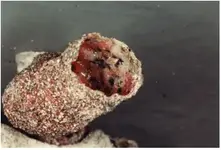
Naturally occurring glass may be found in three different types. Tektites are of meteoric origin, the fulgurite, (pictured), is from a lightning strike on sand or even rock, or obsidian, which is of volcanic origin.


Tektites - Out of this World Natural Glass
Filed under: Tektite Information —

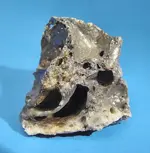
Tektites are collected for their unique shapes and textures as natural oddities. They are glass. They are however, not glass like any other natural glass found on Earth. They form when asteroid hit the Earth and melt the rocks of our planet and send the liquid and vaporous rock material out to near space. There it cools and returns through the atmosphere. It receives during this process aerodynamic shapes apparently determined by the kind of spin the blobs of liquid glass had.

Among the shapes are patty, sphere, rod, dumbbell, teardrop, and bubbleforms. The bubble type nearly always breaking upon hitting the ground again. But, from the large number of bubble fragments we know there were many of this type.

Not all asteroid impacts create tektites. In fact there are only five area on our world where they can be found. This makes tektites a very desireable natural wonder to collect.

The tektite glass is very dry and gas free. Obsidian on the other hand as a volcanic glass is very abundant with water and gas in its composition. The extremely high temperatures of tektite formation account for this dryness and lack of gas.

Debate about tektites has gone on for a couple centuries. Today many of the questions about this fascinating objects have been answered. But, since no one has ever witnessed a tektite forming event some of the details of their creating remain points of debate.
...cite... http://www.meteorites-for-sale.com/blog/out-of-this-world-natural-glass/

Wow! and I just found this!
...
King Tut's Necklace Gem Is Actually Natural Glass From Meteorite Impact
Submitted by Khalid on Tue, 2006/07/25 - 19:54

* Science
* | History
* | Egypt

The BBC has an article on how a gem in one of King Tut's necklaces is actually made of
natural glass that formed from a meteorite that exploded over the Western Desert.

Here is an article on Space.com on the crater, called El Kebira ( الكبيرة "The Big" in Arabic), and here is a satellite photo.

I was able to locate the crater on Google, marked on Wikimapia. This straddles the border of Egypt and Libya.

And here is a Slashdot discussion on this crater, meteorite and glass.
»


fulgaritesand.webp
Fulgurite sand glass


Obsidian
Obsidian is a naturally occurring glass formed as an extrusive igneous rock. It is produced when felsic lava extruded from a volcano cools without crystal growth. Obsidian is commonly found within the margins of rhyolitic lava flows known as obsidian flows, where the chemical composition (high silica content) induces a high viscosity and polymerization degree of the lava. The inhibition of atomic diffusion through this highly viscous and polymerized lava explains the lack of crystal growth. Because of the lack of crystal structure, obsidian blade edges can reach almost molecular thinness, leading to its ancient use as projectile points, and its modern use as surgical scalpel blades.

Obsidian is mineral-like, but not a true mineral because as a glass it is not crystalline; in addition, its composition is too complex to comprise a single mineral. It is sometimes classified as a mineraloid.

Obsidian can be found in locations which have experienced rhyolitic eruptions. Obsidan flows which may be hiked on are found within the calderas of Newberry Volcano and Medicine Lake Volcano in the Cascade Range of western North America, and at Inyo Craters east of the Sierra Nevada in California. Yellowstone National Park has a mountainside containing obsidian located between Mammoth Hot Springs and the Norris Geyser Basin, and deposits can be found in many other western US states including Arizona, Colorado,New Mexico, Texas, Utah, Oregon[4] and Idaho

fulguriterock.webp

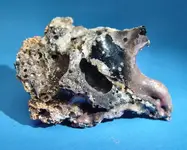
ful503.webp


Cite for rock fulgurite, Cacapon River District, Hampshire County, West Virginia.....

http://www.minresco.com/fulgurites/fulimages/ful503.jpg

rmptr
 
Hi Gypsy, nice finds. I think you should take some closeups of the rocks and start a thread in the what is it section. They look as tho they may be some sort of crystal from what i can see. Nice work and HH

Sasnz
 
NICE FINDS GYPSY. :thumbsup:
 
I'd like to see a couple close ups of the mystery rocks. I'll try to find the ones we found many years ago that I know came from a glass furnace area as comparison.

Brian
 
Looks like you had a good day detecting. also like the rock...Matt
 
Good to hear from you. Nice to see you up to your old tricks.
Awhile back a high voltage line fell down and landed on a concrete drive in my town, it was weird but the line burned thru the concrete and the by product was a green glass looking pile of slag. I'm sure that's not what you found but it was a curious byproduct.
Wish you and the girls the best, keep em coming.
 
Nice hunt, GH Those green translucent rocks are really cool. I have only seen pictures of them on TNET.
 
Gypsy!
Please don't call Superman.
You did good. Glad to see you getting out.
Joe
 
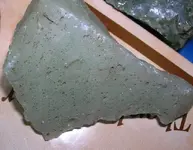
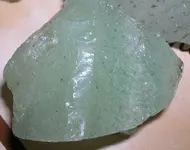
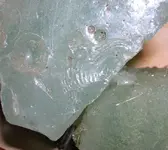
Brian, and Sas, here's closeups of the kryptonite...
I feel confident it's glass. Yet I'm not highly qualified to make the call.
(Well, I've seen as much or more glass than the next guy!)

Origin?
I dunno...

jan1909 025cz.webp

jan1909 026cz.webp

jan1909 027cz.webp

Best
rmptr
 
Hey Gypsy. take a mag. glass & look for bubbles in the green rock. thats the easiest way to distinguish rock from glass. but doesn't look like glass to me. goollllly! you had a good day! is MO treatin ya good? I have been trying to get my feet back on the ground, (in other words, trying to regain my sanity ((if I ever had it)) it's nice to get back to this site. & nice to see you are having a good haul!
 
Nice pile of coins, Gypsy! :thumbsup: Great finds and those red gloves look just nicely broken in to me.

With my limited geology experience I'd say those are natural rocks. More pics, please!

HH
 

Users who are viewing this thread

Back
Top Bottom