OntarioArch
Sr. Member
- Joined
- Nov 26, 2017
- Messages
- 427
- Reaction score
- 1,172
- Golden Thread
- 0
- Location
- Cayuga County NY
- Primary Interest:
- Relic Hunting
(warning: I hope I am using the proper terminology - if not, please correct me!)
I have looked at a bunch of Clovis online photos to see what a 'ground edge' looks like: the flaking pattern has been ground down until smooth. And obviously, I have many 'flaked edges' / non-ground edges to see in my own collection.....but what would be most helpful is to see an edge that has been "lightly ground." Can you sometimes still see a little smoothed, reduced, inconspicuous flaking where the artisan perhaps did not completely grind away the flake pattern?
Here are some pics of the piece I am questioning: And do I understand correctly that grinding is indicative of Paleo or Early Archaic time period? Exclusively?
Thanks again!
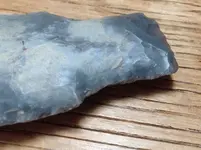
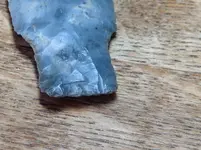
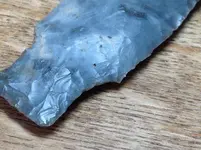
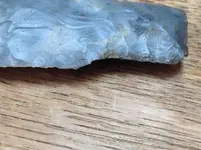
I have looked at a bunch of Clovis online photos to see what a 'ground edge' looks like: the flaking pattern has been ground down until smooth. And obviously, I have many 'flaked edges' / non-ground edges to see in my own collection.....but what would be most helpful is to see an edge that has been "lightly ground." Can you sometimes still see a little smoothed, reduced, inconspicuous flaking where the artisan perhaps did not completely grind away the flake pattern?
Here are some pics of the piece I am questioning: And do I understand correctly that grinding is indicative of Paleo or Early Archaic time period? Exclusively?
Thanks again!
Last edited:
Upvote
0