Almy
Bronze Member
- Joined
- Mar 18, 2011
- Messages
- 2,014
- Reaction score
- 3,982
- Golden Thread
- 0
- Location
- Maritime Provinces
- Detector(s) used
- Tesoro Cibola
- Primary Interest:
- Other
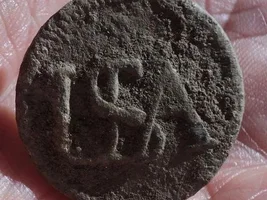
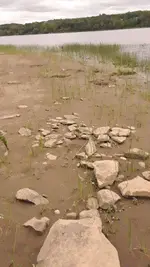
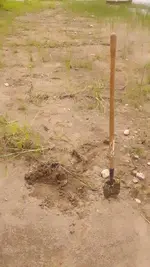
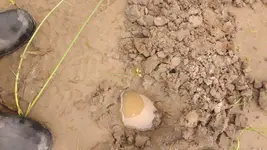
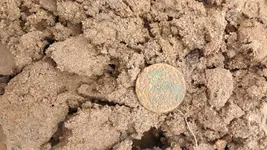
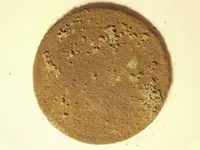
This coin was extensively and deeply pitted by corrosion. Like many coins in this condition, both surfaces have a random pattern of bumps and hollows obliterating the original detail. The photos show the area with several of my filled holes, the hole in which I found the coin.
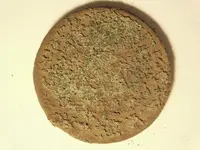
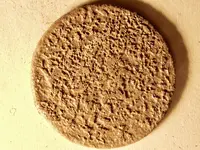
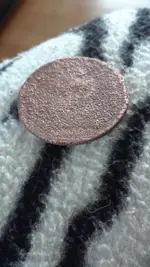
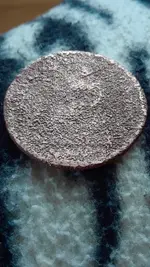
A coin like this has no value except to a person interested in history like myself. I knew that it might be possible to extract enough information from it to at least get an idea of type and age but doing so would harm the coin. I decided to go as far as needed. First, I put the coin in lemon juice overnight. That removed the remaining corrosion and a little of the base metal, leaving a rough-surfaced, bright copper disc. The ghost of an image appeared on one side using this technique. Then I used fine sandpaper to improve the image. What appeared was a left-facing Brittania on the reverse with a date field below her. I was not able to read the date.
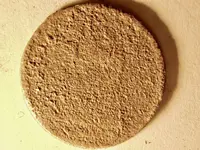
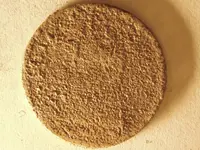
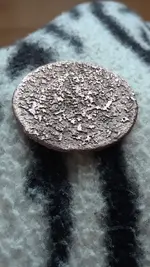
The obverse was more badly pitted by corrosion than the reverse and the treatment did not help much, although with a little imagination the ghost of a right-facing head is visible.
I photographed the coin in as-found condition, after cleaning with the corrosion remover and then after mechanical (sandpaper) scraping.
I found it hard to capture in a photograph what I could see with the coin in my hand after all the preparation, so took several with different lighting. People on the site have been amazing in discerning images on coins from photos, so maybe some of you may see something I missed or mis-identified.
Using what I can see, the coin seems to be a copper halfpenny, either 1700s British or one of the early 1800s Canadian tokens. That would fit with its corroded state and with the history of the area. There are two Loyalist-era homesteads on the mainland within 200 metres of this island site. I have found halfpennies, British and early Canadian, at these homesteads.
A coin like this has no value except to a person interested in history like myself. I knew that it might be possible to extract enough information from it to at least get an idea of type and age but doing so would harm the coin. I decided to go as far as needed. First, I put the coin in lemon juice overnight. That removed the remaining corrosion and a little of the base metal, leaving a rough-surfaced, bright copper disc. The ghost of an image appeared on one side using this technique. Then I used fine sandpaper to improve the image. What appeared was a left-facing Brittania on the reverse with a date field below her. I was not able to read the date.
The obverse was more badly pitted by corrosion than the reverse and the treatment did not help much, although with a little imagination the ghost of a right-facing head is visible.
I photographed the coin in as-found condition, after cleaning with the corrosion remover and then after mechanical (sandpaper) scraping.
I found it hard to capture in a photograph what I could see with the coin in my hand after all the preparation, so took several with different lighting. People on the site have been amazing in discerning images on coins from photos, so maybe some of you may see something I missed or mis-identified.
Using what I can see, the coin seems to be a copper halfpenny, either 1700s British or one of the early 1800s Canadian tokens. That would fit with its corroded state and with the history of the area. There are two Loyalist-era homesteads on the mainland within 200 metres of this island site. I have found halfpennies, British and early Canadian, at these homesteads.
Attachments
-
 Hpenny and button site.webp352.2 KB · Views: 157
 -
 Hpenny hole 1.webp457.3 KB · Views: 70
 -
 Hpenny hole 2.webp383.9 KB · Views: 62
 -
 Hpenny hole 3.webp625.7 KB · Views: 75
 -
 Hpenny raw rev.webp942.1 KB · Views: 71
 -
 Hpenny raw obv.webp822.2 KB · Views: 76
 -
 Hpenny cleaned rev.webp2.3 MB · Views: 71
 -
 Hpenny cleaned obv.webp230 KB · Views: 65
 -
 Hpenny cleaned obv oblique.webp1.6 MB · Views: 68
 -
 Hpenny obv.webp149.3 KB · Views: 94
 -
 Hpenny rev Brittania left smaller.webp121.1 KB · Views: 86
 -
 Hpenny rev Brittania left.webp191.8 KB · Views: 80
Upvote
20


 If you get any more details please post any more info or pictures !!