What's new

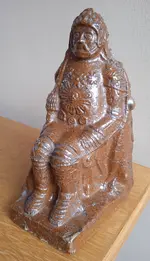
how old is this stoneware figure?

rockpassion

Hero Member
Joined
Oct 5, 2024
Messages
540
Reaction score
605
Golden Thread
0
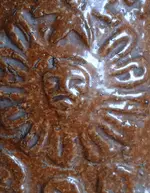
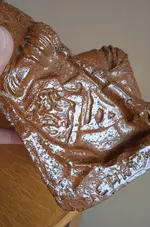
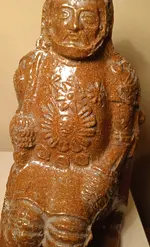
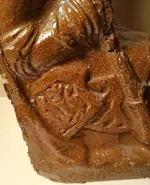
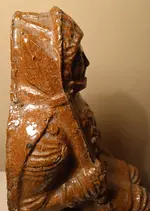
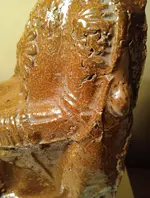
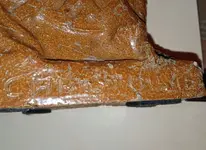
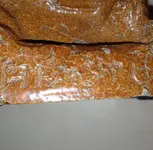
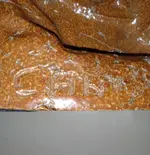
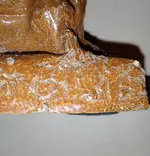
Does someone know how old this stoneware figure is and who it is and what factory made it. The image depicts a king on a throne in armor with a coat of arms on his side, featuring a heraldic lion. And, I believe, the name Christoffeles is inscribed on the side. On his chest are royal medals decorations and a sun symbol.
 

Attachments

  • IMG_20250914_175325.webp
    IMG_20250914_175325.webp
    320 KB · Views: 135
  • IMG_20250914_175513_1.webp
    IMG_20250914_175513_1.webp
    375 KB · Views: 97
  • IMG_20250914_175449.webp
    IMG_20250914_175449.webp
    309.1 KB · Views: 82
  • IMG_20250914_175436_1.webp
    IMG_20250914_175436_1.webp
    215.1 KB · Views: 82
  • IMG_20250914_175412_1.webp
    IMG_20250914_175412_1.webp
    321 KB · Views: 86
  • IMG_20250914_175526.webp
    IMG_20250914_175526.webp
    418.4 KB · Views: 92

  • IMG_20250914_175258_1.webp
    IMG_20250914_175258_1.webp
    455.7 KB · Views: 91
Interesting piece, I do not know the age. I do not think that is a King, instead of a scepter that looks like a trumpet. The castle trumpeter would be a high ranking noble.
The best I can tell, that type of armor, 14th to 16th century. Salt glazing started in that time period. I am not saying that it is that old, likely not, that is what the maker is representing.
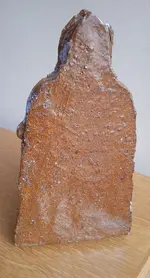
This front of this piece came from a mould so of coarse, more produced. The maker name, there is not any info that I can find, so that may make it rare. Hopefully someone can decipher the heraldic symbols on the breastplate. Great piece, hang on to it !
 
Interesting piece, I do not know the age. I do not think that is a King, instead of a scepter that looks like a trumpet. The castle trumpeter would be a high ranking noble.
The best I can tell, that type of armor, 14th to 16th century. Salt glazing started in that time period. I am not saying that it is that old, likely not, that is what the maker is representing.
This front of this piece came from a mould so of coarse, more produced. The maker name, there is not any info that I can find, so that may make it rare. Hopefully someone can decipher the heraldic symbols on the breastplate. Great piece, hang on to it !
Hi there, the reason i believe it is a king is the royal medals on the chest and the heraldic lion on a shield see photo's. and it is realy a spear he is holding see photo.
 

Attachments

  • IMG_20250917_193944_1.webp
    IMG_20250917_193944_1.webp
    411.4 KB · Views: 72
  • IMG_20250917_193414.webp
    IMG_20250917_193414.webp
    257.5 KB · Views: 73
  • IMG_20250917_193355.webp
    IMG_20250917_193355.webp
    221.9 KB · Views: 61
  • IMG_20250917_193516.webp
    IMG_20250917_193516.webp
    286.8 KB · Views: 73
On todays pics, I do see the spearhead. Has this been in family or something you bought? A backstory would be good.
 
bought it from somebody who thought it was just an ornamental bookholder.

Well, this is curious. It was advertised (same piece) on ‘Marktplaats’ as:

“Raeren stoneware, 16th century
RARE Raeren stoneware figurine depicting a king on a throne in armor, with a coat of arms on the side featuring a heraldic lion and the name…”


Marktplaats.webp

https://www.marktplaats.nl/v/antiek...rdewerk/m2309964390-raeren-steengoed-16e-eeuw

Raeren is a municipality in eastern Belgium, in the province of Liège, which was formerly part of Germany and ‘Raeren stoneware’ is a type of high-quality pottery produced there until the 17th century.

Could we please see a better and more complete picture of the signature on the side of the base? It doesn’t look like typical 16th Century lettering from what I can see so far.

Name.webp
 
Well, this is curious. It was advertised (same piece) on ‘Marktplaats’ as:

“Raeren stoneware, 16th century
RARE Raeren stoneware figurine depicting a king on a throne in armor, with a coat of arms on the side featuring a heraldic lion and the name…”


View attachment 2225595
https://www.marktplaats.nl/v/antiek...rdewerk/m2309964390-raeren-steengoed-16e-eeuw

Raeren is a municipality in eastern Belgium, in the province of Liège, which was formerly part of Germany and ‘Raeren stoneware’ is a type of high-quality pottery produced there until the 17th century.

Could we please see a better and more complete picture of the signature on the side of the base? It doesn’t look like typical 16th Century lettering from what I can see so far.

View attachment 2225596
yes indeed you are wright it was posted by me on marktplaats. but i hesitated because i could not find any info on the piece and thought it could be valueble so i decided not to sell. And the name on the piec is something like christoffele but can't photograph is because of the glare of the salt glaze.
 
yes indeed you are wright it was posted by me on marktplaats. but i hesitated because i could not find any info on the piece and thought it could be valueble so i decided not to sell. And the name on the piec is something like christoffele but can't photograph is because of the glare of the salt glaze.

You hesitated because you couldn't find any info on the piece... but offered it for sale as 16th Century Raeren stoneware?

You can reduce the amount of glare by taking a picture in indirect light and shooting from an angle that doesn't reflect light back to the camera lens.
 
You hesitated because you couldn't find any info on the piece... but offered it for sale as 16th Century Raeren stoneware?

You can reduce the amount of glare by taking a picture in indirect light and shooting from an angle that doesn't reflect light back to the camera lens.
ok will try it tommorow i am going to sleep now it's late
 
You hesitated because you couldn't find any info on the piece... but offered it for sale as 16th Century Raeren stoneware?

You can reduce the amount of glare by taking a picture in indirect light and shooting from an angle that doesn't reflect light back to the camera lens.
Dear Red coat, how old do you think it is? here closeups of the name. can't read it.
 

Attachments

  • IMG_20250917_232417_1.webp
    IMG_20250917_232417_1.webp
    338.5 KB · Views: 72
  • IMG_20250917_232403_1.webp
    IMG_20250917_232403_1.webp
    282.8 KB · Views: 68
  • IMG_20250917_232530_1.webp
    IMG_20250917_232530_1.webp
    259.5 KB · Views: 65
  • IMG_20250917_232538.webp
    IMG_20250917_232538.webp
    320.3 KB · Views: 64
  • IMG_20250917_232543_1.webp
    IMG_20250917_232543_1.webp
    304.7 KB · Views: 68
  • IMG_20250917_232933_1.webp
    IMG_20250917_232933_1.webp
    463.9 KB · Views: 81
I can't read it either, but the letter forms (particularly the 'H') appear to be 'Early Modern English'. Those forms were certainly in use in Britain by the 1600s, but most usually in print rather than as hand-written inscriptions. Adoption in mainland Europe, and particularly in 'Germanic' areas came rather later and would be unusual for hand-written inscriptions before the first part of the 1800s. Except for inscriptions transcribed in Latin, which this doesn't appear to be.

Lettering.webp
 
I can't read it either, but the letter forms (particularly the 'H') appear to be 'Early Modern English'. Those forms were certainly in use in Britain by the 1600s, but most usually in print rather than as hand-written inscriptions. Adoption in mainland Europe, and particularly in 'Germanic' areas came rather later and would be unusual for hand-written inscriptions before the first part of the 1800s. Except for inscriptions transcribed in Latin, which this doesn't appear to be.

View attachment 2225720
so to be safe it is probably 19th century
 

Users who are viewing this thread

Back
Top Bottom