Tkirbykidd ,
It is true that Cameron Park CA is at what I will call the base of the Mother Lode Country of NorCal as the rivers and streams do come right down through that area. Find a prospecting club in your area, go to a couple of the meetings, should be free but be sure to ask as this will be the initial impression you will make on these new friends of yours! You should be able to pick up a lot of free information from these generally good natured folks. This info will include club outings (places to go), hints and tips on 'how to' (and places to go) and being 'younger' but eager, willing to learn and Work they could even take you under a wing, so to speak.
Then you can just go take a hike, I mean literally take a hike After you've located several small creeks in your area, or you could ride your bicycle to them. But Be Certain To Let Your Folks know exactly where you are going. If its on private property then first locate the owner and ask permission to be on their property, could save you a lot of trouble later on. Be prepared for rattle snakes and ticks (ticks start out about the size of a sesame seed but once they start sucking blood they grow and dig in). For the snakes you can just walk away from them or as you are carrying a hiking staff (a long round stick about one inch in diameter x 4' to 6' tall) you can move them out of your way IF you really need to go that way. Wear a hat for sun protection and bring plenty of fresh water with you, you never know what pollution will be in the water around your location.
From your general location you should be able to find gold by panning. There are several "Learn how to Properly Pan for Gold" videos on you tube, check them out and practice how to pan. Drop some small lead pellets into your pan and when you pan all the way to the bottom of your pan and all the pellets are still there then you have a good handle on how to do it.
Google Earth could be a helpful tool in locating streams in your area. There is a tremendous amount of information for the beginning prospector on the internet as well as any local club meeting. Best of luck to you and keep asking questions...................63bkpkr
Oh yes, tools of the trade: 14" - 16" gold pan or (check out
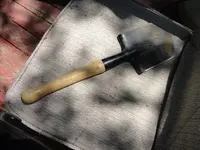
Home Page), small Gerber folding shovel(the small one), some form of a classifier (I cut the top and bottom from a good sized Tuna Fish Can and then pop riveted 1/4" mesh hardware cloth into one end and made my own easy to carry classifier), a cheap 1" cheap paint brush, section of an old 'T' shirt about 12" x 16", a screw driver or thick (1/8" diameter piece of wire) for cleaning out cracks (the wire can be smashed on one end to make a flat 'spoon' while the other end of this 18" long piece of wire can be filed to a point and this makes a good rock crack cleaner). When you find a rock crack place the cloth at the bottom end (the end you move all the contents of the crack towards) and spread the cloth out good and flat, start scraping the 'stuff' out of the crack and as it builds up brush it onto/into the cloth. This crack will be in rock next to a creek, be great if the crack is at a 90 degree angle to the creek but if not clean it out anyway as this is where fine gold will tend to settle (depending on the angle of the crack to the creek) and it will be your first clue if there is any gold in this particular piece of water. This is Only One way to start.
Sometimes at yard sales one can find prospecting tools: small flat nail pullers(used for opening up cracks in bedrock to get the gold out), 18" crow bar, wire mesh drawer organizers to use as classifiers(also can buy new for 4x the cost at Bed Bath & Beyond/Wal Mart), screw drivers





 ...I recomend building your own sluice box as well.youtube a great place to get ideas.no matter where you prospect the more material you process the more gold you gonna get.good luck and let us know.
 .......................63bkpkr/Herb