What's new

Is this a musket ball?

rodarian

Hero Member
Joined
Jul 20, 2014
Messages
820
Reaction score
483
Golden Thread
0
Location
upstate New York
Detector(s) used
AT Pro, ACE250, Garrett pro pointer
Primary Interest:
Metal Detecting
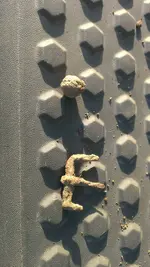
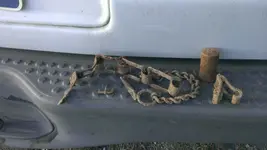
Spent the day at the field that borders the Bennington Battlefield and pretty much dug nails and modern bullet casings all day but also believe that i found a musket ball and a few other odds and ends that i really have no idea as to what they are but here's the pics. I'm really hoping that it is a musket ball, that'll at least give me hope that there should be colonial items out there. Also found a bit of a buckle.(next to the alleged musket ball) Thanks for looking.
 

Attachments

  • IMAG0655.webp
    IMAG0655.webp
    1.2 MB · Views: 161
  • IMAG0654.webp
    IMAG0654.webp
    519.2 KB · Views: 154
Upvote 4
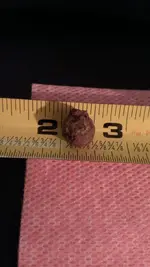
Could be a musket ball. ID would be easier with another picture and diameter and weight in grains. HTH
 
Not sure what that is as it appears to have rust bleeding through the " patina ". Does it stick to a magnet at all? As suggested above, weight and diameter may help.
 
I agree, it does look rusty but it is not magnetic and as for the weight, i am sorry but i don't have anything but a bathroom scale as of yet but here is another pic of it. Thanks guys.IMAG0657.webp
 
You found a fifty cal musket ball, good find!
 
I like your non skid bumper, lol!
 
Congrats on a musket ball, they are a sign that there may be more colonial things at that place.
 
Haha, it has come in handy on more than one occasion. :laughing7:
 
Congrats on a musket ball, they are a sign that there may be more colonial things at that place.

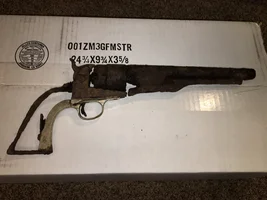
I sure hope so. The owner of the property tells me that the troops marches right through there on there way to the battle. Although, i do believe it was the british troops that came through there.IMAG0627.webp
 
I sure hope so. The owner of the property tells me that the troops marches right through there on there way to the battle. Although, i do believe it was the british troops that came through there.<img src="http://www.treasurenet.com/forums/attachment.php?attachmentid=1078674"/>

Beautiful pic!
 
Well it is not a musket ball, it is too small for that. The smallest musket ball would be around .69 caliber, it very well may be a rifle or pistol ball though.
 
Not sure, but in the first pic, it looked like a split-shot fishing line weight.
 
Well it is not a musket ball, it is too small for that. The smallest musket ball would be around .69 caliber, it very well may be a rifle or pistol ball though.

I agree with cutler, comes from the same era as muskets though. Muskets have a large, smooth bore barrel, while American rifles were a smaller bore, and the barrel is "rifled." English
hunting rifles were very large bore like a musket, however they weren't around during the revolutionary war. The English were hunting very large dangerous game in Africa, and also
came here to hunt buffalo. There are historic recorded arguments between English and Americans about who used the most lead, the argument being the large .69 caliber ball brought
the animal down with one shot, while the smaller .50 caliber wounded animals that ran away. There is lots of information on this, but it's not all in one place, it has to be gleaned from
many books on the subject. I've hunted with .50 caliber muzzle loaders, and I tend to agree with the British, larger is better, and I now hunt with a .62 caliber flint lock knock off of a
British hunting rifle. The larger lead ball takes a little more powder to get it going, but it will shoot further, flatter, buck the wind better, and carry more terminal energy to the target.
You might be interested in this chart showing the weights of the various size round balls used for bullets.
32 caliber: (.310) 048g—approx 146 balls/pound
36 caliber: (.360) 071g—-approx 98 balls/pound
40 caliber: (.395) 092g—-approx 76 balls/pound
45 caliber: (.445) 133g—-approx 52 balls/pound
50 caliber: (.498) 180g—-approx 38 balls/pound
54 caliber: (.535) 220g—-approx 32 balls/pound
58 caliber: (.560) 280g—-approx 25 balls/pound
62 caliber: (.610) 341g—-approx 20 balls/pound
69 caliber: (.678) 468g—-approx 15 balls/pound
75 caliber: (.715) 545g—-approx 13 balls/pound
 

Users who are viewing this thread

Latest Discussions

Back
Top Bottom