What's new

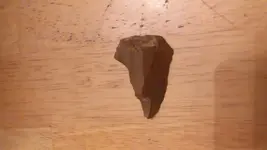
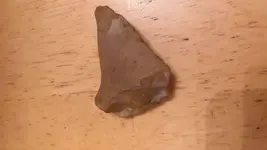
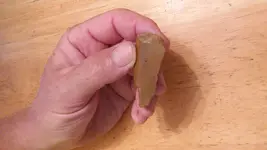
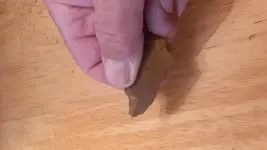
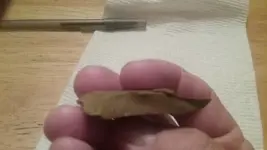
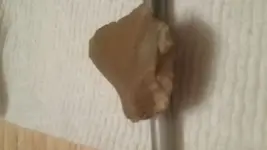
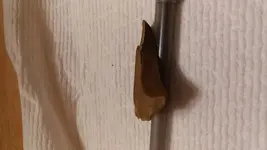
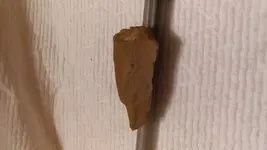
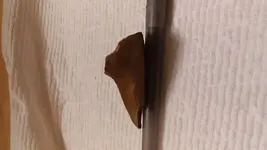
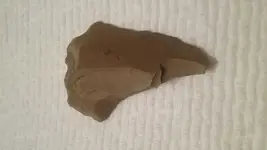
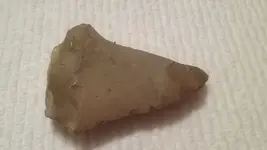
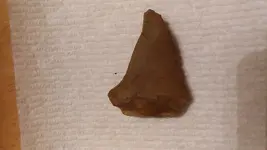
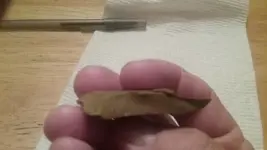
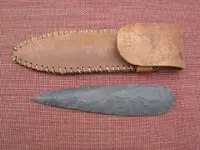
Is this an indian skinning blade?

pganjon

Hero Member
Joined
Nov 6, 2008
Messages
573
Reaction score
425
Golden Thread
0
Location
South Central Pa.
Detector(s) used
Garrett Master Hunter 5, Ace 250
Hello Everyone, I spotted this in the stones by the creek and first thought maybe arrowhead. Then looking closer I believe maybe a knife blade or am I just in wishful thinking mode. It is a beautiful piece of brown flint and I would like to know what all of you think. I live in Adams county Pa, but found this next door in Carroll County Md. Thanks again, Paul:coffee2:
 

Attachments

  • 20190629_182434.webp
    20190629_182434.webp
    131 KB · Views: 184
  • 20190629_182649.webp
    20190629_182649.webp
    135 KB · Views: 148
  • 20190629_182719.webp
    20190629_182719.webp
    160.2 KB · Views: 175
  • 20190629_182826.webp
    20190629_182826.webp
    104.3 KB · Views: 140
Upvote 0
Not only learn to see but have the confidence to believe your eyes, not easy when in the minority.
 
I was scanning the forum and seen this thread title, "Is this an Indian skinning blade"? My first thought was who would want to skin an Indian. ???
Sorry lol, I should have said thumb knife. Paul:coffee2:
 
Uniface,

Ok. I’ve met the smartest guy in the room.

The EXCELLENT point you make regarding the bulb of percussion-being trimmed away is instructive. It’s not easy to see it in the one photo revealing it, and I had to really inspect pic #2 to see it.

Pganjon, I’d like to see more photos of each side if possible.
OK, I will try to get some more on for you soon. Paul
 
Here are some more pics, I hope this helps. Paul:coffee2:
 

Attachments

  • 20190701_214827.webp
    20190701_214827.webp
    114.1 KB · Views: 74
  • 20190701_214936.webp
    20190701_214936.webp
    70.7 KB · Views: 63
  • 20190701_215053.webp
    20190701_215053.webp
    117.4 KB · Views: 60
  • 20190701_215128.webp
    20190701_215128.webp
    122.1 KB · Views: 73
  • 20190701_215237.webp
    20190701_215237.webp
    122.4 KB · Views: 59
Some more.
 

Attachments

  • 20190701_214040.webp
    20190701_214040.webp
    91 KB · Views: 63
  • 20190701_214433.webp
    20190701_214433.webp
    95.7 KB · Views: 59
  • 20190701_214450.webp
    20190701_214450.webp
    142.2 KB · Views: 105
  • 20190701_214827.webp
    20190701_214827.webp
    114.1 KB · Views: 55
Ridiculous nonsense there.

I knapped flint for 22 yrs. and did a lot of experimenting along the way. When it comes to skinning with flint, here's what I found by doing it myself as opposed to reading it in a book.

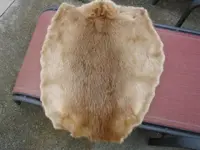
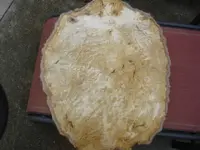
This is my first attempt at skinning with flint. My neighbor was a trapper and caught a beaver and gave it to me. I grabbed 6 or 8 flakes and headed over his house to skin the beast. Zipped his belly skin open and got to work. I found out right away that the flakes are hard to hold after they get a little fat on them. They were hard to control and cut through the hide easily. I had to be really careful not to cut the hide but did anyway numerous times. Another thing I noticed was how fast the flakes got dull. Surprised me. I ran out of flakes quickly and had to run back home and get a hornstone nodule, an abrader, and a billet to make more. I got him finished and the skin looked like it was shot with a shotgun. Since I wanted to keep the hide, I sewed the holes shut as best I could and tanned it. It was a good exercise but pretty much a failure with the holes.

DSC09375.webpDSC09370.webpDSC09373.webpDSC09372.webp


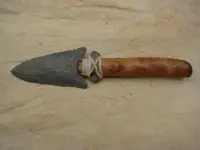
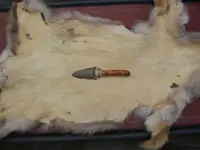
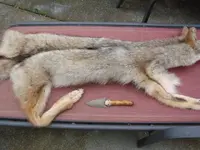
My next attempt was on a coyote I shot with my bow. This time I used both flakes and a hafted Thebes knife. Zipped him open with the flakes then used the knife. Much better! The knife was sharp enough to skin him but not so sharp that it cut the hide. The bevel on the Thebes acted like a ramp to separate the hide from meat. Used flakes often on feet, ears, and eyes. This skin came out nice enough that I sent it off to Moyle Mink in Idaho and had it tanned by the pros. This isn't the Thebes I used, but one very similar.

DSC09378.webpDSC09377.webpDSC09376.webp


I had a Cobbs triangle I wanted to try and got my chance on a buck I arrowed. I used a Buck knife to field dress the deer and also used the Buck to get started. The Cobbs worked great and noticed something unusual. Anyone who has skinned a deer with a Buck knife knows there is a thin layer of fat between the meat and the hide. When using a Buck, you cut through this fat layer often, exposing meat. When finished, the deer looks splotchy with fat and meat showing. Not so with the Cobbs. The flint knife didn't cut through the fat layer to the meat...ever. The deer was white with a fat layer when finished. For an Indian, that's a good thing. More fat on your meat, less on the hide to remove later. Gary

DSC09379.webp
 
I knapped flint for 22 yrs. and did a lot of experimenting along the way. When it comes to skinning with flint, here's what I found by doing it myself as opposed to reading it in a book.

This is my first attempt at skinning with flint. My neighbor was a trapper and caught a beaver and gave it to me. I grabbed 6 or 8 flakes and headed over his house to skin the beast. Zipped his belly skin open and got to work. I found out right away that the flakes are hard to hold after they get a little fat on them. They were hard to control and cut through the hide easily. I had to be really careful not to cut the hide but did anyway numerous times. Another thing I noticed was how fast the flakes got dull. Surprised me. I ran out of flakes quickly and had to run back home and get a hornstone nodule, an abrader, and a billet to make more. I got him finished and the skin looked like it was shot with a shotgun. Since I wanted to keep the hide, I sewed the holes shut as best I could and tanned it. It was a good exercise but pretty much a failure with the holes.

View attachment 1728760View attachment 1728761View attachment 1728762View attachment 1728763


My next attempt was on a coyote I shot with my bow. This time I used both flakes and a hafted Thebes knife. Zipped him open with the flakes then used the knife. Much better! The knife was sharp enough to skin him but not so sharp that it cut the hide. The bevel on the Thebes acted like a ramp to separate the hide from meat. Used flakes often on feet, ears, and eyes. This skin came out nice enough that I sent it off to Moyle Mink in Idaho and had it tanned by the pros. This isn't the Thebes I used, but one very similar.

View attachment 1728770View attachment 1728769View attachment 1728768


I had a Cobbs triangle I wanted to try and got my chance on a buck I arrowed. I used a Buck knife to field dress the deer and also used the Buck to get started. The Cobbs worked great and noticed something unusual. Anyone who has skinned a deer with a Buck knife knows there is a thin layer of fat between the meat and the hide. When using a Buck, you cut through this fat layer often, exposing meat. When finished, the deer looks splotchy with fat and meat showing. Not so with the Cobbs. The flint knife didn't cut through the fat layer to the meat...ever. The deer was white with a fat layer when finished. For an Indian, that's a good thing. More fat on your meat, less on the hide to remove later. Gary

View attachment 1728771

Interesting info
 
I have skinned animals, both furbearers and game species like deer with both steel and blades i knapped myself. Trust me that whichever you use you want sharp as possible. If you say use a dull blade for skinning you haven't skinned very much at all. Using a dull knife is more apt to cause holes than a sharp one. I've even used scalpel blades on small furbearers
 
Last edited:
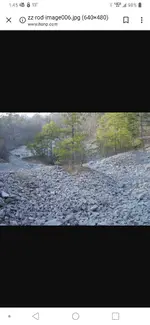
I understand we all want to think that a flake found out of place from it's sorce could mean it was something. Stone was moved about this old earth by nature and man, but I can show you a lot of flakes with percussion bulbs that nature made by movement of rock falls. When Native Americans worked a quarry site there would be tons of chips just laying around like soil. Just one flake doesn't make it a tool if so then I have millions of tools on my shop site. This photo is of a NA quarry in Ar..Screenshot_20190706-134532.webp
 
So then "just one point" doesn't make one a point ?

I can show you a lot of flakes with percussion bulbs that nature made by movement of rock falls

I don't remember ever seeing a cliff in that area -- let alone one with rocks from 150 miles away at the bottom of it.
 
Last edited:

Users who are viewing this thread

Back
Top Bottom