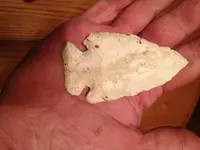
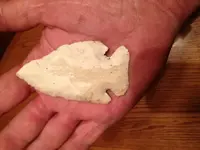
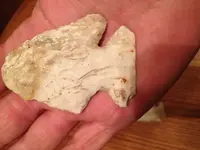
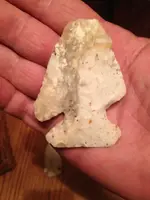
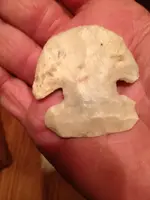
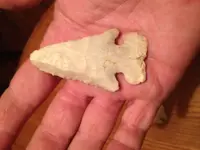
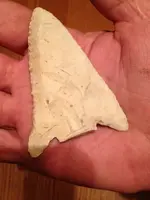
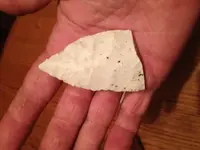
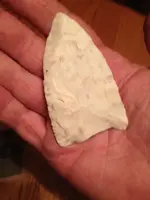
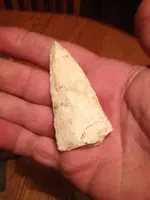
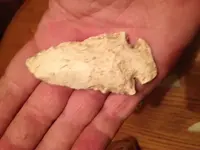
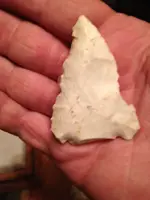
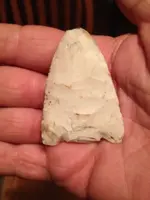
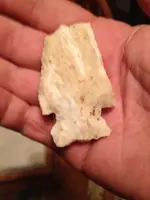
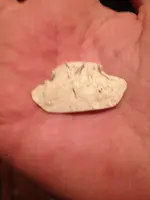
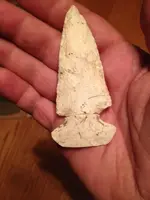
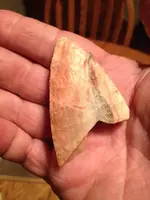
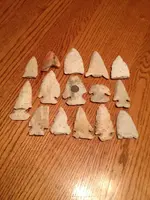
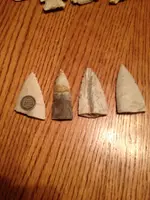
It's easier for early points to do it with a high degree of confidence. It gets harder the later you go.
Some fluted points can be obvious. (Easy to tell a Clovis from a Cumberland from a Folsom if the base is missing.)
Others early points are pretty easy to identify. Many Edens have a particular by the cross section and flaking, Agate Basin and Scottsbluff also tend to be pretty identifiable if they aren't too beat up. You can often identify some of the Early Archaic points in the Midwest when they are resharpened and you know where they were found (Dalton, Thebes, Ohio Beveled, Dove, Pinetree, Lost Lake, etc.)
The later you get, the more generic the upper portion of the biface becomes. A couple of exceptions might be points like Etleys, Steiners, Evans and other points which have some identifiable features on the upper portion of the biface (notches, serrations, width to thickness ratios.) Aftons and Jacks Reef points have an odd pentagonal shape, if you have that and know the material, they are easy to identify. Snyder points are usually broad with flat flaking and heat treated, if you are in the are where they are found a piece of one can stick out like a sore thumb.