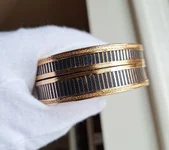
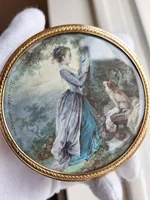
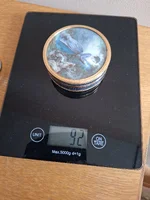
rockcollect
Full Member
- #1
Thread Owner
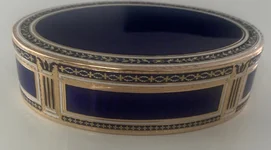
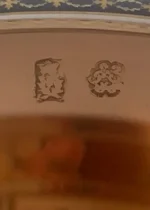
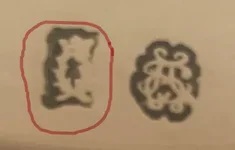
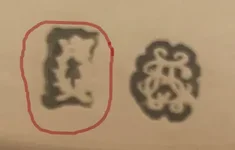
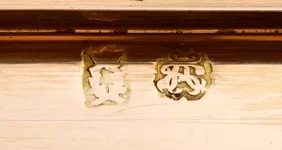
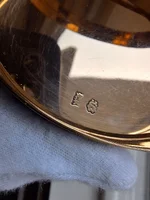
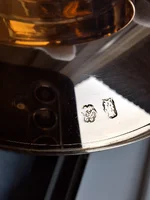
I have bought this box online and it has marks on it but i can't find them. Does anyone know what these marks mean?

what material is it made of do you think, the blue and white is enamel.Very nice.

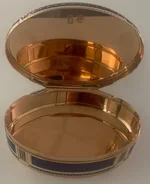
Show the insides of the box.what material is it made of do you think, the blue and white is enamel.
the insideShow the insides of the box.
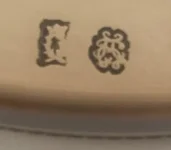
9 x 6 x 2,5 cm i think they are stamped into the metal here are the same marks on a different spotAre the marks inside the lid actually stamped "into" the metal or just on the surface?
What size is it?
and what do you think?Are the marks inside the lid actually stamped "into" the metal or just on the surface?
What size is it?
I can't find any marks that seem to match yours, maybe @Red-Coat can be of some help.and what do you think?
Yes I saw some going for a lot of money...but they had easily identifying purity and maker marks on them, and it's hard for me to tell if your marks are only on the surface or actually stamped into the metal, if only on the surface I doubt it a high dollar item.it would be crazy if it turnes out to be a gold box like the similair ones on the net.
I will post better photo's if the box arrives, these photo's where from the online sell platform where i bought it. very fussy.Yes I saw some going for a lot of money...but they had easily identifying purity and maker marks on them, and it's hard for me to tell if your marks are only on the surface or actually stamped into the metal, if only on the surface I doubt it a high dollar item.
But I still couldn't find any marks that look like what you have even in the photo you posted.
But there's others here that maybe can give you a more positive ID.

Wow thanks so much, i will get the box tested to be sure. P.S. i don´t want to bother you but can you take a look at my latest rock. is it some kind of basalt and what are the crystals in it? TOP marks manTake a look as this screen-grab of some of the marks on the bottom of a pearl-set gold and blue enamel snuff box offered at a Sotheby’s auction. In combination with the other marks on the piece, it was identified as made by Francois-Claude Théremin and Freres Jordan of Berlin, circa 1785-1790:
View attachment 2258351
I’m not too familiar with the marks (which weren’t explained), but if you compare the mark at the left to the mark on the left of your piece, I believe they’re the same and represent two olive branches crossed at the bottom and topped by a crown.
My belief is that this particular mark was for Berlin as a tax, duty or town mark for certification of precious metals. That doesn’t always mean gold, but would also be used to certify silver if it were the base metal for a silver-gilt item with gold plating. That’s what I think you have, and that it’s probably also a snuff box (for table use). I don’t know the exact period that mark was in use, but probably between late 18th to early 19th Centuries.
The other marks on the Sotheby’s piece provide a full maker attribution, but the second, right-hand mark on yours does not identify it as being from the same prestigious maker. Lots of companies made boxes like this. I believe the ornate squiggly mark on the right in your picture is what’s known as a ‘charge mark’ or ‘discharge mark’, which may be difficult to track down. They were often wavy abstract scribbles and were stamped by Prussian tax collectors to show that tax had been paid on a precious metal item during manufacture and was exempt from being levied again at time of retail purchase. Berlin was the official royal capital of the Kingdom of Prussia between 1701–1871.
So my best guess would be a silver gilt snuff box from an unknown Berlin maker, circa early to mid-1800s. It's a very nice item.
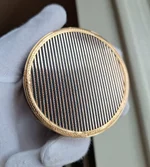
Dear Red Coat, i finally got the boxes delivered. could they be gold?Take a look as this screen-grab of some of the marks on the bottom of a pearl-set gold and blue enamel snuff box offered at a Sotheby’s auction. In combination with the other marks on the piece, it was identified as made by Francois-Claude Théremin and Freres Jordan of Berlin, circa 1785-1790:
View attachment 2258351
I’m not too familiar with the marks (which weren’t explained), but if you compare the mark at the left to the mark on the left of your piece, I believe they’re the same and represent two olive branches crossed at the bottom and topped by a crown.
My belief is that this particular mark was for Berlin as a tax, duty or town mark for certification of precious metals. That doesn’t always mean gold, but would also be used to certify silver if it were the base metal for a silver-gilt item with gold plating. That’s what I think you have, and that it’s probably also a snuff box (for table use). I don’t know the exact period that mark was in use, but probably between late 18th to early 19th Centuries.
The other marks on the Sotheby’s piece provide a full maker attribution, but the second, right-hand mark on yours does not identify it as being from the same prestigious maker. Lots of companies made boxes like this. I believe the ornate squiggly mark on the right in your picture is what’s known as a ‘charge mark’ or ‘discharge mark’, which may be difficult to track down. They were often wavy abstract scribbles and were stamped by Prussian tax collectors to show that tax had been paid on a precious metal item during manufacture and was exempt from being levied again at time of retail purchase. Berlin was the official royal capital of the Kingdom of Prussia between 1701–1871.
So my best guess would be a silver gilt snuff box from an unknown Berlin maker, circa early to mid-1800s. It's a very nice item.
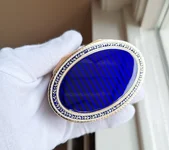
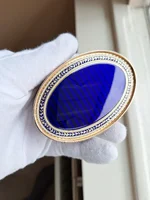
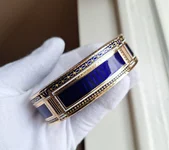
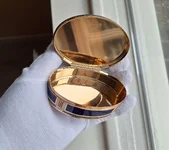
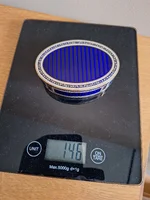
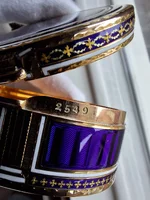
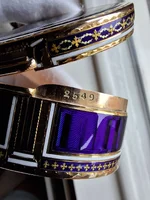
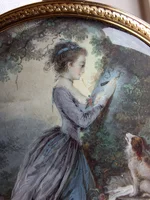
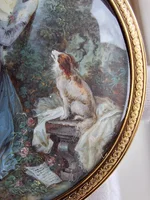
here is the other box, gold? with turtleshell and miniature painting and signedTake a look as this screen-grab of some of the marks on the bottom of a pearl-set gold and blue enamel snuff box offered at a Sotheby’s auction. In combination with the other marks on the piece, it was identified as made by Francois-Claude Théremin and Freres Jordan of Berlin, circa 1785-1790:
View attachment 2258351
I’m not too familiar with the marks (which weren’t explained), but if you compare the mark at the left to the mark on the left of your piece, I believe they’re the same and represent two olive branches crossed at the bottom and topped by a crown.
My belief is that this particular mark was for Berlin as a tax, duty or town mark for certification of precious metals. That doesn’t always mean gold, but would also be used to certify silver if it were the base metal for a silver-gilt item with gold plating. That’s what I think you have, and that it’s probably also a snuff box (for table use). I don’t know the exact period that mark was in use, but probably between late 18th to early 19th Centuries.
The other marks on the Sotheby’s piece provide a full maker attribution, but the second, right-hand mark on yours does not identify it as being from the same prestigious maker. Lots of companies made boxes like this. I believe the ornate squiggly mark on the right in your picture is what’s known as a ‘charge mark’ or ‘discharge mark’, which may be difficult to track down. They were often wavy abstract scribbles and were stamped by Prussian tax collectors to show that tax had been paid on a precious metal item during manufacture and was exempt from being levied again at time of retail purchase. Berlin was the official royal capital of the Kingdom of Prussia between 1701–1871.
So my best guess would be a silver gilt snuff box from an unknown Berlin maker, circa early to mid-1800s. It's a very nice item.
Dear Red Coat, i finally got the boxes delivered. could they be gold?