Uni asked:
Was "Superior Quality" the manufacturer and in Tennessee?
The short answer to both of your questions is No and No. It seems that sometime in the late 1700s the British Jewelers Guild (or something like that) came up with a set of quality ratings for metal buttons. The ratings refer to the relative quality of workmanship in the button's construction, die-work, AND the quality of the gold gilting or silver plating on the buttons. Unfortunately, the Guild was unable to "enforce" the ratings, resulting in a multitude of escalating claims about the button's quality, so the Quality ratings soon became nearly meaningless. For example, what does "Extra Superfine" really mean? (It merely means that one button manufacturer was trying to top the Quality claims of another manufacturer.) Some of the many variations of Quality ratings that I've personally seen on brass buttons from the 1790s through the mid-1800s are:
Standard Quality
Extra Quality
Superior Quality
Warranted Superior Quality
Fine Quality
Superfine Quality
Extra Superfine Quality
Rich Quality
Extra Rich Quality
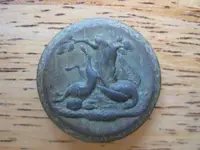
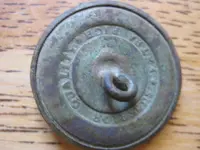
As I said above, the button Quality ratings originated in Britain, and seem to have continued in use there longer than anywhere else. They were soon copied by Amercan button makers, and some French makers. The term "Extra Rich" in your Sportsman's button's backmark is very frequently seen in British-made button backmarks, which makes me lean toward your button being made in Britain. However, there's at least a small chance it could be American-made, due to the existence of an American backmark from 1811-1827 saying "L.H. & Scovill Extra Rich". But according to the best book on button backmarks, Scovill does not seem to have used the term "Extra Rich" on 2-piece brass buttons.
In closing, I should mention, "Superior Quality" was still being used in button backmarks into the late 20th Century, and is probably still in use today. For example, many 20th Century US Army "Great Seal" buttons have a Superior Quality backmark.



 NEET.
NEET.

















