What's new

Ornate spoon!

connorghabra

Jr. Member
Joined
May 3, 2026
Messages
27
Reaction score
95
Golden Thread
0
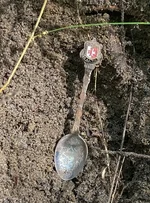
Found at a site that had a farmhouse until the 1950's but is now just a forest. Not the oldest spoon I've found but definitely the most ornate, so I'm super excited. Stamp reads: "EQUISITE EPNS" - "MADE IN ENGLAND" - "WAPW"

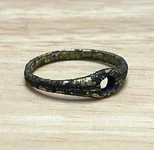
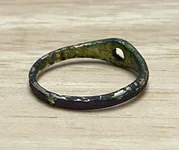
I know the ring is crusty.. but a ring is a ring :)

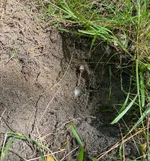
(I might bring a sifting set up to the hole I found the ring in to see if I can find the stone, but I haven't decided if it would be worth a shot.)

3.webp
Front.webp
Back.webp
Exquisite EPNS.webp
 

Attachments

  • 2.webp
    2.webp
    316.9 KB · Views: 20
  • 1.webp
    1.webp
    491.2 KB · Views: 28
  • A.webp
    A.webp
    132.9 KB · Views: 31
  • B.webp
    B.webp
    112.9 KB · Views: 43
Upvote 16
The ‘WAPW’ mark is for Walter Archibald Parker Watson who had established a small jewellery business in Birmingham, which he sold to Augustus Harry Power and Clarence Oswald Flint when he signed up for service in WWI in 1914. The new owners kept the original name and expanded the business as jewellery wholesaler. Much later, they temporarily made military hardware such as jigs and gauges during WWII and then enjoyed a post-war boom in costume jewellery and souvenir items such as spoons, expanding to larger premises in Solihull in 1955. At that time, they began direct supply to retail outlets and the ‘EXQUISITE’ brand was introduced as a mark for Electro-Plated Nickel Silver items, having only previously been used in marketing literature and packaging.

The Exquisite brand disappeared in the late 1970s and the company then used trading names such as The Tudor Mint, to produce things like metal fantasy figurines until the factory closed around 2000.
 
Found at a site that had a farmhouse until the 1950's but is now just a forest. Not the oldest spoon I've found but definitely the most ornate, so I'm super excited. Stamp reads: "EQUISITE EPNS" - "MADE IN ENGLAND" - "WAPW"

I know the ring is crusty.. but a ring is a ring :)

(I might bring a sifting set up to the hole I found the ring in to see if I can find the stone, but I haven't decided if it would be worth a shot.)

View attachment 2263837View attachment 2263841View attachment 2263840
View attachment 2263842
Great spoon...great ring! I would agree with you : " A ring is a ring". I don't find too many, so when I do, it's a celebration regardless of the condition.
 
why the hell was that anyway.... collector spoons.... I remember folk that had racks or those. Why spoons for gods sake?
 
The ‘WAPW’ mark is for Walter Archibald Parker Watson who had established a small jewellery business in Birmingham, which he sold to Augustus Harry Power and Clarence Oswald Flint when he signed up for service in WWI in 1914. The new owners kept the original name and expanded the business as jewellery wholesaler. Much later, they temporarily made military hardware such as jigs and gauges during WWII and then enjoyed a post-war boom in costume jewellery and souvenir items such as spoons, expanding to larger premises in Solihull in 1955. At that time, they began direct supply to retail outlets and the ‘EXQUISITE’ brand was introduced as a mark for Electro-Plated Nickel Silver items, having only previously been used in marketing literature and packaging.

The Exquisite brand disappeared in the late 1970s and the company then used trading names such as The Tudor Mint, to produce things like metal fantasy figurines until the factory closed around 2000.
Thank you so much! I looked into it a bit myself but you gave me even more insight. I absolutely love finding items with a stamp or marking that gives the definite provenance.
 
Very cool, congrats!
Thanks! It's been a little over a year since I started detecting and I'm obsessed. Finally honed in my research with historic aerials and 1800s atlases. I haven't had as much luck finding old coins compared to most other people I see posting, but I'm never going to stop. The main thing I want to find are old coins 1800s or earlier and all I've found so far is a 1906 Indian head (profile pic), 1956 silver quarter, 1955 rosie, 2x 1910 wheats, 1x 1911 wheat, 1x 1920 wheat + many more modern wheats. The only 1800s coin I've found is a slicked large cent and can only make out a part of the wreath and the "T" in "STATES". Still on a mission to find an 1800s coin with the date readable and will never stop. Even though I haven't been as successful as I like, I always find super cool things in my search for old coins like this spoon, which makes it all worth it either way.

(I'm using a Manticore with 11" coil, do you think the 9" coil would make a difference?)
 
Great spoon...great ring! I would agree with you : " A ring is a ring". I don't find too many, so when I do, it's a celebration regardless of the condition.

Thank you! I've found a few rings at the beach but that's my first from an old homesite! Been at it a little over a year and never going to stop. Mainly searching for 1800s coins and the earliest I've found is a 1906 Indian head, but I'm never going to give up. An old timer told me the best motto for metal detecting that I tell myself constantly: "Stay persistent, expect disappointment" 😂

(Historic Aerials typically doesn't go back any earlier than 1930's or 50's in some cases, so can you offer any insight as to how I can have better success at finding earlier sites from the 1700s? ... I assume finding old atlases is the answer but hoping you might have some advice on the topic.)
 
why the hell was that anyway.... collector spoons.... I remember folk that had racks or those. Why spoons for gods sake?
I was wondering that as well and assumed it was an easy and pretty item to take home from trips abroad. Could just throw in your pocket and bring back to your wife as a little momento. Strange fad though lol
 
Thanks! It's been a little over a year since I started detecting and I'm obsessed. Finally honed in my research with historic aerials and 1800s atlases. I haven't had as much luck finding old coins compared to most other people I see posting, but I'm never going to stop. The main thing I want to find are old coins 1800s or earlier and all I've found so far is a 1906 Indian head (profile pic), 1956 silver quarter, 1955 rosie, 2x 1910 wheats, 1x 1911 wheat, 1x 1920 wheat + many more modern wheats. The only 1800s coin I've found is a slicked large cent and can only make out a part of the wreath and the "T" in "STATES". Still on a mission to find an 1800s coin with the date readable and will never stop. Even though I haven't been as successful as I like, I always find super cool things in my search for old coins like this spoon, which makes it all worth it either way.

(I'm using a Manticore with 11" coil, do you think the 9" coil would make a difference?)
Keep at it, it took quite a while before the older coins started showing up, but then it became a regular occurrence.
The smaller coil helps in trash infested areas, and of course also in tight areas (trees, rocks, etc.).
 
Thank you! I've found a few rings at the beach but that's my first from an old homesite! Been at it a little over a year and never going to stop. Mainly searching for 1800s coins and the earliest I've found is a 1906 Indian head, but I'm never going to give up. An old timer told me the best motto for metal detecting that I tell myself constantly: "Stay persistent, expect disappointment" 😂

(Historic Aerials typically doesn't go back any earlier than 1930's or 50's in some cases, so can you offer any insight as to how I can have better success at finding earlier sites from the 1700s? ... I assume finding old atlases is the answer but hoping you might have some advice on the topic.)
The "Old Timer" wasn't wrong. This hobby can and does offer a fair amount of disappointment. However, when you get onto a good spot, it seems like the old coins/ relics just start flying out of the ground. There is nothing better! You are right about the limits of Historic Aerials, but that site can still be useful. I also get a lot of use out of a site called " Past Maps". It allows you to overlay old maps onto a current map, which can give you clues about a given area. It also allows you to access LIDAR images which can really help you see the ground in a productive way ( ex. shows stonewalls, cellar holes, etc). Putting all this tech to the side, your best tool for finding good areas to detect is on the ground reconnaissance. Get out there and explore new spots. Try to imagine how the land was used 100, 200, or 300 years ago. If you stick with it, you will absolutely find coins and relics from the 1800's...or maybe even the 1700's...or dare I say...the 1600's. Good luck, and let us all know how you do. Cheers!
 
Nice finds, I like that spoon.
 

Users who are viewing this thread

Back
Top Bottom