Dr. Otek MT-XR, Ace Apex, Xterra Pro, Nokta Legend, Nokta Makro Impact, Manticore, XP ORX, XP Deus 2 WS6 Master, XP Deus 2, Deeptech Vista X, Nokta Makro Invenio Pro
Dr. Otek MT-XR, Ace Apex, Xterra Pro, Nokta Legend, Nokta Makro Impact, Manticore, XP ORX, XP Deus 2 WS6 Master, XP Deus 2, Deeptech Vista X, Nokta Makro Invenio Pro
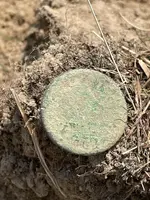
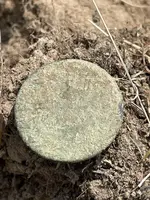
I'm sorry if I missed the weight and dimensions last night. I was looking at the British coins for the same way the Monarch and Britannia were facing and the KGIII Cartwheel matched up.
It's a farthing . I don't remember her name but I think she was a queen and this coin was modeled after her elderly self . Her arm is sticking out and up and she's holding what looks like a wheel with the other one. Google colonial copper coins and you'll find it. It was used by the British in the US before the colonies started producing their own coinage.
It's a farthing . I don't remember her name but I think she was a queen and this coin was modeled after her elderly self . Her arm is sticking out and up and she's holding what looks like a wheel with the other one. Google colonial copper coins and you'll find it. It was used by the British in the US before the colonies started producing their own coinage.
From Coins of Colonial and Early America, an exhibit of over 250 items from Massachusetts silver to the provisional half disme of 1792. Features high-resolution images and detailed descriptions.
It's a farthing . I don't remember her name but I think she was a queen and this coin was modeled after her elderly self . Her arm is sticking out and up and she's holding what looks like a wheel with the other one. Google colonial copper coins and you'll find it. It was used by the British in the US before the colonies started producing their own coinage.
Too large and heavy to be a farthing. Farthings were maximum weight of a little over 5 grams, and 24.5 mm diameter. This coin is 7.8 grams and 27.04 mm diameter. It is a George III halfpenny, real or counterfeit, or one of the state coppers with a similar design. The Connecticut and Vermont coppers copied the design pretty closely.
Too large and heavy to be a farthing. Farthings were maximum weight of a little over 5 grams, and 24.5 mm diameter. This coin is 7.8 grams and 27.04 mm diameter. It is a George III halfpenny, real or counterfeit, or one of the state coppers with a similar design. The Connecticut and Vermont coppers copied the design pretty closely.
When you say Vermont and Connecticut copied them closely do you mean the design and or weight? When the coinage act came into play in the US would the remaining british coins just become obsolete or were they restruck with united states ?
When you say Vermont and Connecticut copied them closely do you mean the design and or weight? When the coinage act came into play in the US would the remaining british coins just become obsolete or were they restruck with united states ?
The design and weight were copied most likely because these were the most common coins in circulation and most familiar to the public. The Connecticut and Vermont coins were made by private contractors, as well as some unauthorized minters, so the weight was often cheated to make more profit for the coiners. The British and state coppers did become obsolete but not right away, it took quite a few years before there were enough US coins in circulation to drive them out. The new US coins were held to a pretty strict weight standard so the older coins were not overstruck by US dies. There were some instances though, when planchets were hard to come by that tokens were recut into half cent planchets, but the weight standard was still kept.