What's new

Possible flintlock piece

TomB

Full Member
Joined
Nov 16, 2007
Messages
132
Reaction score
6
Golden Thread
0
Location
Southwest Virginia
Detector(s) used
Metrotech 220 and Minelab X-Terra-70
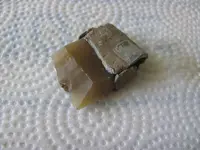
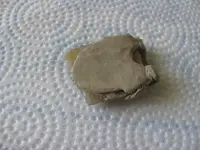
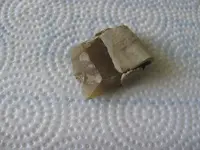
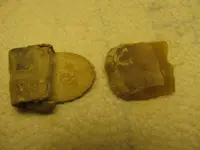
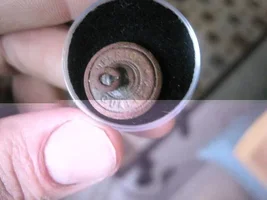
I have been hunting an area that I believe at one time was a late 1700 hundred to early 1800 home site. I have recovered 29 .69 cal musket balls, a brass button dated to that period and other items that would be found around a home site. Today I recovered a piece of metal holding a piece of flint. Does any know if it is part of a flintlock type weapon. Thanks TomB
 

Attachments

  • flintlock piece 008.webp
    flintlock piece 008.webp
    53.4 KB · Views: 502
  • flintlock piece 005.webp
    flintlock piece 005.webp
    55.3 KB · Views: 413
  • flintlock piece 004.webp
    flintlock piece 004.webp
    61 KB · Views: 360
Looks good to me. Nice find. :icon_thumright:

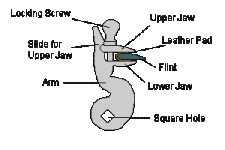
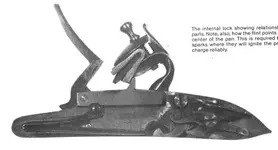
It may be lead. I think they used lead or leather.
 

Attachments

  • flintlock_cock.gif
    flintlock_cock.gif
    2.2 KB · Views: 620
Upvote 0
Thanks guys...4H I carefully removed the piece of flint . I feel like the metal is lead and it has the same patina as the recovered musketballs from the same area.
 

Attachments

  • Flintlock 001.webp
    Flintlock 001.webp
    43.1 KB · Views: 367
Upvote 0
It's lead. Historically lead or leather was used to pad the flint in the jaws of the hammer, which was called the "cock" at that time. If a person uses lead to pad the flint there is a good chance of springing the jaws on the hammer, so modern shooters use leather for the most part. The color of your flint makes me think that it's French. English flints were very dark, and I've seen amber colored French flints. The French military used a .69 caliber flintlock musket called a "Charlyville." The English used the .75 caliber "Brown Bess" musket. The flints for various firearms varied in size, with the flints for the Brown Bess being huge. I've heard guys call them "tombstone flints," perhaps over an inch wide. The Charlyville flints would be a bit smaller, maybe 7/8's inch. .79 caliber is the same bore as a 12 gauge shotgun, and that bore size relates to the size of a round lead ball that it would shoot. In other words, the .75 caliber "Brown Bess" musket fired a ball that weighed 12 balls to the pound. .58 caliber is a very common caliber in the later fur trade era, that that is 32 balls to the pound, or a round ball that weighs 1/2 ounce. Without looking it up, I recollect that the .69 caliber is 20 guage or so, a 5/8" ball weighing 20 balls to the pound.
 
Upvote 0
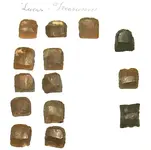
Here's an early one from my collection...
 

Attachments

  • leadsculpture[1].webp
    leadsculpture[1].webp
    46.3 KB · Views: 309
  • leadsculpture[1].webp
    leadsculpture[1].webp
    46.3 KB · Views: 276
Upvote 0
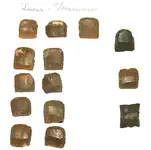
Sweet find! The heeled flint is made from French flint. So, either Rev War, or early 19th c. U.S. military would be my guess for SW Va.

These are mine:
 

Attachments

  • myflints.webp
    myflints.webp
    24.6 KB · Views: 748
  • myflints.webp
    myflints.webp
    24.6 KB · Views: 273
Upvote 0
Nice pictures .These pictures look alot better than the other ones I saw.
 
Upvote 0
Thanks to everyone who responded to my request. Your ID was right on.
HH to all TomB
 
Upvote 0

Users who are viewing this thread

Back
Top Bottom