What's new

Recirculating sluice

Dieseltechjon

Jr. Member
Joined
Mar 20, 2025
Messages
47
Reaction score
93
Golden Thread
0
Hi guys, does anybody have firsthand experience with a successful recirculating sluice? Here in so cal we been getting a lot of rain and the dirt is super wet. It looks like I have to put the dry washer away and run a sluice. I have (or think I have) everything I need to get this thing off the ground. My question is this though. If I am running a gold cube with trommel, with dirt that is already moist, if not considered wet, how much water are we talking here? I have about sixty gallons of water right now spread across three twenty sever gallon utility storage bins. Is sixty gallons enough to run half a yard to a yard of material? I know I can never bring enough water, but I wanted to see if this would be enough to get the job done. I'm not looking to run more than say 20-30 buckets max but don't know if the water is sufficient. Maybe someone can chime in and offer some guidance or Insite. Thanks in advance.
 
The trick is finding a way to keep the water from turning into mud. Using some type
of filter on the water coming out the bottom of the GC would be the first thing I'd try,
and you'll constantly have to keep dumping the crud out of the filter.

I would try using a couple of "settling tubs" and then draw the return water from
a third tub.

If that was the only option, I think I'd dig all my material, then sit down with a large tub
of water and pan most of the dirt out of the material, first, then feed the cleaned material
into the GC.
 
Hi guys, does anybody have firsthand experience with a successful recirculating sluice? Here in so cal we been getting a lot of rain and the dirt is super wet. It looks like I have to put the dry washer away and run a sluice. I have (or think I have) everything I need to get this thing off the ground. My question is this though. If I am running a gold cube with trommel, with dirt that is already moist, if not considered wet, how much water are we talking here? I have about sixty gallons of water right now spread across three twenty sever gallon utility storage bins. Is sixty gallons enough to run half a yard to a yard of material? I know I can never bring enough water, but I wanted to see if this would be enough to get the job done. I'm not looking to run more than say 20-30 buckets max but don't know if the water is sufficient. Maybe someone can chime in and offer some guidance or Insite. Thanks in advance.
If there is a high percentage of clay in your dirt the effort of a sand filter may not work that well for the recirculating sluice set up.

Is there a way of drying the dirt on top of a wood stove to dry the dirt and then tumble in a cement mixer before using the dry washer set up you have to process the dirt?
If the goal is to process 1/2 to 1 yard of dirt the heating / drying of the dirt is not out of the question.
 
The trick is finding a way to keep the water from turning into mud. Using some type
of filter on the water coming out the bottom of the GC would be the first thing I'd try,
and you'll constantly have to keep dumping the crud out of the filter.

I would try using a couple of "settling tubs" and then draw the return water from
a third tub.

If that was the only option, I think I'd dig all my material, then sit down with a large tub
of water and pan most of the dirt out of the material, first, then feed the cleaned material
into the GC.
It sounds like I'm going to need an extra tub. I wonder If using an extra tub and installing hvac air filters, kind of like brillo pads in each tank would slow it down. I'll definitely be running the gold cube straight into a five-gallon bucket but don't know how well it's going to work...too many variables here it looks like.
 
If there is a high percentage of clay in your dirt the effort of a sand filter may not work that well for the recirculating sluice set up.

Is there a way of drying the dirt on top of a wood stove to dry the dirt and then tumble in a cement mixer before using the dry washer set up you have to process the dirt?
If the goal is to process 1/2 to 1 yard of dirt the heating / drying of the dirt is not out of the question.
There doesn't appear to be much clay here. From what I have seen so far it looks like two to three feet of dirt sitting on top of hard pack decomposing granite like material. Seems pretty sandy once its crushed up.
 
Likely no need for filters if you use properly sized and set up settling tubs. The tubs need to be set on ground of about the same level.Use siphons to transfer the waste water from tub to tub and draw your feed water from the last tub in the series. The first tub will capture the bulk of the solid waste and will need to be emptied frequently with the others likely not needing cleanouts for the day or much longer. Properly set up, siphons will keep the water level of all the tubs the same all day. The siphon tubes will likely need to be 2 or more inches in diameter to be able to keep up with the pump.Google to see what size pipe will handle the gph of your pump. Make in a U shape large enough to span tubs set side by side. The key to siphoning is that the tube must be kept filled while inserting/connecting the tubs..and the ends must remain submerged to start and continue to siphon. Make the siphon legs an inch or so unequal and insert so that the suction end is the shorter leg. This insures that suspended solids are injected lower than the suction end of the next siphon...cleaner water gets transferred.

Good luck and heavy pans!
 
Last edited:
This is a setup I use the first drum has a screen on it which you can scrape off as you run & when it gets full of sediments just dump & refill with water , I had 2 30 gal drums of water lasted all weekend .
DSCF1552.webp
 
I guess my setup is going to be similar. I have one 55-gallon drum that's running into three 27-gallon utility bins, with one 17-gallon bin I'll use to catch the tailings and clean out as necessary. You saying that your water lasted all weekend is promising. I'll have to take some pictures once its running. Not sure what to expect at this point. Everything looks good on paper, but you know how that goes....
 
Likely no need for filters if you use properly sized and set up settling tubs. The tubs need to be set on ground of about the same level.Use siphons to transfer the waste water from tub to tub and draw your feed water from the last tub in the series. The first tub will capture the bulk of the solid waste and will need to be emptied frequently with the others likely not needing cleanouts for the day or much longer. Properly set up, siphons will keep the water level of all the tubs the same all day. The siphon tubes will likely need to be 2 or more inches in diameter to be able to keep up with the pump.Google to see what size pipe will handle the gph of your pump. Make in a U shape large enough to span tubs set side by side. The key to siphoning is that the tube must be kept filled while inserting/connecting the tubs..and the ends must remain submerged to start and continue to siphon. Make the siphon legs an inch or so unequal and insert so that the suction end is the shorter leg. This insures that suspended solids are injected lower than the suction end of the next siphon...cleaner water gets transferred.

Good luck and heavy pans!
So far, I have two 2'' siphons connecting the three tanks. I just got a bigger 2kgph pump and a speed controller that I hope helps with stabilizing the water flow. I watched a fella run a 3kgph with three-inch siphons and he mentioned that they system kept up with the pump, so if my match is correct the 2'' siphons will keep up with the 2kgph pump. If it doesnt maybe I can dial it in with the speed controller.
 
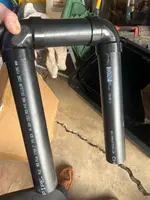
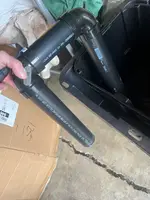
Do you know if these will flow water? Or does it matter if they are not a perfect 180-degree design? All the designs I see are perfect 180deg.
 

Attachments

  • IMG_6395.webp
    IMG_6395.webp
    917.6 KB · Views: 66
  • IMG_6394.webp
    IMG_6394.webp
    1.2 MB · Views: 61
This is a setup I use the first drum has a screen on it which you can scrape off as you run & when it gets full of sediments just dump & refill with water , I had 2 30 gal drums of water lasted all weekend . View attachment 2234942
If you'll notice in Xracer550 1st picture he has a fire under his first tub heating water. Hot water helps drop out heavies and helps settle out the mud. Its better and cheaper than any of the stuff we normally use to do the same thing !
 
Do you know if these will flow water? Or does it matter if they are not a perfect 180-degree design? All the designs I see are perfect 180deg.
It could be hard to keep primed , Maybe try a 2" P-trap without the 90'
 
Time to get fresh water! Just a bit too brown, could be losing fines.
 
Do you know if these will flow water? Or does it matter if they are not a perfect 180-degree design? All the designs I see are perfect 180deg.
Those will work. Fill with water, cork or cap the ends and insert and uncap when submerged. Make sure water levels are about of equal height at start because the siphons will immediately start to level the containers and could move enough water to expose the shortest leg.
 
Last edited:
Guys, thanks for the help so far. I did a little test run this afternoon and it does seem to work. However, the pump tank, or last tank seems to struggle to keep level. If I leave it alone it will recirculate though. I wonder if I should add another 2'' U pipe between the last, and middle tanks? Mind you I ran the test with the 1100gph pump.
 
Guys, thanks for the help so far. I did a little test run this afternoon and it does seem to work. However, the pump tank, or last tank seems to struggle to keep level. If I leave it alone it will recirculate though. I wonder if I should add another 2'' U pipe between the last, and middle tanks? Mind you I ran the test with the 1100gph pump.
If the final tank is not keeping up then the siphon(s) are undersized so you probably need to pair the siphons or use upsized ones. When adequately sized the level in all tanks remain the same always...horizontal line across all.
 
Last edited:
I'm going to stop by the hardware store tomorrow and get two more siphons...maybe two or three inch id
I had to upsize mine too. I think mine are at least 3".
 
Last edited:
So I added two more 2'' siphons, one for each tank and this time it worked. Even with the 2kgph pump at full output it pretty much kept up. I don't plan on running it on max so it should work well. The only thing left is to try it out in the field. If you guys dont mind I have another question that may be off topic. what is the standard when it comes to handheld equipment in the field? I was told that anything under 10hp is allowed on most claims but that seems kinda high to me..
 
If you'll notice in Xracer550 1st picture he has a fire under his first tub heating water. Hot water helps drop out heavies and helps settle out the mud. Its better and cheaper than any of the stuff we normally use to do the same thing !
Now I just learned something there. Going to have to test this out using a couple glasses of water.
 

Users who are viewing this thread

Back
Top Bottom